WRLD

Search

#EP
BFMTV 5m

The National Assembly voted in favor of increasing the Livret A ceiling to 30,000 euros, but this measure has sparked opposition due to concerns that it would primarily benefit the wealthiest households. #LivretA #Plafond #Epargne (translated)

rmc.bfmtv.com
Livret A: rehausser le plafond de 7.050 euros, pourquoi certains estiment que cette mesure examinée en ce moment ne profiterait qu'aux plus riches
1114
Dávid Vitézy 27m

On October 9, Dávid Vitézy announced that the government is terminating the contract previously signed with V-Híd and is instructing the company to withdraw from the construction of the Southern Belt Railway. #DéliKörvasút #GVH #közbeszerzés (translated)

Eljárást indított a versenyhivatal a budapesti Déli Körvasút beruházás ügyében
telex.hu
1266
Jean Marc Morandini 28m

Edouard Geffray stated that after the attack in which the principal and a teacher of a college in Aubagne were shot, the national education system would remain united and strong alongside a severely affected educational community. https://t.co/RPYrh28rOd #Éducation #Solidarité #Violence #FR (translated)

1504
Il Fatto Quotidiano 42m

In a recent episode in Posillipo, Naples, some young people were filmed throwing heavy stones from the panoramic terrace, raising concerns among residents, who report violent behaviors and demand intervention from the authorities to ensure their safety. #Napoli #Sicurezza #Violenzaurbana (translated)

www.ilfattoquotidiano.it
Lancio di pietre dalla terrazza di Posillipo (Napoli). La denuncia: “Non è la prima volta”
923
Jari Mäkäräinen 42m

Jari Mäkäräinen criticized Sanna Ukkola's writing about the Prime Minister's meeting with Imam Sharmarke Said Aw-Mussen. According to Mäkäräinen, Ukkola regarded the meeting as ordinary work and believed that the imam, who was born in Turku, was being asked impossible questions regarding Sharia. Mäkäräinen argued that asking the imam was not a misunderstanding: in his view, the imam left open whether Sharia would be applied in Finland in family or criminal law matters. Mäkäräinen wrote that, according to him, freedom of religion did not justify the establishment of a parallel legal system alongside Finnish laws. He claimed that in Muslim-majority countries, freedom of religion, women's equality, and individual rights were not realized in liberal democracies due to Islamic doctrine and Sharia. He cited Lebanon as an example, where he believed the growth of the Muslim population and political organization undermined previous balance and led to civil war. In France, Sweden, Belgium, and Britain, he mentioned the visibility of parallel societies, honor-based violence, segregation of areas and schools, and pressure to accept practices related to Sharia. In Finland in the 2000s, Mäkäräinen claimed that groups with a Muslim background who had immigrated were connected to the overrepresentation of sexual offenses, unemployment, use of social security, and demands for their own rules. He believed that distinguishing criticism of Islam from calls for deportation did not make questions about Sharia suspect. According to Mäkäräinen, the primacy of the Finnish Constitution and criminal law should be clear in all matters, and Finland did not need to repeat the experiences of countries where the application of Sharia had been tried. https://t.co/bGpZ7VaTux #uskonnonvapaus #integratio #muslimit (translated)

1264
Luc Van den Brande 2h

But hardly was it put on the rails when Flanders, through the voice of its minister-president at the time, the Christian democrat Luc Van den Brande, launched the idea of confederalism: a central level reduced to its simplest expression, with two states – Flanders and Wallonia – jointly managing Brussels. #Belgique #Flandre #confédéralisme (translated)

La Belgique tiendra-t-elle jusqu’en 2030 ?
www.lalibre.be
1286
Ignazio Marino 2h

He claimed that in Rome the right to housing continued to be sacrificed to the interests of large real estate funds and that there were solutions, but political will was needed to adopt them. On Mi manda Rai Tre, he recalled that when he was elected mayor, the municipality spent 42 million. https://t.co/I8BDqkgBZT #Roma #dirittiallacasa #politica #IT (translated)

1346
AuBonTouiteFrançais 🍾🍾🍾 2h

AuBonTouiteFrançais wrote that he had been reported a "curious epidemic" affecting, according to him, the European political leaders in favor of unconditional support for Ukraine. He associated it with foul-smelling flatulence, loss of control of the sphincters, abundant diarrhea, screams of terror, and a long prostration. https://t.co/zvxdWCVKS1 #Ukraine #PolitiqueEuropéenne #Humour (translated)

1515
ABC TU DIARIO EN ESPAÑOL 3h

Aemet warns of the possibility of locally heavy showers in Menorca and Mallorca for the holiday on October 12, although maximum temperatures in much of Spain are expected to be above normal for this time of year. #Aemet #TiempoEspaña #DíaDeLaHispanidad (translated)

www.abc.es
La Aemet avisa de chubascos «localmente fuertes» en estas zonas para el 12O
1296
Le Monde.fr 3h

Faced with unprecedented violence in several institutions, the principals of the student movement find themselves exhausted and constantly on edge. #BrowserIssues #Connectivity #AdBlocker (translated)

www.lemonde.fr
Mouvement lycéen : face à une violence inédite dans plusieurs établissements, des proviseurs épuisés et sur le qui-vive
1184

Tino explained that writing his book, "100 Tips for Successful Investing," had been one of the most difficult trials of his life. For nearly ten months, his perfectionism had, according to him, caused him doubts, frustrations, short nights, and sometimes tears. He added that the project had also weighed on his health and his private and family life. His partner, with whom he had shared his life for nearly fifteen years, had to accept his absences and the fact that writing sometimes took precedence over their life together, he wrote. Since finishing the book, he had been trying to reconnect with her over the moments that were set aside, while acknowledging that lost time could not really be made up. As the book was meeting with greater success than he had expected, Tino wanted to pay tribute to his partner, believing that without her support, the work probably would not have come to fruition. #Écriture #Amour #Sacrifice (translated)

1845
Henri Vanhanen 3h

Henri Vanhanen wrote that he doubted whether Vladimir Putin had a realistic understanding of the situation in the war in Ukraine or whether he would be willing to accept information contrary to his own views. Vanhanen assessed that in Russia's system, reporting bad news to the leadership could be dangerous and that the military leadership, subordinates, or the president's inner circle might distort or filter information. Vanhanen referred to a recent assessment by the think tank ISW, which stated that Ukraine's successful counteroffensive in northern Donetsk had shattered Russia's plan to encircle the region's key defensive cities from two directions. According to him, Russia's goal of capturing the entire Donetsk region appeared to be further away as a result. Vanhanen wrote that Putin might continue the war to achieve unrealistic goals if he believed that Russia was closer to victory than reality suggests. He deemed it even more concerning that Putin might be receiving accurate information but did not want to believe it. Vanhanen emphasized that Russia's military failure, in his view, might not necessarily change Putin's goals or his desire to continue the war. He believed that an unrealistic situational picture could lead to the prolongation of the war and taking greater risks, and he appealed for continued support for Ukraine and to resist Russia's military pressure. https://t.co/Lb2advefv2 #Ukraina #Putin #sota (translated)

1855
Saara Huhtasaari 3h

Saara Huhtasaari wrote that Sanna Marin had been in Italy promoting her book and told Corriere della Sera that she would likely not run for office unless Russia attacked Finland. In that case, according to Huhtasaari, Marin would have said she was available. Huhtasaari interpreted the statement as positioning herself rather than expressing a willingness to be a victim. According to her, Marin implied that conventional political work did not match her capabilities and that only a crisis threatening Finland's existence would be a sufficiently significant task. Huhtasaari compared this to the scale of historical leaders such as Kekkonen, Winston Churchill, Nelson Mandela, Lee Kuan Yew, and George Washington, using the metaphor of the "Napoleon syndrome" to describe the phenomenon. She specified that she did not mean it as a diagnosis. Huhtasaari also criticized the contradiction between Marin's book discussing hope and the self-image conveyed in the interview. She argued that the role of politics was to build structures that functioned without a single politician. As examples of such builders, she mentioned Lee Kuan Yew, who influenced Singapore's development, and Mart Laar, who made economic and institutional decisions in post-independence Estonia. Huhtasaari believed that there had not been similar builders in Finland for decades and that Marin did not belong to their ranks. According to Huhtasaari, statesmen did not announce in advance when they would return to politics, but either did their job or stepped aside. She criticized Marin for traveling to present her book, which discussed decisions made behind closed doors, and for associating a potential return with Russia's attack. Huhtasaari described this as a fantasy of seeing herself as a historical exception. #SannaMarin #Politiikka #Historia (translated)

1767
Postimees 4h

The European People's Party (EPP) is considering seeking support from far-right forces to ease climate regulations due to disagreements over the future of the European Union's carbon market. #EuroopaLiit #kliimapoliitika #süsinikuturg (translated)

pmo.ee
Kliimavaidlus võib viia EPP europarlamendis paremäärmuslastega koostööle
1487
Jari Mäkäräinen 4h

Jari Mäkäräinen criticized an article in Helsingin Sanomat and said he had made corrections to it. According to him, the nonfiction writer Ari Haasio and Mattila had suggested that Finnish identity was ambiguous, compared the mistrust faced by evacuees from Karelia to current fears directed at Muslims, and stated that everyone was a descendant of immigrants. Mäkäräinen wrote that migration was an old phenomenon, but migrations from different times could not be equated. He noted that the first people arrived in what is now Finland about 11,000 years ago and believed that this did not provide a basis for equating the current migration from Afghanistan or Somalia with the arrivals of earlier traders, craftsmen, or industrial founders. He described Finlayson as an actor that built factories in capital-poor Finland, brought technology, and created jobs. Mäkäräinen compared him to a Mohammed coming from Somalia, who he described as illiterate and dependent on Kela support. He believed these examples illustrated different types of migration and claimed that there were differences in education, employment, cultural distance, and criminality. He also claimed that those coming from Afghanistan were overrepresented in rape statistics. Regarding the evacuees from Karelia, Mäkäräinen wrote that they had come from within Finland, spoke Finnish, and shared key features of Finnish culture. He said they had faced mistrust and derogatory name-calling, but believed they differed from current arrivals from Afghanistan, for example, in terms of adaptation, work ethic, and use of social security. Mäkäräinen also denied the comparison made by Haasio and Mattila between 19th-century antisemitism and the Somali discussions of the 1990s. According to him, the groups were not similar, and Jews had mostly integrated well. He argued that current migrations should be evaluated based on their impacts on employment, crime, and social security. Finally, he wrote that the continuity of society required, in his opinion, the adaptation of newcomers. #maahanmuutto #suomalaisuus #kulttuuri (translated)

1735
Luciano Magaldi Sardella (PhD) 4h

LETTERE MERIDIANE — IL TEATRO-EDICOLA DI SAN SEVERO CONQUISTA IL MONDO SOURCE: SOURCE: https://www.letteremeridiane.org/2026/10/il-teatro-edicola-di-san-severo-conquista-il-mondo/?fbclid=IwY2xjawU4oqFleHRuA2FlbQIxMQBwZG9mAXNydGMGYXBwX2lkEDIyMjAzOTE3ODgyMDA4OTIAAR5rVEwYs6UUXg7v-P0SyIQ_DRb_F6ZiY58OcseYoV4J7atcTiERnhWaqKM2pw_aem_Njle1jq1XLzHr93KLBUcVA Dopo Broadway World, Los Angeles Journal, The Psychologist (British Psychological Association) ed Hollywood Beat Magazine, ora è arrivata la sua “consacrazione accademica” a cura della Stanford University. Come ho già sottolineato nel mio articolo sulla rivincita del GIO Festival a Foggia, celebrata dal BroadwayWorld per la prima mondiale scenica della giordaniana Marina (1888), la provincia di Foggia ha smesso ormai di essere periferia. Accade quando trova un’idea che sposta le coordinate: ebbene, a San Severo, a 40 chilometri da Foggia, è successo di nuovo. Solo che questa volta non serviva un’orchestra, ma sono bastate sei sedie. Il celebre Teatro-Edicola del sanseverese direttore artistico Francesco Gravino della Compagnia Teatrale Foyer’97 è finito sulla rivista accademica Stanford Social Innovation Review (SSIR) in qualità di caso di studio accademico. La notizia, rilanciata il 19 settembre 2026 da ANSA Nazionale, sembrava un refuso. Poi si è capito che non lo era. La SSIR, pubblicazione pluripremiata che copre soluzioni multisettoriali ai problemi globali, ha inserito il progetto nella sezione Dispatches con il reportage The Six-Seat Revolution. È il percorso inverso rispetto a quello del GIO Festival: non un’opera dimenticata che torna in un grande teatro storico italiano a ferro di cavallo, ma un teatro intero che rinasce dentro un luogo dismesso, dimenticato dall’uomo. Ci sono momenti in cui il passato e il futuro si intrecciano per creare qualcosa di visionario, innovativo, artisticamente “rivoluzionario”: San Severo ha vissuto uno di questi momenti la mattina del 27 marzo 2026, durante la Giornata Mondiale del Teatro, quando la saracinesca di un’edicola chiusa da sei anni in Via Matteo Tondi è stata riaperta “non per vendere giornali, ma per offrire emozionanti storie”, citando il motto graviniano. L’idea del visionario Francesco Gravino (nella foto sopra), direttore artistico, regista e attore della compagnia sanseverese Foyer ’97, attiva da almeno 30 anni in Capitanata si è basata sull’edicola, esagonale in metallo e vetro, concessa a titolo gratuito dal proprietario Pino Frau, ormai un relitto urbano creato dalla crisi dell’editoria degli inizi anni 2000: oggi in Italia le edicole attive sono scese da circa 35.000 nel 2005 a circa 20.000 nel 2024, con un calo del 42,8%. Gravino e altri undici attori l’hanno ristrutturata in due settimane di lavoro, senza fondi istituzionali, e l’hanno trasformata in quello che oggi è sotto esame della commissione londinese del Guinness World Record come “teatro più piccolo del mondo”. La formula è volutamente austera: sei spettatori alla volta fuori, attori dentro a meno di un metro, spettacoli di 15 minuti, rotazione continua dalle 11 alle 20.45, testi da Goldoni a Čechov, da Ibsen a Dacia Maraini. Sulla porta un QR code con un originale avvertimento teatrale: “Attenzione! Questo codice QR trasforma i passanti in attori. Scansionate solo se pronti.” I numeri hanno sùbito detto che non era una boutade: più di 60 persone in un solo pomeriggio, tre giornate inaugurali che hanno registrato il tutto esaurito. Ma soprattutto un’eco positiva che è andata oltre i confini sanseveresi. BroadwayWorld (proprio come il previo caso del GIO Festival) la più influente testata mondiale di critica teatrale con oltre 5,5 milioni di visualizzazioni mensili, il 27 aprile 2026 gli ha dedicato una copertura esclusiva: An Abandoned Italian Newsstand Just Became the World’s Smallest Theatre. Non una segnalazione, ma un’analisi: “Non c’è foyer, non c’è balconata, non c’è graticcia. C’è a malapena una quinta. Quello che c’è è qualcosa di quasi irriconoscibile come serata a teatro, e proprio per questo è ancora più potente.” BroadwayWorld ha colto l’idea manifesto di Gravino: “Questo è un teatro di prossimità. In un’epoca di distanza digitale, stiamo rimettendo il contatto umano al centro,” incorniciandolo come “Più che un abile esercizio di teatro site-specific. È una riappropriazione.”. Il tutto, in un Mezzogiorno d’Italia spesso raccontato solo per criminalità organizzata e marginalizzazione. A quel sigillo se ne è aggiunto un altro, ancora più spiazzante per un’edicola di San Severo: il Los Angeles Journal, una delle testate più influenti della West Coast per le arti performative. Il 12 maggio 2026, titola in questo modo: San Severo’s Teatro Edicola as an Innovative Model for Los Angeles Theaters? aprendo così: “In una città del Sud Italia di cui Hollywood non ha mai sentito parlare, un regista teatrale ha appena costruito il palcoscenico più piccolo del mondo: sei posti, quindici minuti, zero distanza. Los Angeles dovrebbe prestare attenzione.” Il Los Angeles Journal non fa folklore, ma mette il chiosco di via Matteo Tondi accanto al presigioso teatro losangelino Ahmanson da 1600 posti, al Pantages di Broadway in Hollywood, ai 99-seat plan di Rogue Machine, all’ Odyssey, al Victory Theatre e all’ Hollywood Fringe. Rievoca persino l’Electrical Box Theatre di Ethan Marks, una vera e propria scatola elettrica foderata di velluto rosso in downtown Los Angeles, per dire che Gravino ha portato all’estremo la domanda che Los Angeles si fa da decenni: Quanto piccolo può diventare un palco prima di smettere di essere un palco? E riconosce il modello urbano sanseverese: costo quasi zero, due settimane di lavoro e una sestina di sedie, a fronte di una immediata copertura mediatica provinciale, regionale e nazionale, riconoscimento dell’ Amministrazione Comunale sanseverese, e un format esportabile (quasi) ovunque. Dopodiché, il terzo tassello americano è arrivato dall’ Hollywood Beat Magazine il 20 aprile 2026: Six seats. Fifteen minutes. One actor. No stage. Il magazine racconta il chiosco di Via Tondi rimasto dismesso per quasi sei anni, il presidio culturale contemporaneo da sei posti, inserendo Francesco Gravino nella genealogia alta: Richard Schechner e l’environmental theatre, Jerzy Grotowski e il teatro povero, Nicolas Bourriaud e l’estetica relazionale. Ma chiude con concretezza: non è una tesi, è fixing a street corner, ovvero aggiustare un angolo di strada urbana chiedendosi non quanto grande può diventare un teatro, ma quanto piccolo deve tornare per recuperare il suo potere originario. E infine, il celebre londinese The Psychologist, la rivista della British Psychological Society (BPS), la più antica società di psicologia al mondo, ha trasformato il Teatro-Edicola in caso di studio scientifico: il 30 luglio 2026 pubblica The world’s smallest theatre — and Psychologists’ next act, partendo dallo stesso dettaglio, la mattina del 27 marzo in cui la saracinesca metallica del chiosco esagonale di Via Tondi si riapre dopo sei anni, sei persone dentro, un attore a meno di un metro che inizia Chekhov. Descrive la formula: sei spettatori, 15 minuti, 11 attori su 10 ore, da Goldoni a Euripide, dentro un chiosco dove la quarta parete non si rompe perché architettonicamente non è mai esistita. Ma la BPS fa un passo oltre: cita gli studi del 2025 di Damien Gabriel su IBRO Neuroscience Reports, la performance live genera attivazione emotiva e fisiologica misurabilmente più forte del video e introduce la prossemica di Edward Hall: sotto il metro è spazio intimo, riservato a medici, amici stretti, amanti. In quello spazio da un metro quadrato, il respiro dell’attore è udibile, le microespressioni leggibili, il confine sé-altro diventa permeabile. Il Teatro-Edicola “non rende il teatro migliore, lo rende inevitabile”. Ed è qui che si capisce perché Stanford lo studia come caso di studio accademico di innovazione sociale, non come caso di originalità artistica. In Italia, nel frattempo, il circuito mediatico nazionale aveva già intercettato il fenomeno: RaiNews — TG2 Storie lo porta su RaiDue alla mezzanotte del 19 aprile. RTL 102.5 dedica spazio al format ideato da Gravino e sviluppato da Foyer’97 nel cuore di San Severo in Via Tondi, definendolo micro-palcoscenico permanente capace di portare teatro nello spazio pubblico. ANSA.it, Gazzetta del Mezzogiorno, La Repubblica, TG2000, Radio Capital, RSI svizzera, ANSA Brasile e tanti altri seguono. E per diritto di cronaca: Fiorello lo ha elogiato in La Pennicanzacome caso artistico ispirato al suo Edicola Fiore, nonché Biagio Antonacci, nel suo tour nell’anfiteatro augusteo di Lucera, ha fatto tappa “conoscitiva” nel Teatro-Edicola cantando la celebre e nostalgica Iris davanti ad un pubblico sicuramente maggiore dei “sei posti”. La Compagnia Teatrale Foyer ’97 di Francesco Gravino non è nata ieri: ha alle spalle il Teatro-Cantina del 2016, il teatro sottoterra, e nel 2011 una performance sulla torre campanaria di una chiesa del centro di San Severo a 45 metri d’altezza. Il Teatro Edicola completa, nelle parole di Gravino, “l’intera estensione verticale del teatro: sottoterra, piano strada, tetto”. E si prepara al trentennale del 2027 puntando ad acquistare l’edicola per renderla permanente esportando il “Modello San Severo” a Roma, Lucca, nei festival di Santarcangelo e Todi. Come per il GIO Festival, qualcuno potrebbe osare di affermare che si tratta solo di un exploit ma, quando BroadwayWorld ti mette accanto alla Los Angeles Opera House, il Los Angeles Journal ti propone come modello per Hollywood, Hollywood Beat Magazine ti legge con Grotowski e la British Psychological Society ti usa per spiegare i neuroni specchio, non è più un exploit ma un eccellente posizionamento artistico ed accademico. A chi ancora sussurra che Foggia e la Capitanata siano provincia, la risposta ora è scritta su due fronti opposti e complementari: il 5 giugno a Foggia un’opera di 138 anni ha ritrovato la scena al Giordano finendo su BroadwayWorld; il 27 marzo a San Severo un’edicola di 4 metri quadrati ha inventato una scena che non esisteva, finendo a Stanford, a Los Angeles, a Hollywood e a Londra. La periferia, quando ha un’idea precisa, diventa centro. Anche con sei sedie. Luciano Magaldi Sardella

www.letteremeridiane.org
Il teatro-edicola di San Severo conquista il mondo
61
mtvuutiset.fi 5h

The power of the Republicans in the United States is threatened as Trump's unpopularity and historical changes in traditional states like Kansas are undermining the party's control in Congress. #Yhdysvallat #republikaanit #vaalit (translated)

www.mtvuutiset.fi
Republikaanipainajainen syvenee – nyt horjuu 94-vuotias valtakausi
1677
János Bóka 5h

There was also news from home over the weekend that Dávid Vitézy sent a letter to Mészáros's company stating that they were fired from the construction of the Southern Ring Railway, the upper limit of environmental fines has been raised from 2 to 5 billion, and the minimum penalty will also be higher, according to János Bóka, the Fidesz has no reason to apologize for its campaign that incites war anxiety, the editorial offices of Hungarian women's magazines requested the ratification of the Istanbul Convention from the government, it turned out that 5 percent of the property tax can also be offered for public purposes, and that Imre Komjáthi is setting an example for the old warhorse Orbán in reaching young people. #szegénység #szerhasználat #mentálhigiénia (translated)

Gyilkos szerek és gyilkos szándékok
444.hu
1527
BFMTV 5h

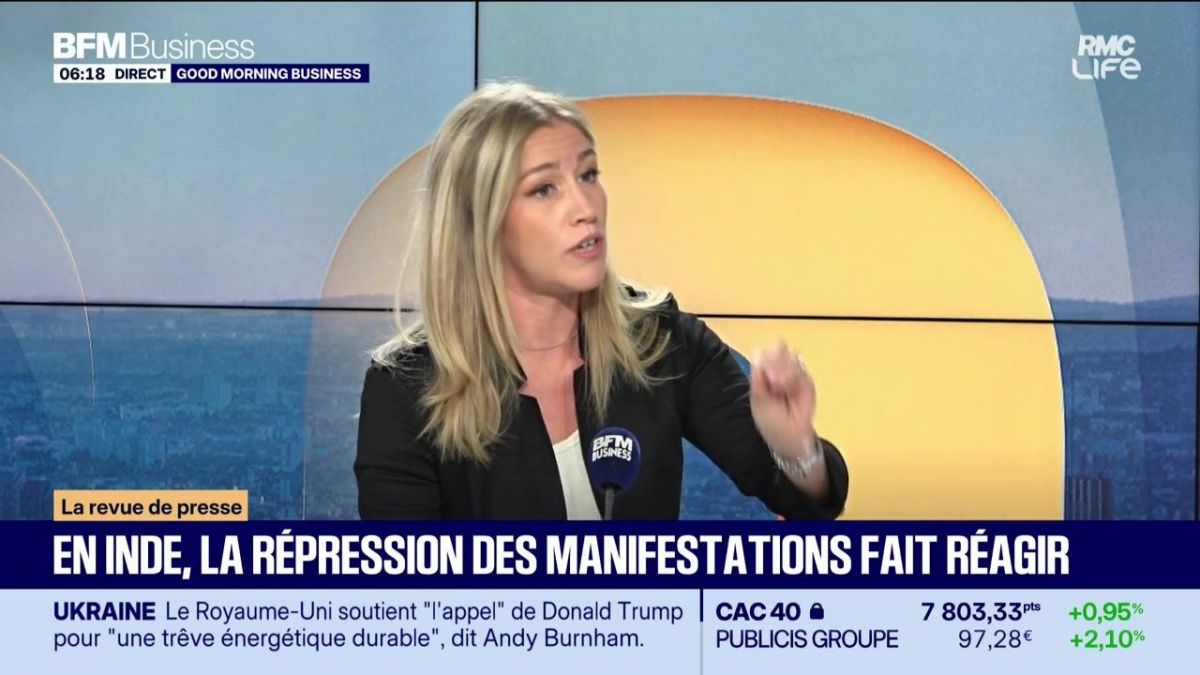
In India, the repression of protests evokes reactions after tragic events, as discussed in the latest episode of Le Monde qui bouge. #Inde #manifestations #répression (translated)

www.bfmtv.com
Le Monde qui bouge : la revue de presse : En Inde, la répression des manifestations fait réagir - 12/10
1148
Mario Grech 6h

the transposition into legal terms of what, in each era, the Church perceives of itself and what constitutes the object of its faith, with the corresponding repercussions on the way human relationships are carried out within it. The Secretary General of the Synod, Cardinal Mario Grech, defines Canon Law as "the transposition into legal terms of what, in each era, the Church perceives of itself and what constitutes the object of its faith, with the corresponding repercussions on the way human relationships are carried out within it." #IglesiaCatólica #DerechoCanónico #MinistrosLaicos (translated)

El Vaticano propone blindar en el Código de Derecho Canónico el nombramiento de mujeres y laicos como 'ministros'
www.eldiario.es
1871