WRLD

Search

#Famine
Krzysztof Graj 3d

AFRICA DAILY REPORT — 9 OCTOBER 2026 Main developments of past 24 hours 1. ETHIOPIA–ERITREA — Reports of Eritrean troops entering Tigray and drone strikes A commander aligned with Ethiopia's government reported Eritrean troops in Adigrat and Idaga Hamus. ACLED reported drone strikes targeting Eritrean forces. The reports raise concerns about a direct Ethiopia–Eritrea confrontation; troop movements were not independently verified. SOURCE: https://apnews.com/article/ethiopia-eritrea-tigray-mekelle-shire-tplf-drones-6d89a0f53f527fb45d21637c5d9a0179 2. SOUTH AFRICA — Anti-migrant protests turn violent in Durban and Soweto IMPORTANCE: 9/10 — VERY HIGH Anti-migrant protests led to looting and vehicles being burned. The government attributed unrest partly to false claims about a Constitutional Court asylum ruling. Police deployed additional personnel. SOURCE: https://www.reuters.com/world/africa/south-african-anti-migrant-protests-turn-violent-with-cars-torched-gunshots-2026-10-08/ 3. GUINEA-BISSAU — December elections postponed The prime minister announced that presidential and legislative elections planned for December 6 could not proceed, citing missed candidate-selection and submission deadlines. No new election date was announced. SOURCE: https://www.reuters.com/world/africa/guinea-bissau-delay-elections-following-last-years-coup-2026-10-08/ 4. KENYA — Suspected second Ebola case tests negative IMPORTANCE: 9/10 — VERY HIGH Preliminary tests on a suspected Ebola patient in Wajir County were negative. Kenya continues heightened surveillance and contact tracing after its first confirmed imported case. SOURCE: https://www.reuters.com/business/healthcare-pharmaceuticals/kenya-says-tests-suspected-ebola-case-come-back-negative-2026-10-08/ 5. NIGERIA — Petrol price cap proposed IMPORTANCE: 8/10 — HIGH Nigeria's finance minister proposed capping petrol at about 1,350 naira per litre and considering measures to buffer fuel-price volatility, including possible windfall taxation. The measures are proposals, not implemented policy. SOURCE: https://www.reuters.com/business/energy/nigeria-proposes-petrol-price-cap-curb-fuel-cost-volatility-2026-10-08/ 6. NIGERIA — World Bank sees 4.4% average growth through 2028 IMPORTANCE: 8/10 — HIGH The World Bank forecasts Nigeria's economic growth averaging 4.4% through 2028 if reforms continue, with inflation potentially declining toward 12% by 2028. Improvements in public services and job creation remain essential. SOURCE: https://www.reuters.com/world/africa/world-bank-sees-nigeria-growth-averaging-44-through-2028-2026-10-08/ 7. AFRICA / UNITED STATES — Human Rights Watch examines third-country deportations Human Rights Watch documented allegations of arbitrary detention, mistreatment and other rights risks involving US deportations of people to African countries other than their countries of origin. These are findings and allegations of the rights organization. SOURCE: https://www.hrw.org/report/2026/10/08/to-scare-people/us-expulsions-of-third-country-nationals-to-countries-in-africa 8. SOMALIA — Conflict and aid reductions deepen famine risk IMPORTANCE: 10/10 — CRITICAL Drought, insecurity and reductions in international assistance are worsening food insecurity. Al-Shabaab restrictions impede access to vulnerable communities. Baidoa hosts large numbers of displaced people. SOURCE: https://www.lemonde.fr/en/international/article/2026/10/08/war-cuts-off-entire-somalians-threatened-by-famine-from-humanitarian-aid_6758371_4.html 9. SOUTH SUDAN — Hospitals overwhelmed by renewed fighting IMPORTANCE: 9/10 — VERY HIGH Medical facilities are struggling with gunshot, blast and trauma casualties. An ICRC-supported hospital in Juba has reported severe pressure on surgical capacity and medical supplies. SOURCE: https://www.theguardian.com/world/2026/oct/08/inside-south-sudan-overwhelmed-trauma-wards 10. PAN-AFRICAN FINANCE — Dangote refinery IPO highlights investment barriers IMPORTANCE: 8/10 — HIGH Nigeria's Dangote refinery $1.6 billion offering exposed regulatory obstacles to cross-border share purchases, despite ambitions for broad African participation. Investors outside Nigeria face fragmented securities rules and limited eligible intermediaries. SOURCE: https://www.reuters.com/business/energy/africas-biggest-ipo-exposes-continents-cross-border-investing-barriers-2026-10-09/ #Africa #AfricaNews #AfricaDailyReport #TopNewsOfAfrica #AfricaToday #SouthAfrica #Durban #Soweto #AntiMigrantProtests #Xenophobia #MigrationCrisis #CivilUnrest #HumanRights #Disinformation #Nigeria #NigerianEconomy #WorldBank #EconomicGrowth #GDPGrowth #EconomicReforms #Inflation #AfricanEconomy #Ethiopia #Eritrea #Tigray #Mekelle #HornOfAfrica #DroneStrikes #RegionalSecurity #ArmedConflict #GuineaBissau #Elections #PoliticalInstability #Kenya #Ebola #PublicHealth #NigeriaFuelPrices #EnergySecurity #Somalia #FoodInsecurity #FamineRisk #HumanitarianCrisis #SouthSudan #HealthcareCrisis #USDeportations #DangoteRefinery #AfricanFinance #CrossBorderInvestment #AfricanDevelopment #AfricanPolitics #Geopolitics #AfricaSecurity #AfricanUnion #WRLDorg


558
Steevy Boulette 4d

Steevy Boulette wrote that Gabrielle Cathala and Antoine Léaument had sent TUC and chips with roasted chicken flavor to 67 students of Sciences Po, thus saving them, according to him, from famine. He added that most had not eaten anything for three hours. #Urgent #SciencesPo #Solidarité (translated)

3153
sophia aram 5d

Sophia Aram wrote that the propagandists were no longer interested in the subject, and then shared an article from Le Point dedicated to the figures presented, a year later, as a denial of the famine in Gaza. #Gaza #Famine #Société (translated)

2929
Le Monde.fr 5d

In the context of the war in Somalia, humanitarian aid is hindered, leaving populations in danger of famine. #ProblemasDeConexión #NavegaciónWeb #ExtensionesDelNavegador (translated)

www.lemonde.fr
Dans la Somalie en guerre, une aide humanitaire empêchée, des populations menacées de famine
1920
Krzysztof Graj 7d

Africa Daily Report — 5 October 2026 Main developments reported during the previous 24 hours. 1. Ethiopia — Federal forces take control of Mekelle after TPLF withdrawal Ethiopian federal forces and allied fighters took control of Mekelle, the capital of Tigray, after the Tigray People's Liberation Front said it had withdrawn and temporarily relocated the regional administration. The renewed fighting, which began on 23 September, is the most serious breakdown since the 2022 peace agreement and has revived concern about a wider Horn of Africa conflict, particularly after Ethiopia and Eritrea severed diplomatic ties. Source: https://www.reuters.com/world/africa/government-forces-seize-capital-ethiopias-tigray-region-rebels-2026-10-04/ 2. Horn of Africa — Egypt, Eritrea, Somalia and Sudan issue joint declaration The leaders of Egypt, Eritrea, Somalia and Sudan met in New Alamein on 4 October and called for peaceful political solutions to regional conflicts, respect for sovereignty and non-interference. The summit took place amid Ethiopia's renewed Tigray war and escalating diplomatic tensions with Eritrea. The four leaders also called for a political solution to Sudan's civil war. Source: https://www.aljazeera.com/news/2026/10/5/four-african-leaders-issue-joint-declaration-as-ethiopia-war-escalates 3. Sudan — WFP aid trucks attacked in South Kordofan Importance: 10/10 — Critical An aerial attack hit two clearly marked trucks carrying World Food Programme food supplies from Dilling to Kadugli, killing one driver. WFP called for a prompt and impartial investigation and stressed that humanitarian personnel and cargo must be protected. The incident followed another WFP truck striking an explosive device in Dilling one day earlier. Source: https://wfpusa.org/news/wfp-strongly-condemns-attack-trucks-south-kordofan/ 4. Sudan — 32 WFP aid trucks reportedly seized in North Darfur Importance: 10/10 — Critical A Darfur regional humanitarian official accused the Rapid Support Forces of continuing to hold 32 trucks from a WFP convoy carrying relief for famine-threatened communities in North Darfur. The official said a 60-truck convoy entered from Chad through Tina and that dozens of vehicles were diverted. The RSF had not immediately commented on the accusation. Source: https://sudantribune.com/article/319630 5. Kenya — Highway crash kills at least 17, mostly Catholic pilgrims Importance: 9/10 — Very High At least 17 people were killed in a multi-vehicle collision on the Nairobi-Mombasa highway in the Salama area. Most victims were Catholic pilgrims travelling to a prayer site in Nakuru County. Kenya's road-safety authority described the location as a known accident black spot and urged motorists to exercise additional caution. Source: https://apnews.com/article/d2f788a5ab157acec3b5caa3afd5330f 6. Somalia — 366 Shabelle River breach points raise flood risk Importance: 8/10 — High Somalia's Disaster Management Agency warned that the Shabelle River has breached or is vulnerable at 366 major high-risk points. Authorities say the condition of the river is making flood prevention more difficult, raising risks to low-lying communities, farmland, homes and infrastructure along the river system. Source: https://www.dawan.africa/news/shabelle-river-breaches-at-366-points-raising-flood-risk-sodma-warns 7. African Union — Leaders focus on continental integration and value-added production African leaders met in New Alamein for the 8th African Union Mid-Year Coordination Meeting. A major economic theme was the need to move African economies from exporting raw materials toward processing and higher-value production, while improving regional integration and access to development finance. South African President Cyril Ramaphosa participated in his capacity as SADC chair. Source: https://www.sabcnews.com/sabcnews/africa-must-shift-from-raw-exports-to-value-added-products-sisi/ 8. Mozambique — Central bank holds benchmark interest rate at 9.25% Importance: 7/10 — High The Bank of Mozambique kept its MIMO policy rate at 9.25%, while also changing the reserve-requirement framework for banks. The central bank said its decision reflected prevailing risks to the inflation and macroeconomic outlook. Source: https://southafricatoday.net/africa-news/southern-africa/mozambique/mozambique-bank-of-mozambique-holds-interest-rate-at-9-25-percent/ 9. Nigeria — Telecom regulator launches free educational data pilot Importance: 7/10 — High Nigeria's Communications Commission has launched a pilot initiative giving eligible learners up to 100 MB of free daily data for approved educational platforms. The initial phase targets 5,000 learners and involves telecom operators and technology-sector partners. The programme is intended to test whether subsidised connectivity can measurably improve digital-learning access and outcomes. Source: https://brandspurng.com/2026/10/04/ncc-introduces-free-100mb-daily-data-for-mtn-airtel-and-glo-users-under-education-scheme/ 10. Eswatini — Laotian deportee released after more than a year in detention A Laotian national who had been deported from the United States to Eswatini and held there for more than a year has been released, according to Associated Press reporting. The case forms part of continuing scrutiny of arrangements under which migrants removed by the United States have been transferred to third countries in Africa. Source: https://abcnews.com/International/wireStory/immigrant-deported-us-held-african-prison-year-released-136989610 #Africa #AfricaNews #TopNewsOfAfrica #HornOfAfrica #Egypt #Eritrea #Somalia #Sudan #Diplomacy #RegionalCooperation #Sovereignty #NonInterference #AfricanUnion #AU #RegionalIntegration #ValueAddedProduction #Industrialisation #DevelopmentFinance #AfricanEconomy #Ethiopia #Tigray #Mekelle #TPLF #FederalForces #PretoriaPeaceAgreement #RegionalConflict #AfricanSecurity #Geopolitics #AfricaToday #wrldorg

454
Franceinfo 2w

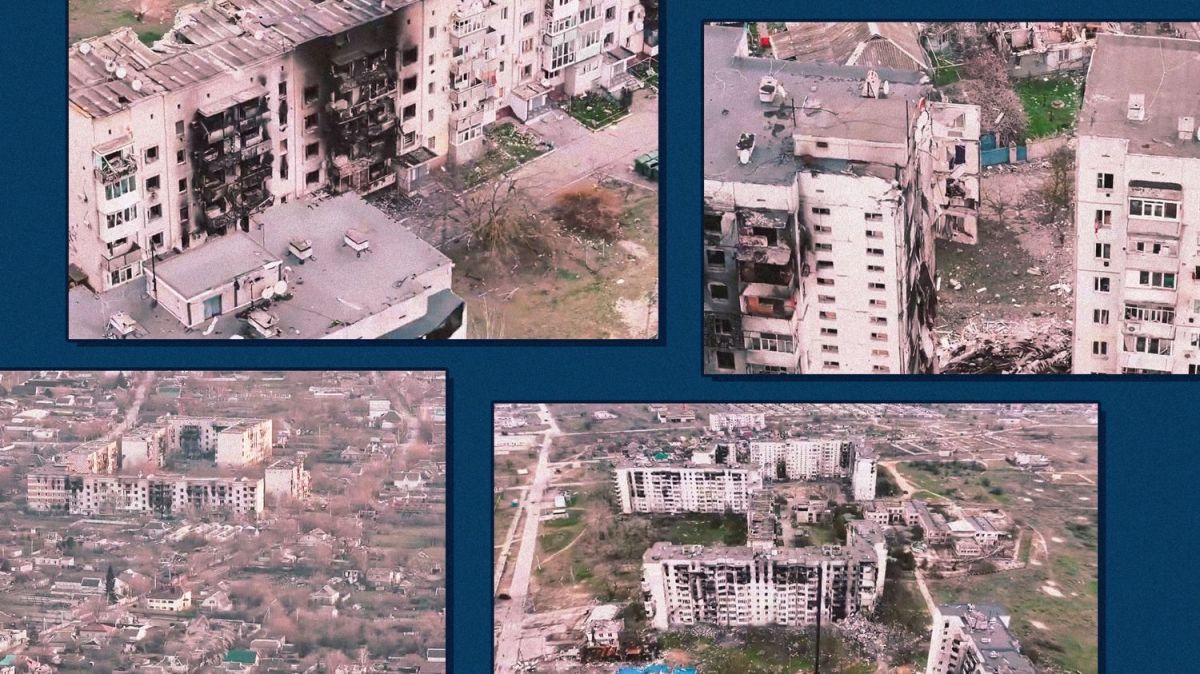
The city of Oleshky, in Ukraine, is on the brink of famine, with 2,000 inhabitants surviving in desperate conditions with little or no food, while conflicts between Russian and Ukrainian forces exacerbate their suffering. #Oleshky #Famine #Ukraine (translated)

www.franceinfo.fr
"Il y a des gens qui meurent tout simplement de faim" : Oleshky, une ville ukrainienne au bord de la famine
1945
Franceinfo 2w

In Olechky, a Ukrainian city occupied by the Russians, the inhabitants are facing a severe famine, having received no food deliveries for months, while Ukrainian forces are trying to rescue them through air drops. #Olechky #Ukraine #Famine (translated)

www.franceinfo.fr
"Il n'y a plus rien" : à Olechky, ville ukrainienne occupée par les Russes, les habitants se retrouvent confrontés à la famine
1948
Bouli ☃️ 3w

@01110010i1 Le communisme entraîne systématiquement la famine. Le capitalisme produit tellement de nourriture qu'il a inventé l'Ozempic. #communisme #capitalisme #famine

13436
RMadrid actu 🇫🇷 3w

🚨 Yan Diomande a reçu de GROSSES INSULTES des fans d'Elche : "Tu viens du Mali fils de p*te. T'es pire que la famine." 🤯 Yan a répondu en embrassant l'écusson du Real Madrid. ✅🤍 https://t.co/4FO2nHSITH #Football #Elche #RealMadrid

12181
Tuomas Malinen 4w

Yes. Famine for the poorer countries is coming, caused by @POTUS @vonderleyen @EmmanuelMacron et al. The rest of us will just get (much) poorer. @VP #Famine #Poverty #GlobalPolitics #US #FR

116
G-William Goldnadel Sep 4

Le monde découvre peut être la vérité, mais pas Le Monde : Rien sur l’Unicef et la famine . Rien sur Libération qui reconnaît que nombre de « journalistes » étaient des terroristes. Rien sur le Sec Gen de l’ONU qui découvre que ses Rapporteurs étaient « hors de contrôle » . Le #Vérité #UNICEF #Libération #FR #UN

1519
G-William Goldnadel Aug 31

Mon article du lundi : Ce mois d’août aurait dû être exceptionnel pour détruire le Grand Mensonge sur Gaza : 1 . L’Unicef a déposé un rapport qui invalide la légende antisémite d’une famine organisée. 2 Libération reconnaît enfin que nombre de faux journalistes gazaouis étaient #Gaza #Antisémitisme #Libération #IL #PS #PS #GA

1171
S
Sandfeen Aug 28

The Deadly Seduction of Democratic Socialism Young people are being urged to support “democratic” socialism—ideas blamed for tens of millions of deaths in the last century—promising that consent will make it work this time. But consent cannot make an economic system wise. A ballot cannot set the right prices for wages, goods, or services, nor prevent shortages, repression, or famine. This isn’t fringe. New York elected Zohran Mamdani, who says there should be no billionaires and backs rent freezes, state-run grocery stores, free CUNY, and higher taxes. Polling shows strong support for socialism and communism among Americans under 30. The core error is believing resources can be taken from creators and transferred without losing the knowledge that made them productive. Mao’s China illustrates the outcome: land reform dispossessed and killed landowners, production collapsed as local expertise was treated as an enemy, and grain seizures during the Great Leap Forward worsened a catastrophic famine. The lesson: destroying incentives, property rights, and local knowledge destroys production itself. Envy is often disguised as justice. Communist regimes cultivated resentment and turned grievance into political energy, making societies less focused on creating wealth and more focused on making others lose it. Even when central planners tried to subordinate families to the state, people preserved knowledge through markets, private plots, and community practice. Civilization isn’t a machine bureaucrats can redesign. Take away property and you don’t automatically transfer knowledge—abundance can vanish with it. Redistribution may promise equality, but if it destroys the people, incentives, and knowledge that produce abundance, the result is a hungry one.

820
S
Sandfeen Aug 28

What Chairman Mao and Dolores Umbridge Have in Common In Harry Potter, Dolores Umbridge is a more realistic villain than Voldemort: she gains power through titles, loyalty, conformity, and paperwork, not competence. She weakens Defense Against the Dark Arts by replacing practical preparation with Ministry-approved theory—her real talent is playing the institutional game. This echoes Hannah Arendt’s “banality of evil,” where ordinary people advance by obeying and enforcing a system. When loyalty matters more than ability, institutions start selecting for mediocrity. The parallel with Maoist China is stark. During the Cultural Revolution, Zhang Tiesheng was celebrated for submitting a blank exam and attacking “bookworms.” Despite poor results, political loyalty earned him a seat in the National People’s Congress. Mao’s promotion rule was effectively “red and expert”: political reliability outweighed competence. The consequences were catastrophic. Honest reporting was punished, so officials produced what Mao wanted to hear. False harvest data drove unrealistic targets and helped fuel the Great Leap Forward famine, which killed tens of millions. Education was politicized too: the Gaokao was abolished in 1966, and when admissions resumed, scores were replaced by class background, manual labor experience, and Party recommendations; the national exam returned only in 1977. Totalitarian systems don’t just remove capable people—they select for those politically reliable and morally compliant. Mediocrity shields leaders from rivals; reduced conscience makes coercion easier. Psychologist Andrew Lobaczewski called this pathocracy: rule by the pathological disordered, where normal institutions lose their ability to distinguish honest from manipulative. The system keeps its name and stated purpose while serving something else. The lesson: tyranny doesn’t require everyone to become evil. It requires enough people to stop recognizing the pathological. Once that moral filter disappears, institutions become vulnerable to exploitation—how psychopaths take over a society.

1172
S
Sandfeen Aug 28

Who Gets Promoted in a Broken Society? In Harry Potter, J.K. Rowling created a villain: Dolores Umbridge. She gains power not through competence, but conformity, loyalty, and bureaucracy. Evil rarely looks like Voldemort. Umbridge resembles Hannah Arendt’s “banality of evil”: ordinary people pursuing advancement by playing the institutional game. She enforces ideology through bureaucracy. Loyalists replace competent people, dissenters are labelled extremists, and punishment becomes a tool of conformity. The goal is not truth, but compliance. Political Ponerology Polish psychologist Andrew Lobaczewski studied how institutions can be captured by pathological individuals. He called the resulting system pathocracy, and the transformation of normal institutions into ones serving pathological interests ponerization. The danger begins when institutions lose the ability to distinguish competence from manipulation. Those willing to conform can rise precisely because others will not. Ideologues create doctrines, propagandists spread them, and ruthless operators capture institutions. The lesson: totalitarianism does not require one tyrant. It emerges when institutions lose the ability to distinguish the pathological from the honest. The Case of Mao Mao’s China offers a striking example. During the Cultural Revolution, Zhang Tiesheng became famous for submitting a blank exam paper while denouncing intellectuals. Political loyalty mattered more than academic ability. Mao elevated being politically “red” over being technically “expert.” Specialists were displaced by ideologically reliable outsiders. Officials who honestly reported collapsing harvests were purged, while those telling Mao what he wanted to hear advanced. False information helped sustain the Great Leap Forward, whose famine killed tens of millions. China abolished university entrance exams in 1966; they were not restored until 1977. A system that selects against competence eventually loses the ability to see reality. Mediocrity protects power; moral compromise enforces it. Capture education, and you shape a generation unable to challenge the system.

820
Impact Aug 25

🇸🇪🇮🇱❌ FLASH DEUX EURODÉPUTÉS SUÉDOIS ONT ÉTÉ EMPÊCHÉS PAR ISRAËL D’ENTRER EN PALESTINE POUR AVOIR DÉNONCÉ LE GÉNOCIDE À GAZA ! Les eurodéputés de gauche Jonas Sjöstedt et Hanna Gedin devaient se rendre en Cisjordanie occupée et à Jérusalem-Est afin de rencontrer des ONG, visiter des camps de réfugiés et échanger avec des organisations israéliennes et palestiniennes de défense des droits humains. Israël justifie cette décision par leurs "positions hostiles", leur reprochant notamment d’avoir accusé le pays de génocide à Gaza, de recours délibéré à la famine et de ciblage intentionnel d’enfants et de membres du personnel médical. 👉 Pour rappel : toutes les accusations évoquées ici sont 100 % vraies et documentées. (Anadolu / WAFA / Israel National News) #Palestine #Gaza #DroitsHumains

13730
Alex Hoffmann Aug 18

‼️APRÈS NUREMBERG, LE MONDE N'A TOUJOURS PAS APPRIS‼️ En 1945, après les horreurs de la Seconde Guerre mondiale, l'humanité avait juré : « Plus jamais ça. » Nuremberg, le tribunal de guerre international, devait consacrer un principe simple et immense : un État ne peut pas tout justifier au nom de la guerre, et un dirigeant ne peut pas se réfugier derrière son pouvoir lorsque des crimes sont commis. Quatre-vingts ans plus tard, cette promesse est piétinée chaque jour. Trois hommes incarnent, chacun à leur manière, les contradictions d'un ordre international qui prétend défendre cette promesse sans jamais oser l'appliquer à ceux qui détiennent le pouvoir : Vladimir Poutine, Benjamin Netanyahu et Donald Trump. ‼️Trois situations différentes. Un même constat accablant : le droit international recule dès qu'il touche aux puissants. 👉POUTINE : LA GUERRE COMME INSTRUMENT DE PUISSANCE Vladimir Poutine est visé par un mandat d'arrêt de la Cour pénale internationale pour la déportation et le transfert illégal d'enfants ukrainiens. La CPI enquête plus largement sur les crimes commis dans le cadre de la guerre en Ukraine. L'image est glaçante : un chef d'État décide de la guerre, des civils paient le prix de ses décisions — et des enfants sont arrachés à leur pays. Combien de vies faudra-t-il sacrifier avant que le droit atteigne enfin ceux qui déclenchent les guerres ? 👉NETANYAHU : QUAND LA SÉCURITÉ NATIONALE NE PEUT PLUS TOUT JUSTIFIER En novembre 2024, la CPI a délivré un mandat d'arrêt contre Benjamin Netanyahu pour crimes de guerre et crimes contre l'humanité allégués dans le cadre de la guerre à Gaza. La Chambre a retenu des « motifs raisonnables » concernant la famine utilisée comme méthode de guerre, le meurtre, la persécution et d'autres actes inhumains. Ce n'est pas une condamnation définitive. Mais c'est une accusation que plus personne ne peut ignorer. Jusqu'où un État peut-il aller au nom de sa défense avant que celle-ci cesse d'être une justification et devienne elle-même un crime international ? La souffrance d'un enfant palestinien ne vaut pas moins que celle d'un enfant israélien. La vie d'un civil ukrainien ne vaut pas moins que celle d'un civil russe. Le droit international ne devrait connaître ni nationalité, ni religion, ni camp — et pourtant, dans les faits, il en connaît. 👉TRUMP : LE POUVOIR QUI REFUSE LE TRIBUNAL Donald Trump n'est pas sous mandat d'arrêt de la CPI. Il serait malhonnête de le prétendre. Mais son administration mène une guerre ouverte contre la Cour pénale internationale, imposant des sanctions contre ses responsables. Trump a lui-même reconnu, en juillet 2026, que cette offensive visait notamment à protéger Netanyahu et ses alliés. Le symbole est brutal : le même tribunal qui peut poursuivre les ennemis de Washington se voit interdire d'examiner Washington ou ses alliés. Ce n'est plus de la justice internationale — c'est un tribunal à sens unique. 🔺️LE VÉRITABLE SCANDALE Le problème n'est pas de savoir quel homme nous préférons. Poutine n'est pas Netanyahu. Netanyahu n'est pas Trump. Trump n'est pas Poutine. Le vrai scandale, c'est que la puissance politique continue de dicter les limites de la justice. Nuremberg avait tenté de briser cette logique. Quatre-vingts ans après, elle est de retour, intacte. Un crime devient-il moins grave lorsqu'il est commis par le dirigeant d'une grande puissance ? Si la réponse est oui, Nuremberg n'aura été qu'une parenthèse dans l'histoire. Si la réponse est non, le même principe doit s'appliquer à Moscou, à Jérusalem, à Washington — et partout ailleurs. ‼️Pas de justice sélective. Pas d'impunité pour les puissants. UNE JUSTICE INTERNATIONALE QUI NE PEUT PAS ATTEINDRE LES PUISSANTS N'EST PAS UNE JUSTICE UNIVERSELLE : C'EST UNE JUSTICE À GÉOMÉTRIE VARIABLE. Et les victimes, elles, n'ont pas de géopolitique. Elles ont simplement un nom. Un visage. Une famille. Et parfois, une tombe. #JusticeInternationale #Nuremberg #CPI #DroitsHumains #Impunité #Poutine #Netanyahu #Trump #Ukraine #Gaza

353
Brivael Le Pogam Aug 18

La plupart des jeunes qui défendent encore le socialisme ou le communisme tombent dans le même piège de débutant. Ils pointent la Chine et disent : « Vous voyez, ça marche. » C’est exactement l’erreur. La Chine d’aujourd’hui n’a plus rien de communiste ni de socialiste. Elle a commencé à sortir de la misère le jour où elle a arrêté d’en faire. Sous Mao, le « Grand Bond en avant » (1958-1962) a produit la plus grande famine volontaire de l’histoire humaine. Entre 30 et 45 millions de morts de faim. Pas à cause d’une sécheresse. À cause d’une idéologie qui a forcé la collectivisation, inventé des chiffres de production, puni ceux qui disaient la vérité et confisqué le grain jusqu’à ce que les paysans meurent. Mao savait. Il a même déclaré qu’il valait mieux que la moitié meure pour que l’autre moitié mange à sa faim. C’est le socialisme réel. Pas le rêve de collège. Le système où l’État décide de tout, où la vérité devient un crime, et où les corps s’empilent pendant que les dirigeants mangent. Après Mao, Deng Xiaoping a ouvert la porte au marché, à la propriété privée, aux prix, aux entrepreneurs. La Chine a explosé. Pas parce qu’elle a « perfectionné le socialisme ». Parce qu’elle l’a contourné. Le socialisme, dans sa version pure, n’est pas une théorie économique élégante. C’est un mécanisme très simple : On prend l’argent par la force (impôts, confiscations, inflation). On le confie à des politiques et à des bureaucrates. On leur dit de « redistribuer » et de « planifier ». Le problème n’est pas que ces gens soient tous méchants. Le problème, c’est qu’ils n’ont aucune peau dans le jeu. Ils ne risquent pas leur propre argent. Ils ne subissent pas le feedback immédiat du marché. Ils peuvent mentir, gaspiller, protéger leurs amis, et continuer. Regardez autour de vous. France Télévisions : plus de 2,5 milliards d’euros d’argent public par an, déficits chroniques, salaires de cadres à plus de 200 000 €, millions en taxis et réceptions, résidences de comités d’entreprise. Pendant que le service public s’enfonce, l’argent continue de couler. Ce n’est pas une exception. C’est le pattern. Quand tu enlèves la responsabilité personnelle et le prix de l’erreur, tu obtiens exactement ça : corruption douce, gaspillages, mensonges institutionnalisés, et une classe qui se protège elle-même. Les jeunes qui croient encore au socialisme pensent qu’il s’agit de justice. En réalité, c’est un système qui transforme la compassion en machine à produire de la misère et de l’hypocrisie. La Chine l’a appris dans le sang. L’URSS l’a appris dans le sang. Le Cambodge l’a appris dans le sang. On n’a plus besoin de recommencer l’expérience pour un ado de 2026. Le socialisme n’est pas une idée mal comprise. C’est une arnaque structurelle qui a toujours produit les mêmes résultats : pauvreté, mensonge, et une élite qui prétend sauver le peuple pendant qu’elle vit autrement. Nommer. Refuser de jouer. Et construire ce que ce système est incapable de créer. #Socialisme #Économie #Histoire

12938