The author asked how soon refugee flows might head west to Hungary, Poland and beyond, warning that they would arrive as Europe faced what the author described as a major energy crisis. #RefugeeCrisis #Europe #EnergyCrisis #HU #PL
The author asked how soon refugee flows might head west to Hungary, Poland and beyond, warning that they would arrive as Europe faced what the author described as a major energy crisis. #RefugeeCrisis #Europe #EnergyCrisis #HU #PL
Max Verstappen has achieved his first victory in Singapore and finishes the season with a positive flow while preparing for the remaining races. #MaxVerstappen #Formule1 #Singapore (translated)

Russia’s war propaganda gets a soundtrack – how AI-generated songs reached global streaming platforms Russian war propaganda is no longer confined to television broadcasts, Telegram channels or political videos. A study by the Ukrainian threat-intelligence organisation Terrecon has identified 981 songs combining signs of AI generation with pro-Russian military narratives, distributed through an ecosystem that reaches YouTube, Spotify, Apple Music, Deezer and SoundCloud. The songs range from sentimental ballads to rock and heavy metal. Their recurring themes are familiar from conventional Russian wartime propaganda: the heroisation of Russian soldiers, romanticisation of the war, mobilisation, the “Russian world”, commemoration of fallen troops and attacks on Ukraine and its armed forces. Some contain derogatory or dehumanising references to Ukrainians. What is new is not necessarily the message, but the production and distribution model: generative AI allows propagandistic music to be produced rapidly, cheaply and in quantities that would previously have required musicians, studios and producers. Nearly 1,000 tracks identified Terrecon examined 3,725 tracks collected from YouTube, YouTube Music, SoundCloud and the AI music platform Suno. After manual review, researchers classified 981 as showing both indications of AI generation and pro-Russian war propaganda. In 681 tracks they identified 728 propaganda-related keywords or phrases. The largest category was the glorification of the Russian military, followed by romanticised treatment of Moscow’s so-called “special military operation”, mobilisation appeals, narratives about the “Russian world”, and the cult of fallen soldiers and the state. The reach was not merely theoretical. Listening or viewing statistics were available for 608 of the identified tracks; together they had accumulated 86.8 million plays and views, according to Terrecon. A smaller group of 13 high-performing songs accounted for more than 53 million YouTube views and more than 67 million when YouTube Music was included. Among the better-known examples is “Power of Artillery”, a Russian-language rock song praising artillery weapons that passed two million views on YouTube. Most of the tracks for which publication dates could be established appeared after 2024, broadly coinciding with the rapid expansion of consumer AI music generators such as Suno and Udio. That correlation does not prove that AI alone caused the increase, but it illustrates how drastically the economics of production have changed. A propaganda song for as little as $11 Terrecon also tested how difficult it would be to commission such material. Researchers approached 25 creators producing AI-assisted militaristic music; 15 agreed to take commissions. Prices ranged from approximately $11 to $330, while delivery times ranged from two hours to three days. According to Terrecon, some were prepared to produce highly aggressive anti-Ukrainian material, including content intended for audiences involving children from occupied Ukrainian territories. Some creators used Russian intermediary services that provided access to Western AI tools such as Suno and Udio despite restrictions. The researchers then tested several AI generators themselves. Across 40 prompts submitted to Suno, Udio, Mureka, Google Flow Music and ElevenLabs, 25 resulted in successful generations, while safeguards were circumvented in 15 cases. Terrecon reported that four of the five services tested produced Russian-language material containing wartime narratives, although technical problems prevented comparable testing on some systems. In one Udio experiment, the researchers said the model itself introduced more explicit violent language than had appeared in the original promp These tests do not demonstrate that the commercial platforms knowingly support Russian propaganda. They show something narrower: existing safeguards can be inconsistent when political messaging is packaged as music. From generation to Spotify The distribution experiment may be the most revealing part of Terrecon’s research. The team deliberately uploaded test tracks containing explicit hostile language to YouTube, SoundCloud, Spotify and Deezer. Terrecon says none was blocked during the experiment. On SoundCloud, researchers used an account identifying its location as Moscow, disclosed the use of AI and added markers including references to the Russian military and the war. The platform accepted the upload and subsequently offered paid promotional and distribution tools. This does not prove that streaming recommendation systems systematically promote pro-war music. There is currently insufficient public evidence to make that claim. It does demonstrate that material can enter the same commercial distribution infrastructure as ordinary music and, once there, potentially benefit from playlists, searches, sharing and recommendation mechanisms available to other releases. That distinction is important. Propaganda no longer has to announce itself as political communication. On a streaming platform it can look like another song. Culture as a delivery mechanism Music has always been used in wartime propaganda. What generative AI changes is scale. Instead of investing heavily in a limited number of patriotic performers or officially commissioned productions, creators can generate variations across styles, audiences and emotional registers at very low cost. Terrecon found material ranging from war rock to sentimental songs and content styled for younger audiences. Some creators also experimented with cloned celebrity voices and stylistic imitation of established musicians. The format also offers a different relationship with the audience. A political video asks a viewer to consume an argument. Music can accompany commuting, exercise or entertainment and may be encountered outside explicitly political spaces. This does not automatically make it more persuasive, and Terrecon’s research does not establish measurable effects on political attitudes. It does, however, place wartime narratives inside a cultural environment where users may not initially perceive themselves as consuming political messaging. An ecosystem, not a proven Kremlin command structure The strongest evidence supports describing this as a growing AI-assisted pro-Russian propaganda-music ecosystem, not a single operation controlled from Moscow. Terrecon did not establish that the Russian government created, financed or coordinated all 981 tracks. Reporting on the study likewise notes that the extent of direct state involvement remains unclear. There is broader evidence that the Russian state finances cultural projects and digital content supporting the war, including through state-backed funding bodies. That context matters, but it does not allow individual songs in Terrecon’s dataset to be attributed to the Kremlin without additional evidence. The significance of the case lies elsewhere. AI has reduced the cost of producing ideological content, intermediaries can help creators access generation tools, and global platforms can provide distribution. The result is a pipeline in which wartime propaganda no longer has to resemble propaganda at all. It can simply appear in a playlist. Sources Terrecon / Ukrainska Pravda — Daria Verbytska on the research https://www.pravda.com.ua/columns/2026/10/05/8056229/ Suspilne Culture — detailed breakdown of Terrecon findings https://suspilne.media/culture/1417933-rosijsku-voennu-propagandu-maskuut-pid-anime-karaoke-ta-rok-doslidzenna-si-pisen-vid-terrecon/ The Insider — AI-generated Russian war propaganda music https://theins.ru/news/297839 Institute of Mass Information — summary of New York Times reporting https://imi.org.ua/en/news/doslidzhennya-rf-masovo-stvoryu%D1%94-propagandistski-pisni-za-dopomogoyu-shi The Bridge Media — AI-generated songs and Russian military propaganda https://thebridgemedia.com.ua/en/ai-generated-songs-russian-military-propaganda/ Center for Strategic Communication — cost and production of AI propaganda music https://spravdi.org/propaganda-za-11-yak-rosiya-shtampuye-shi-pisni-z-miljonamy-prosluhovuvan/ Times of India — AI-generated Russian war songs https://timesofindia.indiatimes.com/world/europe/ai-sings-russias-war-story-inside-the-rise-of-generative-songs-about-ukraine-conflict/articleshow/134650594.cms EU Council / EUR-Lex — Presidential Foundation for Cultural Initiatives https://eur-lex.europa.eu/legal-content/EN/TXT/?uri=CELEX:32026D1351 Human Rights Watch — Russian state funding of digital and patriotic content https://www.hrw.org/report/2025/07/30/disrupted-throttled-and-blocked/state-censorship-control-and-increasing-isolation #DISINFORMED #Episode16 #Russia #Ukraine #RussianPropaganda #WarPropaganda #MusicPropaganda #AIMusic #ArtificialIntelligence #AI #GenerativeAI #SyntheticMedia #AIPropaganda #Disinformation #InformationWarfare #InfluenceOperations #CulturalPropaganda #DigitalInfluence #NarrativeManipulation #PropagandaMusic #StreamingPlatforms #Spotify #AppleMusic #YouTube #YouTubeMusic #Deezer #SoundCloud #Suno #Udio #RussianWorld #RusskiyMir #MilitaryPropaganda #WarNarratives #Mobilisation #AlgorithmicDistribution #RecommendationAlgorithms #MusicStreaming #PlatformManipulation #Terrecon #OSINT #MediaManipulation #WRLD


Among the Burning Flowers - The Roots of Chaos #0.2 by Samantha Shannon Rovina Cai (illustrator) With the awakening of fire-breathing wyrms, Among the Burning Flowers sees the first sparks of danger that threaten to consume the world in The Priory of the Orange Tree. Take your first steps into the epic. Yscalin, land of sunshine and lavender, will soon be ablaze. It has been centuries since the Draconic Army took wing, almost extinguishing humankind. Marosa Vetalda is a prisoner in her own home, controlled by her cold father, King Sigoso. Over the mountains, her betrothed, Aubrecht Lievelyn, rules Mentendon in all but name. Together, they intend to usher in a better world. A better world seems impossibly distant to Estina Melaugo, who hunts the Draconic beasts that have slept across the world for centuries. And now the great wyrm Fýredel is stirring, and Yscalin will be the first to fall . . . A story of human resilience in the face of dire circumstances, Among the Burning Flowers leads readers through the gripping and tragic events that pave the way for the opening of the million-copy bestseller The Priory of The Orange Tree.


Rvpfr wrote that the track featuring Ninho and La Rvfleuze reminded him of "Roh Roh." He also noted that La Rvfleuze was using, according to him, a sung flow in the chorus for the first time, and wondered if the title was the first single from a reissue of MILS 4 or announced a new project. https://t.co/V65cJ2QFby #Ninho #RapFrancais #NouvelleMusique (translated)


Each member of the hive has an essential role and works in harmony to keep the system alive and functional. It represents tireless dedication, focus, and the certainty that hard work brings fruits and rewards. 🌻🌼🐝 Payment by bank transfer, shipping to all of Europe. Orders: send a message on WhatsApp @SylviaRoque #macrame #bracelet #handcrafted #flower #bee #spring Quarteira, Algarve, Portugal 🇵🇹 💗 13 🇧🇷 13 ⭐ 13 🇧🇷 13 💗 13 🇧🇷 13 ⭐ 13 🇧🇷 13 (translated)

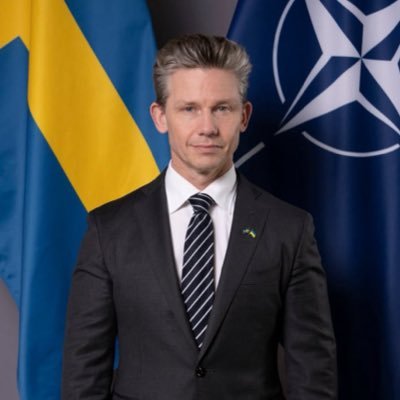
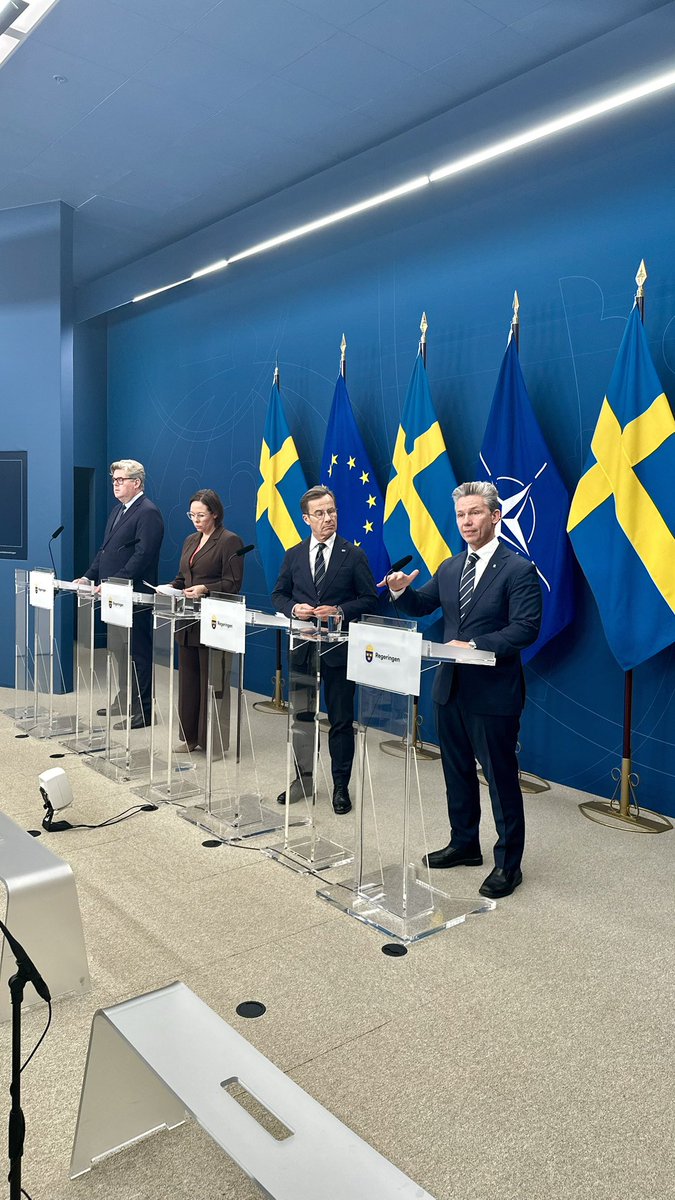
The author described Poland as a close ally of Sweden and said protecting military and civilian support routes to Ukraine was a priority. Sweden intended to deploy a Patriot air defence unit from December to help safeguard NATO’s logistics hub in Poland and keep that support moving, the author wrote. https://t.co/iazUp8X8bP #Polska #Szwecja #Ukraina #PL #SE #UA #NATO

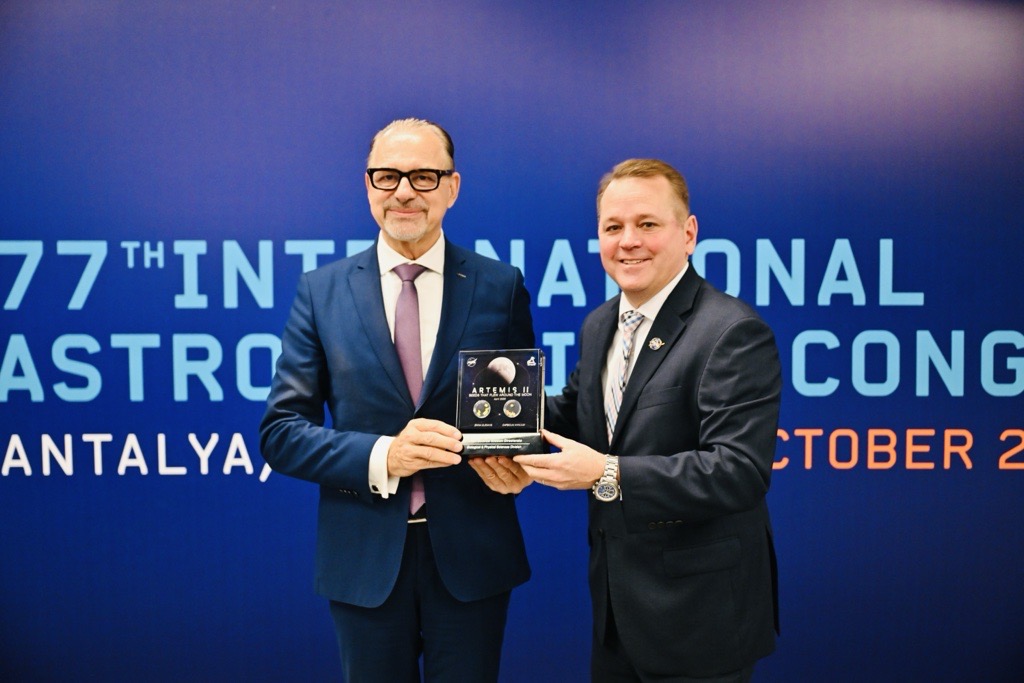
The author thanked NASA for an Artemis II keepsake containing Zinnia elegans and Capsicum annuum seeds, which they said had flown around the Moon. They wrote that zinnias had helped scientists study flowering in microgravity and that peppers were being explored as a future space crop.
The author claimed that oil was flowing into the sea, not smoke, and said this would significantly increase the global oil glut. They added that TankerTrackers had confirmed it as a major development in what they called the ongoing “englutification” of world oil markets.

Czar Samuel’s bones are flown back to Sofia after 60 years in Greece, as both countries seal a deal to exchange historic religious relics. #CzarSamuel #BulgarianHistory #CulturalHeritage


An energy expert from Argus Media said in a CNBC interview that morning that estimates of oil flows from the Middle East differed by millions of barrels depending on the source. He also began to discuss what crude prices should be based on the highest reported flows, but did not complete the point. #Energie #Rohöl #Marktanalysen #MT #US

Mordecai published a link to Kārļa Padegsa's 1933 work "Madonna with a White Flower." https://t.co/gqKtphjyMo #KārlisPadegs #māksla #glezna (translated)


Lucia described the typical reader of Helsingin Sanomat as a 25–40-year-old, highly educated urban woman who lived in neighborhoods like Kallio, Käpylä, Kumpula, Pakila, Kalasatama, Töölö, or Lauttasaari. She noted that this woman would usually vote for the Greens, the Left Alliance, or the SDP and would frequent brunches, bars, and the Flow festival. According to Lucia, the woman she described might be in a relationship, live in a community garden cabin, and be the mother of one or two children. She listed names like Alvar, Oliver, Ariel, Kuura, and Kaura for the children. Lucia mentioned that the woman preferred public transportation but accepted her partner's expensive car, even if she suffered from climate anxiety and flying shame. The woman might also have a small dog. The author claimed that such a reader did not know any voters of the Finns Party and might consider her rural uncle, who had voted for the party at times, to be peculiar. She speculated that the woman worked in a field where she could aim to make the world a better place. Lucia called this a reader profile and target group for Helsingin Sanomat, whose interests and views, according to her, the paper's journalists anticipated. She wrote that HS did not aim for objective or neutral reporting, nor was it an agenda-driven media outlet. According to her, the paper's target group did not encompass all people regardless of their background, lifestyle, or viewpoints. She compared HS to a mirror held up by journalists so that the reader could be satisfied with what they saw, and concluded that the reader of the described profile was not the same as the writer of the piece. #Helsinki #ilmastoahdistus #lukijaprofiili (translated)

Folha de S.Paulo reported that a survey indicated Lula as the leader in searches and mentions on social media after he exchanged the Globo debate for a participation in Flow. https://t.co/kehGWTJTIY #Lula #RedesSociais #Debate (translated)


Sucumba Games wrote that Davy Jones, during the Flow Games, criticized those who considered Jason from GTA 6 too serious and lacking personality, saying that these people should reflect on themselves. Jones also asked, according to the report, what they expected from someone who was a former soldier and drug dealer. https://t.co/Vqrk7Yuq2P #GTA6 #DavyJones #FlowGames (translated)


The account Pesquisas e Análises Eleições stated that President Lula's (PT-SP) interview on Flow Podcast reached 11 million views in 15 hours, becoming, according to the publication, the most viewed and most liked video in the history of the channel on YouTube. The account also said that Lula thanked the supporters who accompanied him and asked them to follow Lula's Research and Election Research. The author declared that he would continue to give unrestricted support to the president. #Lula #FlowPodcast #Brasil (translated)


The Meio Independente stated that Lula's live broadcast on Flow raised suspicions after, according to the outlet, several bots from other countries were registered among the viewers. https://t.co/7Rsd2sMSof #Lula #Flow #Robôs (translated)


SB stated that President Lula's interview on Flow exceeded 11 million views in less than 17 hours. For comparison, he said that Lula's interview on a podcast in 2022 had reached 10 million views. https://t.co/iuJh55PxoP #Lula #FlowPodcast #Entrevista (translated)