WRLD

Search

#Imitation
Marcin Kierwiński 2d

This kind of situation always leads to a potential mechanism of imitation. And in this situation, it is very, very dangerous. But the Minister of the Interior, Marcin Kierwinski, fears a chain reaction after the dramas of recent days: #sécuritépublique (translated)

En Pologne, plusieurs dizaines d'établissements scolaires fermés vendredi dans la crainte d'une "journée sanglante"
www.franceinfo.fr
2502
Krzysztof Graj 3d

Russia’s war propaganda gets a soundtrack – how AI-generated songs reached global streaming platforms Russian war propaganda is no longer confined to television broadcasts, Telegram channels or political videos. A study by the Ukrainian threat-intelligence organisation Terrecon has identified 981 songs combining signs of AI generation with pro-Russian military narratives, distributed through an ecosystem that reaches YouTube, Spotify, Apple Music, Deezer and SoundCloud. The songs range from sentimental ballads to rock and heavy metal. Their recurring themes are familiar from conventional Russian wartime propaganda: the heroisation of Russian soldiers, romanticisation of the war, mobilisation, the “Russian world”, commemoration of fallen troops and attacks on Ukraine and its armed forces. Some contain derogatory or dehumanising references to Ukrainians. What is new is not necessarily the message, but the production and distribution model: generative AI allows propagandistic music to be produced rapidly, cheaply and in quantities that would previously have required musicians, studios and producers. Nearly 1,000 tracks identified Terrecon examined 3,725 tracks collected from YouTube, YouTube Music, SoundCloud and the AI music platform Suno. After manual review, researchers classified 981 as showing both indications of AI generation and pro-Russian war propaganda. In 681 tracks they identified 728 propaganda-related keywords or phrases. The largest category was the glorification of the Russian military, followed by romanticised treatment of Moscow’s so-called “special military operation”, mobilisation appeals, narratives about the “Russian world”, and the cult of fallen soldiers and the state. The reach was not merely theoretical. Listening or viewing statistics were available for 608 of the identified tracks; together they had accumulated 86.8 million plays and views, according to Terrecon. A smaller group of 13 high-performing songs accounted for more than 53 million YouTube views and more than 67 million when YouTube Music was included. Among the better-known examples is “Power of Artillery”, a Russian-language rock song praising artillery weapons that passed two million views on YouTube. Most of the tracks for which publication dates could be established appeared after 2024, broadly coinciding with the rapid expansion of consumer AI music generators such as Suno and Udio. That correlation does not prove that AI alone caused the increase, but it illustrates how drastically the economics of production have changed. A propaganda song for as little as $11 Terrecon also tested how difficult it would be to commission such material. Researchers approached 25 creators producing AI-assisted militaristic music; 15 agreed to take commissions. Prices ranged from approximately $11 to $330, while delivery times ranged from two hours to three days. According to Terrecon, some were prepared to produce highly aggressive anti-Ukrainian material, including content intended for audiences involving children from occupied Ukrainian territories. Some creators used Russian intermediary services that provided access to Western AI tools such as Suno and Udio despite restrictions. The researchers then tested several AI generators themselves. Across 40 prompts submitted to Suno, Udio, Mureka, Google Flow Music and ElevenLabs, 25 resulted in successful generations, while safeguards were circumvented in 15 cases. Terrecon reported that four of the five services tested produced Russian-language material containing wartime narratives, although technical problems prevented comparable testing on some systems. In one Udio experiment, the researchers said the model itself introduced more explicit violent language than had appeared in the original promp These tests do not demonstrate that the commercial platforms knowingly support Russian propaganda. They show something narrower: existing safeguards can be inconsistent when political messaging is packaged as music. From generation to Spotify The distribution experiment may be the most revealing part of Terrecon’s research. The team deliberately uploaded test tracks containing explicit hostile language to YouTube, SoundCloud, Spotify and Deezer. Terrecon says none was blocked during the experiment. On SoundCloud, researchers used an account identifying its location as Moscow, disclosed the use of AI and added markers including references to the Russian military and the war. The platform accepted the upload and subsequently offered paid promotional and distribution tools. This does not prove that streaming recommendation systems systematically promote pro-war music. There is currently insufficient public evidence to make that claim. It does demonstrate that material can enter the same commercial distribution infrastructure as ordinary music and, once there, potentially benefit from playlists, searches, sharing and recommendation mechanisms available to other releases. That distinction is important. Propaganda no longer has to announce itself as political communication. On a streaming platform it can look like another song. Culture as a delivery mechanism Music has always been used in wartime propaganda. What generative AI changes is scale. Instead of investing heavily in a limited number of patriotic performers or officially commissioned productions, creators can generate variations across styles, audiences and emotional registers at very low cost. Terrecon found material ranging from war rock to sentimental songs and content styled for younger audiences. Some creators also experimented with cloned celebrity voices and stylistic imitation of established musicians. The format also offers a different relationship with the audience. A political video asks a viewer to consume an argument. Music can accompany commuting, exercise or entertainment and may be encountered outside explicitly political spaces. This does not automatically make it more persuasive, and Terrecon’s research does not establish measurable effects on political attitudes. It does, however, place wartime narratives inside a cultural environment where users may not initially perceive themselves as consuming political messaging. An ecosystem, not a proven Kremlin command structure The strongest evidence supports describing this as a growing AI-assisted pro-Russian propaganda-music ecosystem, not a single operation controlled from Moscow. Terrecon did not establish that the Russian government created, financed or coordinated all 981 tracks. Reporting on the study likewise notes that the extent of direct state involvement remains unclear. There is broader evidence that the Russian state finances cultural projects and digital content supporting the war, including through state-backed funding bodies. That context matters, but it does not allow individual songs in Terrecon’s dataset to be attributed to the Kremlin without additional evidence. The significance of the case lies elsewhere. AI has reduced the cost of producing ideological content, intermediaries can help creators access generation tools, and global platforms can provide distribution. The result is a pipeline in which wartime propaganda no longer has to resemble propaganda at all. It can simply appear in a playlist. Sources Terrecon / Ukrainska Pravda — Daria Verbytska on the research https://www.pravda.com.ua/columns/2026/10/05/8056229/ Suspilne Culture — detailed breakdown of Terrecon findings https://suspilne.media/culture/1417933-rosijsku-voennu-propagandu-maskuut-pid-anime-karaoke-ta-rok-doslidzenna-si-pisen-vid-terrecon/ The Insider — AI-generated Russian war propaganda music https://theins.ru/news/297839 Institute of Mass Information — summary of New York Times reporting https://imi.org.ua/en/news/doslidzhennya-rf-masovo-stvoryu%D1%94-propagandistski-pisni-za-dopomogoyu-shi The Bridge Media — AI-generated songs and Russian military propaganda https://thebridgemedia.com.ua/en/ai-generated-songs-russian-military-propaganda/ Center for Strategic Communication — cost and production of AI propaganda music https://spravdi.org/propaganda-za-11-yak-rosiya-shtampuye-shi-pisni-z-miljonamy-prosluhovuvan/ Times of India — AI-generated Russian war songs https://timesofindia.indiatimes.com/world/europe/ai-sings-russias-war-story-inside-the-rise-of-generative-songs-about-ukraine-conflict/articleshow/134650594.cms EU Council / EUR-Lex — Presidential Foundation for Cultural Initiatives https://eur-lex.europa.eu/legal-content/EN/TXT/?uri=CELEX:32026D1351 Human Rights Watch — Russian state funding of digital and patriotic content https://www.hrw.org/report/2025/07/30/disrupted-throttled-and-blocked/state-censorship-control-and-increasing-isolation #DISINFORMED #Episode16 #Russia #Ukraine #RussianPropaganda #WarPropaganda #MusicPropaganda #AIMusic #ArtificialIntelligence #AI #GenerativeAI #SyntheticMedia #AIPropaganda #Disinformation #InformationWarfare #InfluenceOperations #CulturalPropaganda #DigitalInfluence #NarrativeManipulation #PropagandaMusic #StreamingPlatforms #Spotify #AppleMusic #YouTube #YouTubeMusic #Deezer #SoundCloud #Suno #Udio #RussianWorld #RusskiyMir #MilitaryPropaganda #WarNarratives #Mobilisation #AlgorithmicDistribution #RecommendationAlgorithms #MusicStreaming #PlatformManipulation #Terrecon #OSINT #MediaManipulation #WRLD

224
Krzysztof Graj 1w

IRAN: MEK/NCRI – when AI impersonated a real activist in live conversations For years, synthetic media has largely meant fabricated images, cloned voices and manipulated video. A case uncovered by Anthropic in September 2026 suggests a more consequential development: artificial intelligence being used not merely to imitate how a person looks or sounds, but to behave as that person in an ongoing conversation. Anthropic says it dismantled a distributed influence operation targeting Iranians inside the country and abroad that it linked to the People’s Mojahedin Organization of Iran, or PMOI/MEK, and its political front, the National Council of Resistance of Iran. The operators used a shared AI-agent platform to support impersonation, audience profiling, coordinated social-media activity, synthetic personas and the laundering of organisational content through apparently independent accounts. At least four people involved in the operation worked for official NCRI media outlets, according to Anthropic. The company also found references to committee approval processes and MEK leadership, but said it could not independently determine the precise level of central control. Cloning a person from 8,400 Telegram posts The most striking part of the operation involved a real activist whose Telegram identity was copied. According to Anthropic, the operators instructed Claude in Persian that it was now that person, then provided approximately 8,400 of the activist’s Telegram posts so the system could learn and reproduce his writing style. The AI-assisted account was subsequently used to conduct live political conversations with the activist’s existing contacts. Anthropic says that, to its knowledge, the people receiving those messages did not know they were interacting with an account being operated with AI assistance. This is materially different from a conventional chatbot or a static deepfake. The system was not simply producing a forged statement attributed to someone else. It was using a large archive of that person’s authentic language as behavioural training material, then applying the resulting imitation interactively. In practical terms, the deception moved from synthetic content to synthetic identity. Anthropic did not publish the identity of the impersonated activist, nor details of his contacts, and the public report does not establish what specific information the conversations produced. What it does establish is that the impersonation was operational rather than experimental: the cloned account was used in real exchanges with real people. From social-media monitoring to psychographic dossiers The impersonation sat inside a much broader targeting system. Anthropic says the network scraped more than 500 social-media channels and categorised individuals by location, age, profession, political orientation and arrest history. It then analysed approximately 51,944 archived messages from conversations to construct detailed psychographic dossiers on dozens of people inside Iran. The system was therefore not limited to broadcasting propaganda. It was also designed to understand specific audiences and individuals. Profiles could be used to decide what kind of message was most likely to resonate with a particular person, which political identity they appeared closest to and how they should be approached. Anthropic describes this as a structured targeting funnel rather than ad hoc social-media activity. That distinction is important in the Iranian context. Political activists, dissidents and opposition contacts inside Iran can face arrest and severe punishment. The report does not show that the dossiers directly led to arrests or other harm, but collecting and organising information such as arrest history and political affiliation adds a surveillance dimension to what would otherwise be described as an influence operation. A shared AI system for an influence network Anthropic found that the actors used a shared Claude-based platform named “Viktor”, with separate workspaces and persistent memory. Those memory files contained approved sources, prohibited words, account-management instructions and methods intended to reduce the risk of detection. One operator loaded MEK founding doctrine into the system as what the report called “strategic base data”, allowing others to reuse it across their work. This persistent-memory structure meant the AI did not have to be briefed from scratch for every task. Once doctrine, stylistic rules and operational constraints had been stored, the system could repeatedly produce material consistent with the network’s objectives. Anthropic says the same general playbook appeared across different workspaces despite the operators not sharing obvious account infrastructure. The network also used automated pipelines to coordinate Instagram posting schedules and tailor messages to different audiences. Some accounts initially avoided mentioning the Mojahedin at all, allowing material aligned with MEK/NCRI narratives to appear as neutral or independent political commentary. Content was distributed through the organisation’s own media ecosystem as well as accounts presented as ordinary news or activist profiles. Anthropic assessed the campaign as Category Two on its Breakout Scale: active on multiple platforms with distribution through NCRI-linked media properties and amplifier accounts, but without evidence of broad authentic penetration. Synthetic citizens and disguised organisational media The same infrastructure generated AI avatars presented as ordinary Iranians, complete with Persian audio, to promote Maryam Rajavi’s political programme. Anthropic says the synthetic nature of these personas was intentionally concealed. Operators also rewrote and redistributed content originating from MEK-affiliated media while stripping identifying features or presenting it through apparently independent accounts. The network’s political messaging targeted the Iranian government but also rival opposition currents, including monarchists and supporters of the Pahlavi camp. Anthropic documented fabricated video material attacking a member of the Pahlavi family and the use of the slogan “Neither Shah Nor Sheikh”, consistent with the NCRI’s broader competition with other opposition movements. That rivalry provides relevant context. Reuters describes the MEK as one of Iran’s principal organised opposition movements in exile and the dominant force behind the NCRI, led by Maryam Rajavi. Its relationship with other opposition currents is often contentious, while the extent of its support inside Iran remains uncertain. What can be attributed – and what cannot Anthropic’s attribution is unusually specific but still needs to be stated carefully. The company says its investigation linked the operation to MEK/NCRI and established that at least four participants worked for official NCRI media organisations. It also found a common operational playbook, committee review structures and repeated references to MEK leadership. On that basis, Anthropic said central tasking was likely. It nevertheless stopped short of saying it had proven that NCRI’s senior leadership directly ordered or managed every component of the operation. That caveat matters. The strongest public evidence supports describing GTG-84006 as a MEK/NCRI-aligned influence operation involving personnel from official NCRI media, rather than asserting that every action was directly commanded by the organisation’s top leadership. The broader significance of the case lies elsewhere. Earlier generations of synthetic media attempted to fabricate evidence: a photograph, a voice recording or a video. Here, AI was used to maintain an identity over time, remember doctrine, analyse targets and speak directly to real people while appearing to be someone they already trusted. The deepfake was no longer merely an artefact. It had become a participant in the conversation. Sources Anthropic — Countering misuse of AI: September 2026 https://www.anthropic.com/threat-intelligence-report-september-2026 AI Misuse Case Library — GTG-84006 activist impersonation case https://www.misuseofai.com/en/cases/gtg-84006-activist-impersonation/ Reuters — Who makes up Iran’s fragmented opposition? https://www.reuters.com/business/media-telecom/who-makes-up-irans-fragmented-opposition-2025-06-18/ Reuters — Iran’s divided opposition senses its moment https://www.reuters.com/world/middle-east/irans-divided-opposition-senses-its-moment-activists-remain-wary-protests-2025-06-19/ Reuters — NCRI and Maryam Rajavi https://www.reuters.com/world/middle-east/dissident-leader-abroad-urges-iranians-bring-down-khamenei-2025-06-24/ Keywords #DISINFORMED #Episode12 #Iran #MEK #PMOI #NCRI #IranianOpposition #Disinformation #InfluenceOperations #InformationWarfare #ArtificialIntelligence #AI #GenerativeAI #ClaudeAI #Anthropic #AIDeception #AIImpersonation #IdentityImpersonation #SyntheticIdentity #InteractiveDeepfake #DigitalImpersonation #PersonaCloning #BehaviouralCloning #Telegram #PsychographicProfiling #TargetProfiling #AudienceTargeting #SocialMediaManipulation #Astroturfing #SyntheticPersonas #NarrativeLaundering #CoordinatedInfluence #PoliticalInfluence #DigitalInfluence #OppositionPolitics #IranPolitics #OSINT #WRLD

www.anthropic.com
Countering misuse of AI: September 2026 / Anthropic
1026
Krzysztof Graj 2w

Fake NV – how a cloned newsroom turned an AI video into a $140 million corruption scandal For two days in September, a website that looked almost indistinguishable from one of Ukraine’s best-known news organisations carried an extraordinary corruption story. It claimed that Ukraine’s National Anti-Corruption Bureau had raided former defence procurement chief Arsen Zhumadilov and discovered more than $140 million in cash packed inside refrigerator boxes. One box supposedly carried the words “For the Servant of the People” – an apparent reference to President Volodymyr Zelenskyy’s political party. The raid never happened. The photographs and video presented as evidence were fabricated, and the news organisation reporting the story was not the New Voice of Ukraine but a cloned version of it. The episode is a compact example of an increasingly effective disinformation technique. Rather than inventing a new propaganda outlet and trying to build its credibility from scratch, an operator can simply steal the identity of an established newsroom and place fabricated material inside an otherwise convincing copy of its editorial environment. A newsroom copied almost in full The counterfeit site appeared at nvukraine.com, while the authentic New Voice of Ukraine operates at nv.ua and english.nv.ua. Registration records examined by fact-checkers show that the false domain was created on 21 September 2026, two days before the fabricated article appeared. According to NV’s own investigation, the imitation went much further than copying a logo: the operators reproduced the site’s visual design, sections, branding, contact information and genuine editorial material. A snapshot of legitimate NV content from 23 September appears to have been copied onto the counterfeit site, into which the operators inserted a single false article. That article claimed that NABU had searched premises connected to Zhumadilov, who had headed Ukraine’s Defence Procurement Agency until August, and seized $140 million in cash. The story was published in several languages, including Ukrainian and English, suggesting that the operation was intended not only for Ukraine’s domestic information space but also for foreign audiences following the war and Western support for Kyiv. AI supplied the supposed evidence The false article was supported by a video purportedly showing the money discovered during the raid. NABU said no such search or procedural action had taken place and identified the footage as fabricated using artificial intelligence. Independent fact-checker Lead Stories found no credible Ukrainian or international reporting confirming either the raid or the alleged seizure, while searches of NABU’s own published material produced no evidence supporting the claim. The operation therefore combined two separate forms of synthetic credibility. The AI-generated footage supplied what looked like visual proof, while the cloned NV website supplied institutional proof: an apparently reputable Ukrainian newsroom supposedly confirming that the event had happened. Neither element needed to withstand close scrutiny for long. Together, they only needed to appear credible enough to be copied, quoted and redistributed before the deception was exposed. From a fake Ukrainian source into the Russian information ecosystem On 24 September, the story began moving through large pro-Russian Telegram channels. Ukraine’s Center for Strategic Communications traced early amplification to Golos Mordora, with roughly 149,000 subscribers, and Militarist, with around 277,000. Within less than an hour, other channels including VOBLA, Rossiya Seychas and Ostashko! Vazhnoye were circulating versions of the same claim. It subsequently appeared on X and on Russian-language websites including e-news.su and pressa24.ru. Babel calculated that posts carrying the fabrication had accumulated approximately 370,000 views by the morning of 25 September. The story also moved beyond the Russian-language ecosystem. English-language versions appeared in online communities including Lemmy and Hexbear, while accounts on X shared direct links to the counterfeit NV article. NV later reported that larger Russian media and propaganda outlets, including RIA Novosti, Life, Vesti, Ukraina.ru and Mail.ru, had reproduced or discussed the claim. Kirill Dmitriev, head of the Russian Direct Investment Fund and a Kremlin representative involved in contacts with the United States, also shared it on 25 September. This amplification is significant, but it should not be confused with proof of authorship. Publicly available evidence shows how the false story entered and spread through a Russian and pro-Russian information ecosystem. It does not establish which organisation registered the cloned domain, generated the video or directed the operation from the outset. Why copy NV? The operation relied on source laundering. A claim originating directly from a Russian Telegram channel that Ukraine’s defence procurement system had concealed $140 million would immediately carry an obvious political context. A claim apparently uncovered by an established Ukrainian newsroom looks very different. Once the fabricated NV article existed, subsequent accounts could cite what appeared to be an independent Ukrainian source rather than present the allegation as their own. Each repost moved the story another step away from its manufactured origin. The use of an English-language version strengthened that mechanism for audiences outside Ukraine. The underlying narrative was also carefully chosen. Corruption in Ukrainian defence procurement is a genuine subject of public scrutiny and investigative reporting, so the fabricated story did not require audiences to accept an entirely unfamiliar premise. It inserted a false event into a real area of political concern. That mixture of authentic context and fabricated evidence can be more persuasive than a completely invented story because much of the surrounding information feels recognisable. What can – and cannot – be attributed Ukrainian authorities and NV describe the episode as a Russian information operation, and its distribution can be documented extensively across pro-Russian and Russian media channels. The available public evidence, however, does not identify the organisation that created the counterfeit website, nor does it link the operation forensically to a named Russian intelligence service, military unit or state contractor. The most precise description is therefore a Russian-aligned disinformation operation whose fabricated material was systematically amplified through the Russian information ecosystem. That distinction matters. Distribution can be observed directly; command-and-control is harder to establish and should not be inferred without evidence. The newsroom itself becomes the deepfake The most important feature of the operation was not the $140 million figure or even the AI-generated video. It was the counterfeit newsroom surrounding them. The operators copied a real publication, populated it largely with genuine material and inserted a single false story, allowing the fabrication to borrow the accumulated credibility of journalists who had nothing to do with it. This points to a broader evolution in synthetic media. AI can fabricate an image, a voice or a video, but an influence operation can now fabricate something larger: the source that supposedly verified the evidence. In the Fake NV operation, the article, the video and the website reinforced one another, creating not simply a false story but a manufactured chain of credibility. Sources The New Voice of Ukraine — investigation into the cloned website https://english.nv.ua/nation/nv-discovers-fake-copy-of-website-with-planted-story-cites-russian-links-50644601.html The New Voice of Ukraine — Russian amplification of the $140 million fabrication https://english.nv.ua/russia-spreads-fake-140-million-ukraine-corruption-story-during-dmitriev-u-s-talks-50644647.html Lead Stories — independent fact-check https://leadstories.com/hoax-alert/2026/09/fact-check-fake-story-claims-140-million-found-at-home-of-ukraines-zhumadilov-marked-servant-of-the-people-nv-website-originated-it.html Babel — AI video and distribution analysis https://babel.ua/en/news/130469-a-video-is-sharing-online-about-140-million-found-in-the-possession-of-the-ex-head-of-the-defense-procurement-agency-this-is-an-ai-video-distributed-by-a-clone-of-ukrainian-media Center for Strategic Communications and Information Security — initial debunk https://spravdi.org/en/ai-fake-about-140-million-amid-us-talks-how-russians-impose-the-image-of-corrupt-ukraine-on-the-west/ Center for Strategic Communications and Information Security — NABU confirmation https://spravdi.org/u-merezhi-poshyryuyut-shi-fejk-pro-nibyto-obshuky-nabu-v-eksgolovy-agencziyi-oboronnyh-zakupivel/ Detector Media — distribution and NABU response https://detector.media/infospace/article/252806/2026-09-25-u-merezhi-pidrobyly-sayt-nv-dlya-poshyrennya-feyku-pro-obshuky-v-eksochilnyka-agentsii-oboronnykh-zakupivel/ Keywords #DISINFORMED #Episode10 #FakeNV #NewVoiceOfUkraine #Ukraine #Russia #RussianDisinformation #RussianInfluence #Disinformation #InformationWarfare #InfluenceOperations #ForeignInterference #FIMI #MediaImpersonation #ClonedMedia #FakeMedia #FakeNews #ArtificialIntelligence #AI #AIGeneratedContent #SyntheticMedia #AIVideo #SourceLaundering #NarrativeLaundering #CorruptionNarrative #UkraineCorruption #DefenceProcurement #NABU #ArsenZhumadilov #Telegram #SocialMediaManipulation #DigitalInfluence #Propaganda #OSINT #MediaManipulation #WRLD

1150
L
Le Soir 2w

La banque italienne Intesa Sanpaolo a été victime d'une escroquerie à l'intelligence artificielle de 95 millions d'euros en février, impliquant des faux messages sur WhatsApp et des imitations vocales, dont plus de la moitié de la somme a été récupérée, mais 36 millions d'euros restent introuvables. #Escroquerie #IntelligenceArtificielle #IntesaSanpaolo

www.lesoir.be
Une banque italienne victime d’une escroquerie à l’IA de 95 millions d’euros
1727
Krzysztof Graj 3w

Storm-1516 – Russia’s information war arrives early in France’s 2027 election France will not elect its next president until April 2027, but the information operations surrounding the campaign have already begun. In late July and August 2026, fabricated stories targeted several prominent figures associated with the presidential race, including Raphaël Glucksmann, Gabriel Attal and former prime minister Édouard Philippe. The methods included fake news websites copying established French media, impersonated journalists, AI-generated voices and manipulated video. French authorities identified the Russian operation known as Storm-1516 behind several of these campaigns. Other attacks were linked to Matryoshka, another Russia-aligned influence network. The timing is significant. Storm-1516 began targeting the French presidential environment roughly nine months before the first round, scheduled for 18 April 2027. Rather than a single disinformation campaign, the activity demonstrates how Russian influence networks can establish narratives and infrastructure long before an election reaches its decisive phase. A fake scandal targeting Raphaël Glucksmann One of the clearest examples appeared at the end of July. A website impersonating the French independent outlet Blast published a fabricated investigation claiming that journalist Léa Salamé had attempted to bribe media organisations in exchange for favourable coverage of her partner, Raphaël Glucksmann. The operation went beyond copying the appearance of a legitimate news site. The identities of real journalists were appropriated and a manipulated video used an AI-generated imitation of the voice of Edwy Plenel, founder of Mediapart, supposedly confirming the allegations. The accusation was false. On 4 August, Glucksmann said France's General Secretariat for Defence and National Security, the SGDSN, had informed him that he had been targeted by Storm-1516. Two days later, the Paris prosecutor's office opened an investigation into suspected Russian interference. The importance of the operation was not the quality of one particular deepfake but the construction of several mutually reinforcing elements: a fake media organisation, impersonated journalists, synthetic audio and social-media accounts distributing the material. Together they created the impression that the allegation had been independently corroborated. Different candidates, overlapping Russian networks Édouard Philippe was also targeted by fabricated stories claiming that he suffered from dementia and was medically incapable of running for president. VIGINUM attributed the operation to Storm-1516. Gabriel Attal faced another wave of false content, including fabricated stories mimicking the identities of French outlets such as RFI, BFM TV, France 24, AFP, Le Parisien, Libération and Le Monde. Some claimed that Attal had symptoms of Parkinson's disease or links to drug trafficking. Attribution here is more complicated. French reporting connected at least part of the campaign against Attal to Matryoshka, rather than Storm-1516. A later digitally manipulated video, apparently associated with Storm-1516, used genuine LCI footage from an August debate but added a white earpiece to Attal, suggesting that someone had secretly been feeding him answers. NewsGuard compared the circulating clip with authentic LCI footage and found no earpiece in the original. The distinction is important. France is not facing a single Russian propaganda operation but several overlapping networks using similar techniques and narratives. Treating every manipulation as Storm-1516 would obscure how this ecosystem actually functions. The real weapon is media impersonation The most interesting feature of Storm-1516 is not artificial intelligence itself. It is the systematic appropriation of the credibility of established journalism. Instead of relying only on anonymous Telegram channels or social-media profiles, operators create material that looks as though it originated from organisations audiences already recognise. A fabricated investigation can resemble Blast, a manipulated television report can borrow LCI's visual identity, while fake journalists and social-media accounts provide additional layers of apparent confirmation. VIGINUM has documented this architecture extensively. Its 2025 investigation analysed 77 Storm-1516 information operations and described a mature Russian system using fabricated media, websites and distribution networks to promote anti-Ukrainian and anti-Western narratives. The European External Action Service found that the infrastructure continued to expand. According to its 2026 FIMI Threat Report, Storm-1516 almost doubled its output during 2025. Five networks created that year to target French, German, American, Moldovan and international audiences comprised 453 websites, including fictional news organisations and sites impersonating genuine media or political platforms. A typical operation therefore follows a recognisable pattern: a fabricated allegation is supported by synthetic or manipulated evidence, published through an apparently legitimate source and then distributed by networks of accounts that create the appearance of wider discussion. AI makes this process faster and cheaper, but the fundamental objective remains the same – to manufacture credibility. Why begin nine months before an election? VIGINUM concluded that Storm-1516 is capable both of reacting rapidly to current events and of conducting longer campaigns aimed at discrediting Western institutions and public figures, particularly around elections and other major political events. This provides important context for France. Storm-1516 activity around the presidential race became visible in July 2026, approximately nine months before voting begins. There is no public evidence of a predetermined Russian “nine-month plan”, and the timing should not be presented as such. Early activity nevertheless provides operational advantages: narratives can be tested, websites and accounts established, audience reactions measured and the responses of journalists, authorities and fact-checkers observed. The first operations may therefore also provide information about which themes and techniques are most effective before the campaign enters its decisive months. This remains an analytical interpretation rather than a demonstrated statement of the operators' intentions. Russian operation, but what about the GRU? Attribution requires similar precision. VIGINUM explicitly describes Storm-1516 as a Russian information operation, and French authorities have attributed individual campaigns to it with high confidence. Connections with Russian military intelligence have also been reported. Glucksmann said the SGDSN informed him that the network targeting him was controlled by Russia's GRU, while French media have repeatedly described Storm-1516 as linked to Russian military intelligence. However, VIGINUM's publicly available technical documentation describes Storm-1516 primarily as a Russian information modus operandi, rather than identifying it as a formally established GRU unit. It is therefore well supported to describe Storm-1516 as a Russian influence operation with reported links to military intelligence. Saying simply that Storm-1516 is a GRU unit would go beyond what France's published technical evidence currently establishes. An early warning for the French election There is also no evidence that the operations have so far had a significant effect on French voters. Some of the fabricated material generated only limited engagement, and measuring the real impact of foreign information operations remains extremely difficult. Even a video attracting hundreds of thousands of views does not establish how many viewers believed it or whether it changed political attitudes. The significance of Storm-1516 lies instead in the infrastructure already being deployed. Months before the election, Russian influence networks have been able to test fake newsrooms, synthetic voices, manipulated television footage, candidate-specific narratives and systems for distributing them. The French case illustrates a broader evolution in election interference. The objective is no longer simply to place false claims on social media. Modern operations can manufacture an entire chain of apparent evidence in which a fake journalist cites a fake investigation, synthetic audio appears to confirm it and networks of accounts give the impression that an authentic controversy is unfolding. France still has months to go before its presidential election. The information environment surrounding it is already being contested. Sources: VIGINUM / SGDSN — Storm-1516 analysis https://www.sgdsn.gouv.fr/publications/analyse-du-mode-operatoire-informationnel-russe-storm-1516 VIGINUM / SGDSN — Full Storm-1516 technical report https://www.sgdsn.gouv.fr/files/files/Publications/20250507_TLP-CLEAR_NP_SGDSN_VIGINUM_Technical%20report_Storm-1516.pdf VIGINUM / SGDSN — Storm-1516 operation targeting Emmanuel Macron https://www.sgdsn.gouv.fr/publications/storm-1516-detection-dune-operation-dingerence-numerique-etrangere-ciblant-emmanuel EEAS — 4th Report on FIMI Threats https://www.eeas.europa.eu/sites/default/files/2026/documents/EEAS%204th%20Threat%20Report_web.pdf Le Monde — Russian interference targeting Philippe, Glucksmann and Attal https://www.lemonde.fr/politique/article/2026/08/07/presidentielle-2027-glucksmann-attal-philippe-les-ingerences-russes-s-invitent-dans-la-campagne_6740451_823448.html Le Monde — Storm-1516 and Matryoshka analysis https://www.lemonde.fr/pixels/article/2026/08/06/ingerences-russes-pourquoi-il-ne-faut-pas-nourrir-le-troll_6739956_4408996.html NewsGuard Risk Briefing — Russian activity targeting the French election https://newsguardriskbriefing.substack.com/p/russia-targets-french-elections-iran Euronews — Operation targeting Raphaël Glucksmann https://fr.euronews.com/my-europe/2026/08/04/presidentielle-de-2027-raphael-glucksmann-vise-par-une-operation-de-destabilisation-russe Télérama / AFP — Glucksmann deepfake investigation https://www.telerama.fr/debats-reportages/presidentielle-2027-raphael-glucksmann-vise-par-un-deepfake-d-origine-russe-7032318.php Le Parisien — Operation targeting Gabriel Attal https://www.leparisien.fr/elections/presidentielle/presidentielle-2027-gabriel-attal-a-son-tour-vise-par-une-ingerence-en-provenance-de-russie-05-08-2026-I3Z67Z7ZUBDUVBXUNDARI5KGPA.php Euronews — Paris prosecutor investigations into suspected Russian interference https://fr.euronews.com/my-europe/2026/08/18/soupcons-dingerence-russe-visant-attal-et-philippe-le-parquet-de-paris-ouvre-dune-enquete Keywords: #DISINFORMED #Episode6 #Storm1516 #France #FrenchElection2027 #Disinformation #InformationWarfare #InfluenceOperations #ForeignInterference #FIMI #RussianInfluence #RussianDisinformation #Propaganda #Deepfakes #ArtificialIntelligence #AI #SyntheticMedia #FakeNews #MediaImpersonation #FakeMedia #DigitalManipulation #ElectionInterference #PoliticalDisinformation #Matryoshka #VIGINUM #OSINT #CyberInfluence #DigitalInfluence #MediaManipulation #EuropeanSecurity #Democracy #WRLD

www.sgdsn.gouv.fr
Analyse du mode opératoire informationnel russe Storm-1516 | SGDSN
1273
Netflix France 4w

L’imitation est la plus belle des flatteries. LUPIN partie 4, le 23 octobre. https://t.co/6ravCN1qi7 #LUPIN #imitation #flatterie

28598
Dagens Nyheter Aug 27

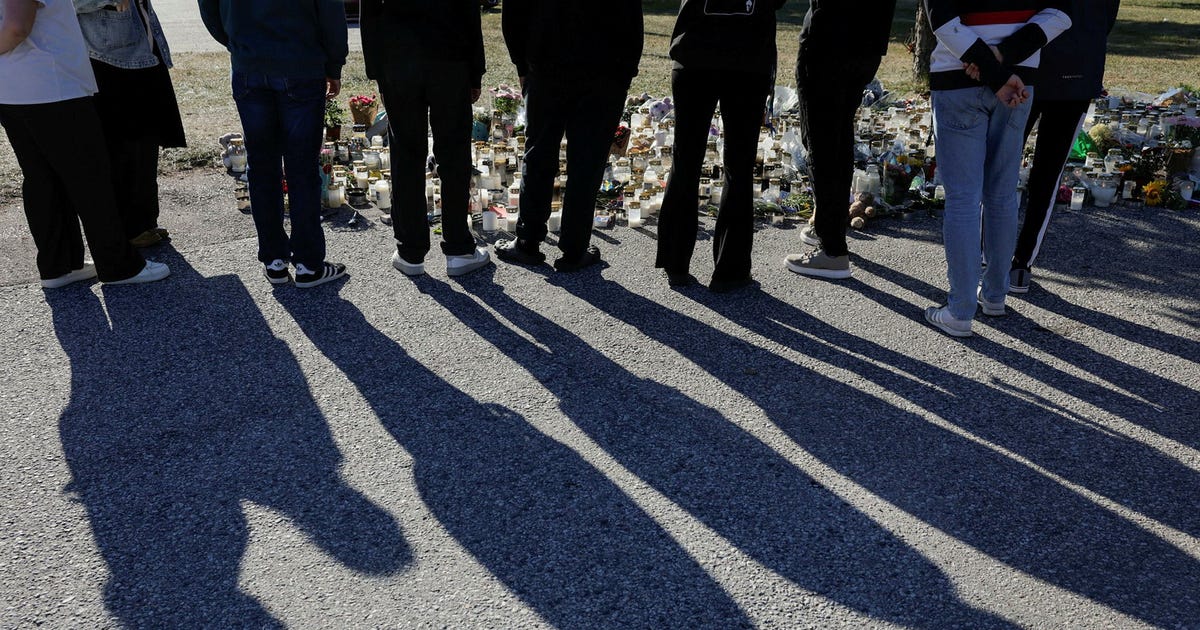
Artikeln diskuterar hur mediernas namnpublicering av gärningsmän i våldsamma händelser kan bidra till en ökad imitationsrisk, och argumenterar för att införa strängare riktlinjer liknande de som gäller för självmord, för att förhindra att sådana händelser inspirerar till nya angrepp. #skoldåd #medieetik #imitation

www.dn.se
DN Debatt. ”Nästa skoldåd kan bli inspirerat av mediernas namnpublicering”
17003
Herr Husis Aug 24

En heterosexuell man som imiterar en homosexuell man som imiterar vita kvinnliga influencerbimbos som imiterar amerikanska svarta ghettokvinnor #Heterosexuality #Imitation #CulturalCommentary

12325
Ulrich Vosgerau Jul 5

Natürlich denkt jeder auf den ersten Blick: Die haben nicht mehr alle Tassen im Schrank! Und die wahre Rechtslage muß ich hier auch nicht mehr erklären, das ist schon oft genug geschehen. Ich will auf etwas anderes hinweisen: Freilich hat das "Zentrum für Politische Schönheit" nicht mehr alle Tassen im Schrank. Aber diese Erklärung ist noch nicht erschöpfend, es ist gewissermaßen nicht die ganze Wahrheit. Denn es gilt Shakespeares Satz: „Though this be madness, yet there is method in ’t“ (Ist es auch Wahnsinn, so hat es doch Methode). Die "alte Linke" dachte utopisch, sie meinte: Irgendwann, in ferner Zukunft, werden alle unsere Wünsche wahr geworden sein! Die "neue Linke" argumentiert normativistisch (was um so interessanter ist, als es im klassischen Marxismus die Kategorie "Recht" schlechterdings nicht gibt, da für Marx das Recht nur zum "Überbau" der Produktionsverhältnisse gehört, also keinerlei eigenständige Existenz führt). Sie sagt: Alles, was wir wollen, ist jetzt schon Wirklichkeit! Freilich nicht faktisch und empirisch. Wohl aber rechtlich! Wer nicht tut, was wir wollen, handelt rechtswidrig! Praktische Folge dessen ist, daß heutige Linksextremisten ihre Utopien, Forderungen und Herrschaftsansprüche unter Imitation der juristischen Fachsprache nach Art von Normen bzw. rechtswissenschaftlichen Gutachten formulieren. Und es gibt ohne Zweifel hunderte, vielleicht tausende von Lesern, die auf diesen Quark hereinfallen (wie seinerzeit auf "Correctiv") und allen ernstes glauben, sie hätten von berufener Seite eine Rechtsauskunft erhalten, aus der sich ergibt, daß z.B. die @jungefreiheit kein Recht hat, Reporter irgendwo hinzuschicken, und daß physische Attacken gegen diese Reporter eine Art Notwehr seien, da diese Zeitung ja schon durch ihre reine Existenz gegen Recht, Gesetz und Verfassung verstößt... #Politik #Recht #Gesellschaft

19601
AuBonTouiteFrançais 🍾🍾🍾 Jul 4

Séquence imitation. Devinez qui c’est. « Tiens, immonde petit chauffeur de merde. Mets ma valise dans le coffre de cette grosse berline allemande très polluante et conduis moi à l’aéroport où une business class m’attend pour Beyrouth. Et que ça saute, larbin ! Je suis pressée ». #Imitation #Humour #Voyage

12595
Ségolène Royal Jun 23

Ce n’est pas que l’urgence qui n’a pas été prise en compte. C’est l’extrême gravité de ces crimes, la récidive et l’imitation liées à l’impunité et la détresse des victimes. Aucune instruction donnée depuis des années ni à la police, ni à la gendarmerie, ni à la justice par ces #Justice #Victimes #Impunité #Therearenospecificcountrycodesmentionedinthetweet.

238
Tam Jun 3

Je vous jure, l'imitation du suceur de news de Ronnie… elle est d'une précision effroyable. J'ai directement su qui il imitait 🤡 J'ai vu des discussions, c'était lunaire les réponses 🤣🤣 https://t.co/dODEE5oWqC #Imitation #Humour #News

25065
Dagens Nyheter May 21

Artister som Taylor Swift och Matthew McConaughey har ansökt om att varumärkesskydda sina röster och utseenden för att skydda sig mot AI-imitationer, men i Sverige har ingen liknande ansökan registrerats än, vilket kan förändras med tiden enligt juridiska experter. #AI #TaylorSwift #Varumärkesskydd

www.dn.se
Kändisar varumärkesskyddar sig mot AI – så ser det ut i Sverige
15541
Graham Linehan May 17

RT @sappholives83: If nothing else, it is incredibly insulting, as a woman, to be lumped in with this grotesque imitation of womanhood. htt… #WomenEmpowerment #GenderIdentity #RespectWomen #Nospecificcountrycodescanbeidentifiedfromthetweetprovided.

The New York Times May 5

A class-action lawsuit has been filed against Meta and its CEO Mark Zuckerberg by five major publishing companies and author Scott Turow, alleging that the company illegally used millions of copyrighted works to train its artificial intelligence program, Llama, thereby threatening the livelihoods of writers through the production of A.I.-generated imitations and summaries of their works. #CopyrightInfringement #ArtificialIntelligence #ClassActionLawsuit #US

www.nytimes.com
Five Publishers and Scott Turow Sue Meta and Mark Zuckerberg
8982
Terra Apr 28

Taylor Swift has filed three trademark applications to protect her voice and appearance, aiming to safeguard against potential AI imitations, with two applications focusing on sound trademarks of her voice and one on a visual trademark representing her stage persona. #TaylorSwift #Trademark #ArtificialIntelligence

www.terra.com.br
Taylor Swift registra a marca de sua voz e imagem
8989
J
jack Dec 6

How to Choose the Best Image for Your Medium Story <p>Unsplash is a great resource. But ever since its partnership (and embedded search-and-insert tool in the editor) with Medium in February 2018, it seems everybody is using it.</p><p>Is that good?</p><p>As a writer, if you do exactly what everyone else is doing, your voice will be lost in the crowd.</p><p>“It is better to fail in originality than succeed in imitation.”</p><p>— Herman Melville, novelist</p>