WRLD

Search

#Inevitable
Luciano Magaldi Sardella (PhD) 2h

LETTERE MERIDIANE — “TEATRO-EDICOLA” OF SAN SEVERO CONQUERS THE WORLD SOURCE: https://www.letteremeridiane.org/2026/10/il-teatro-edicola-di-san-severo-conquista-il-mondo/?fbclid=IwY2xjawU4oqFleHRuA2FlbQIxMQBwZG9mAXNydGMGYXBwX2lkEDIyMjAzOTE3ODgyMDA4OTIAAR5rVEwYs6UUXg7v-P0SyIQ_DRb_F6ZiY58OcseYoV4J7atcTiERnhWaqKM2pw_aem_Njle1jq1XLzHr93KLBUcVA After “Broadway World”, the “Los Angeles Journal”, “The Psychologist (British Psychological Association)” and Hollywood Beat Magazine, its “academic consecration” has now arrived courtesy of Stanford University. As I have already emphasised in my article on the revival of the GIO Festival in Foggia, celebrated by BroadwayWorld for the world stage premiere of the Giordano’s opera Marina (1888), the province of Foggia has long ceased to be peripheral. It happens when it finds an idea that shifts the coordinates: well, in San Severo, 40 kilometres from Foggia, it has happened again. Only this time an orchestra was not needed; six chairs were enough. The celebrated Teatro-Edicola of San Severo artistic director Francesco Gravino of the theatre company Foyer ’97 has been featured in the academic journal “Stanford Social Innovation Review (SSIR)” as an academic case study. The news, relayed on 19 September 2026 by ANSA Nazionale, looked like a misprint. Then it became clear that it was not. SSIR, an award-winning publication covering multisectoral solutions to global problems, included the project in its Dispatches section with the reportage “The Six-Seat Revolution”. It is the inverse trajectory to that of the GIO Festival: not a forgotten opera returning to a grand historic Italian horseshoe theatre, but an entire theatre reborn inside a disused place, forgotten by man. There are moments when past and future intertwine to create something visionary, innovative, artistically “revolutionary”: San Severo experienced one of those moments on the morning of 27 March 2026, during World Theatre Day, when the shutter of a newsstand closed for six years in Via Matteo Tondi was reopened “not to sell newspapers, but to offer stirring stories”, to quote Gravino’s motto. The idea of the visionary Francesco Gravino, artistic director, stage director and actor of the San Severo company Foyer ’97, active for at least 30 years in Capitanata, centred on the kiosk, hexagonal in metal and glass, granted free of charge by its owner Pino Frau, by now an urban relic created by the publishing crisis of the early 2000s: today in Italy active newsstands have fallen from about 35,000 in 2005 to about 20,000 in 2024, a decline of 42.8%. Gravino and eleven other actors restructured it in two weeks of work, without institutional funding, and transformed it into what is now under examination by the London commission of Guinness World Records as the “world’s smallest theatre”. The formula is deliberately austere: six spectators at a time outside, actors inside at less than a metre’s distance, 15-minute performances, continuous rotation from 11:00 to 20:45, texts ranging from Goldoni to Chekhov, from Ibsen to Dacia Maraini. On the door a QR code with an original theatrical warning: “Warning! This QR code transforms passers-by into actors. Scan only if ready.” The numbers immediately showed that it was no boutade: more than 60 people in a single afternoon, three inaugural days that sold out. But above all a positive echo that went beyond the borders of San Severo. “Broadway World” (just as in the previous case of the GIO Festival), the world’s most influential theatre criticism outlet with over 5.5 million monthly views, devoted exclusive coverage to it on 27 April 2026: “An Abandoned Italian Newsstand Just Became the World’s Smallest Theatre”. Not a mere listing, but an analysis: “There is no foyer, there is no balcony, there is no grid. There is barely a wing. What there is is something almost unrecognisable as an evening at the theatre, and for that very reason it is all the more powerful.” “Broadway World” captured Gravino’s manifesto idea: “This is a theatre of proximity. In an era of digital distance, we are putting human contact back at the centre,” framing it as “More than a clever exercise in site-specific theatre. It is a reappropriation.” All of this, in a Mezzogiorno of Italy often narrated only in terms of organised crime and marginalisation. To that seal of approval was added another, even more disorienting for a newsstand in San Severo: the “Los Angeles Journal”, one of the most influential publications on the West Coast for the performing arts. On 12 May 2026, it headlined thus: “San Severo’s Teatro-Edicola as an Innovative Model for Los Angeles Theaters?” opening as follows: “In a city in southern Italy that Hollywood has never heard of, a theatre director has just built the smallest stage in the world: six seats, fifteen minutes, zero distance. Los Angeles should pay attention.” The “Los Angeles Journal” does not indulge in folklore, but places the kiosk in Via Matteo Tondi alongside the prestigious 1,600-seat Ahmanson Theatre in Los Angeles, the Pantages of Broadway in Hollywood, the 99-seat plan of Rogue Machine, the Odyssey, the Victory Theatre and the Hollywood Fringe. It even recalls Ethan Marks’s Electrical Box Theatre, a veritable electrical box lined with red velvet in downtown Los Angeles, to argue that Gravino has taken to the extreme the question Los Angeles has been asking itself for decades: How small can a stage become before it ceases to be a stage? And it recognizes the San Severo urban model: almost zero cost, two weeks of work and six chairs, in return for immediate provincial, regional and national media coverage, recognition by the San Severo’s Municipal Administration, and a format exportable anywhere. Then, the third American piece came from “Hollywood Beat Magazine” on 20 April 2026: Six seats. Fifteen minutes. One actor. No stage. The magazine recounts the kiosk in Via Tondi left disused for almost six years, the contemporary six-seat cultural outpost, placing Francesco Gravino in a distinguished genealogy: Richard Schechner and environmental theatre, Jerzy Grotowski and poor theatre, Nicolas Bourriaud and relational aesthetics. But it closes with pragmatism: it is not a thesis, it is fixing a street corner, that is, repairing an urban street corner by asking not how large a theatre can become, but how small it must become again to recover its original power. And finally, the celebrated London-based “The Psychologist”, the journal of the “British Psychological Society (BPS)”, the oldest psychological society in the world, transformed the Teatro-Edicola into a scientific case study: on 30 July 2026 it published “The world’s smallest theatre — and Psychologists’ next act”, starting from the same detail, the morning of 27 March when the metal shutter of the hexagonal kiosk in Via Tondi reopened after six years, six people inside, an actor at less than a metre’s distance beginning Chekhov. It describes the formula: six spectators, 15 minutes, 11 actors over 10 hours, from Goldoni to Euripides, inside a kiosk where the fourth wall does not break because architecturally it never existed. But the BPS goes a step further: it cites the 2025 studies by Damien Gabriel in IBRO Neuroscience Reports, that live performance generates measurably stronger emotional and physiological activation than video, and introduces Edward Hall’s proxemics: below one metre is intimate space, reserved for doctors, close friends, lovers. In that one-square-metre space, the actor’s breath is audible, micro-expressions legible, the self-other boundary becomes permeable. The Teatro-Edicola “does not make theatre better, it makes it inevitable”. And it is here that one understands why Stanford is studying it as an academic case study in social innovation, not as a case of artistic originality. In Italy, meanwhile, the national media circuit had already picked up the phenomenon: RaiNews — TG2 Storie brought it to RaiDue at midnight on 19 April. RTL 102.5 devoted space to the format conceived by Gravino and developed by Foyer ’97 in the heart of San Severo in Via Tondi, defining it as a permanent micro-stage capable of bringing theatre into public space. ANSA.it, Gazzetta del Mezzogiorno, La Repubblica, TG2000, Radio Capital, Swiss RSI, ANSA Brazil and many others followed. And for the record: Fiorello praised it in La Pennicanza as an artistic case inspired by his Edicola Fiore, and Biagio Antonacci, on his tour in the Augustan amphitheatre of Lucera, made a “fact-finding” stop at the Teatro-Edicola singing the celebrated and nostalgic Iris in front of an audience certainly larger than the “six seats”. Francesco Gravino’s theatre company Foyer ’97 was not born yesterday: behind it lie the Teatro-Cantina of 2016, the underground theatre, and in 2011 a performance on the bell tower of a church in the centre of San Severo at 45 metres high. The Teatro-Edicola completes, in Gravino’s words, “the entire vertical extension of theatre: underground, street level, rooftop”. And it is preparing for its thirtieth anniversary in 2027 aiming to purchase the kiosk to make it permanent, exporting the “San Severo Model” to Rome, Lucca, and to the festivals of Santarcangelo and Todi. As with the GIO Festival, someone might dare to claim that it is merely a stunt, but when BroadwayWorld places you alongside the Los Angeles Opera House, the “Los Angeles Journa”l proposes you as a model for Hollywood, “Hollywood Beat Magazine” reads you through Grotowski and the “British Psychological Society” uses you to explain mirror neurones, it is no longer a stunt but an excellent artistic and academic positioning. To those who still whisper that Foggia and Capitanata are provincial, the answer is now written on two opposite and complementary fronts: on 5 June in Foggia a 138-year-old opera found the stage again at the Giordano ending up on BroadwayWorld; on 27 March in San Severo a 4-square-metre kiosk invented a stage that did not exist, ending up at Stanford, in Los Angeles, in Hollywood and in London. The periphery, when it has a precise idea, becomes the centre. Even with six chairs. Luciano Magaldi Sardella

www.letteremeridiane.org
Il teatro-edicola di San Severo conquista il mondo
56
Gustavo Petro 6h

Gustavo Petro advised blocking the accounts identified as bots on social media and stated that those responsible might get upset. He also claimed that the world's wealthy were spending resources to prevent what he termed inevitable: the emancipation of humanity. https://t.co/Hemf8upD1s #Bots #RedesSociales #Emancipación (translated)

1666
MΛRC VIDΛL 16h

The author claimed that executives from OpenAI and Anthropic were privately preparing the political response to a major artificial intelligence cyberattack, which he wrote, they considered inevitable within 6 to 12 months. He added that he would set a reminder in iCal for a year from now. https://t.co/pi9l4oDD7w #Ciberseguridad #InteligenciaArtificial #Tecnología #US (translated)

2443
Le Parisien 21h

Frustrated by their first defeat, Paris FC is already focusing on their next match against Rennes, stating that it will be inevitable moments in the season. #ParisFC #Ligue1 #Football (translated)

www.leparisien.fr
« Il y aura des moments comme ça dans la saison » : frustré par sa première défaite, le Paris FC se projette déjà sur Rennes
2003
Pilasto 2d

Pilasto stated that it was inevitable that it would reach 30M and pointed out that it had gone from 1.8M to 5M in 40 minutes. He also said that he saw it as very dark. https://t.co/GdlBH0srYN #Trending #Virales #Crecimiento (translated)

2746
Irving Gatell 2d

Irving Gatell expressed the suspicion that Clara Brugada wanted a tragedy to occur and stated that, in his opinion, this was due to the harassment against a mayor who was achieving results. He also maintained that Morena did not care about the people or those who read the message and their families. #Morena #Política #Justicia (translated)

2889
Donald J. Trump 3d

And, inevitably, the President of the U.S., Donald Trump, reappears, having claimed for years that he deserves the award. #NobeldelaPaz #Trump #GretaThunberg (translated)

Trump, el Papa León XIV, la Estación Espacial Internacional... la quiniela de candidatos que suena hoy para el Nobel de la Paz 2026
www.20minutos.es
2798
Oriol Junqueras 🎗️ 4d

Junqueras maintains that his candidate is Gabriel Rufián, but the passage of time and the approaching deadline this Sunday make it inevitable for the party to consider a plan B in case there is no agreement. #EsquerraRepublicana #GabrielRufián #JordiAlbert (translated)

Las negociaciones entre ERC y Rufián siguen abiertas y la dirección sopesa una alternativa para el 29-N
www.lavanguardia.com
2804
Genshin Impact ES 4d

Genshin Impact ES published a cinematic titled "The Passage of Life and Death" and proposed that if the balance between the two were to be broken, one would prevail uncontrollably. It also noted that the rules of the world would not allow such transgression and that punishment would be inevitable. #GenshinImpact #Snezhnaya #Cinemática (translated)

2699
Otherland Bookshop Berlin 6d

The Art of Uncertainty: How to Navigate Chance, Ignorance, Risk and Luck by David Spiegelhalter From the UK’s ‘statistical national treasure’, a clever and data-driven guide to how we can live with risk and uncertainty Life is uncertain. We are all the result of an unforeseen and unforeseeable sequence of small occurrences. But what underlies this fragile chain of events? Is it random or just complex? And what role does luck play in our lives? David Spiegelhalter has spent his career crunching data in order to help understand uncertainty and assess the chances of what might happen. In The Art of Uncertainty, he gives readers a window onto how we can all do this better. Uncertainty, he argues, is a relationship between the observer and an object in the outside world. He shows us how we can express it numerically, and then update our beliefs about the future in the face of constantly changing experience. In crystal-clear prose, he takes us through the principles of probability, a field that informs everything from annuities to pandemics and climate change, while also examining the limitations of statistical modelling and arguing we need to have the humility to admit our ignorance. Drawing on a wide range of real-world examples, this is an essential guide to navigating uncertainty in a world that makes it inevitable.

904
Actu Foot 6d

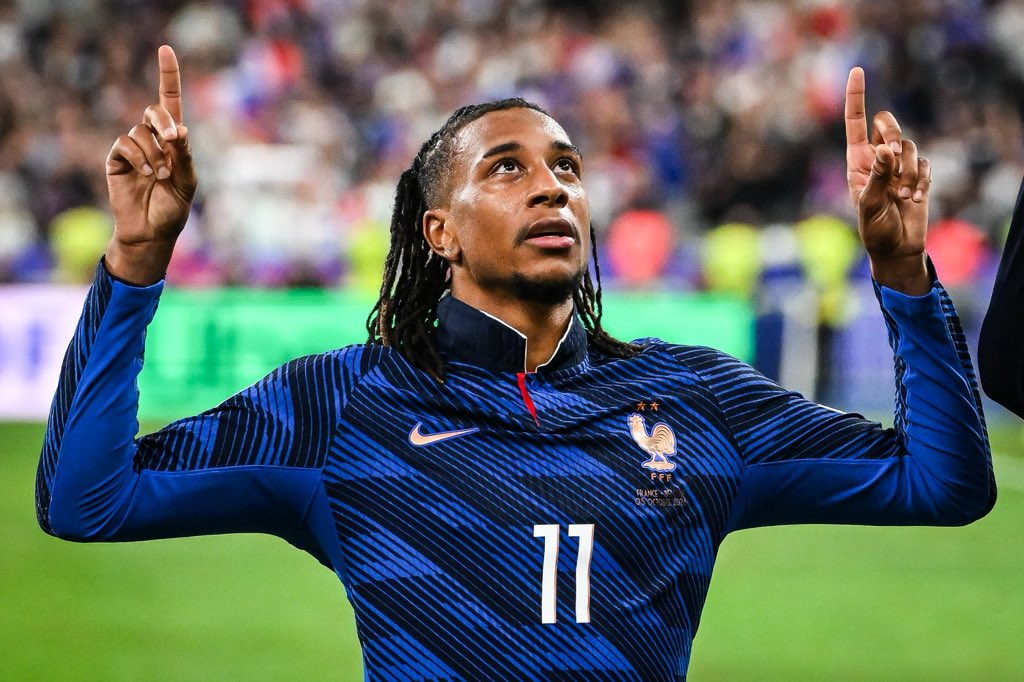
Actu Foot relayed comments from the European press about Michael Olise, via L’Équipe. According to Marca, the player was not seeking the spotlight, but still attracted attention. AS praised a remarkable performance in ten minutes and described him as one of the best in the world. Bild noted that the "joker" Olise had shone once again, while La Libre Belgique wrote that after Désiré Doué and Rayan Cherki, he had also settled into the Belgian box. #MichaelOlise #Football #Sport (translated)

3508
ABC TU DIARIO EN ESPAÑOL 7d

Pedro Piqueras has described the current legislature as atrocious and stated that the early calling of elections by Pedro Sánchez was inevitable, highlighting political polarization and the lack of leadership on the left as determining factors. #Elecciones2026 #PedroSánchez #Polarización (translated)

www.abc.es
Pedro Piqueras: «Ha sido una legislatura atroz y tenía que terminar cuanto antes»
2042
Isabella M Weber 1w

The author said reclaiming essential services was central to Burnham’s agenda and claimed that focusing on what people could not do without had put Labour ahead of Reform for the first time in many months. They added that the rise of the extreme right was not inevitable and said taking back control required courage.

569
Vladimir Putin 1w

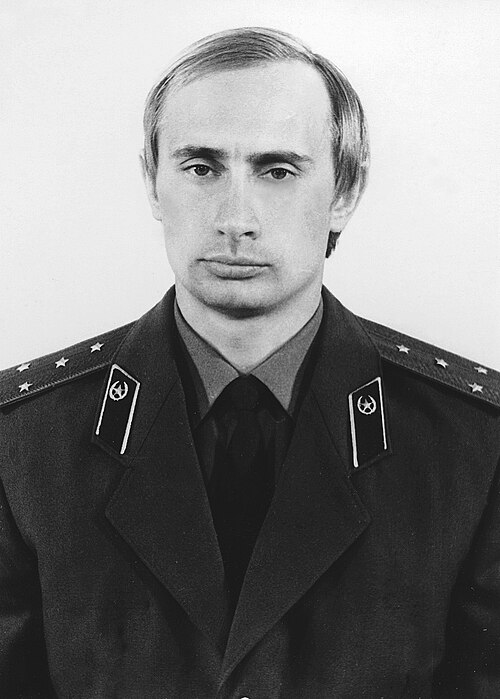
"If we reach a direct attack against the Russian Federation, and I am referring to Kaliningrad, but it can also happen with any other territory, of course the issue of Russia employing all the weapons at its disposal will inevitably and immediately come up on the agenda. That is inevitable." Last Thursday, NATO confirmed that the Kremlin threatened to use nuclear weapons if the Atlantic Alliance blocked the territory of Kaliningrad. Subsequently, Russian President Vladimir Putin confirmed the warnings, extending them to the entire territory of the Russian Federation. #Putin #ArmamentoNuclear #GuerraHíbrida (translated)

Putin eleva con la amenaza nuclear la retórica bélica contra Europa en su estrategia por expandir el miedo
www.eldiario.es
1939
Bruce Grannec 2w

The end of CR7 with the national team contrasts so much with that of Messi as if it were inevitable and that it had to end this way. On one side, there is Messi who didn't force anything; if he had felt he was no longer able to contribute to his team, he would have stopped. #CR7 #Messi #Football #PT #AR (translated)

2059
Olivier Babeau 2w

Unpopular opinion: the solution for our school is to go back to a system before the unified college. It makes no sense to push these young people who have no interest in studying all the way to the baccalaureate. It's a waste of time and resources for everyone. And it creates bitterness once the inevitable failure arrives. We need to stop and professionalize much earlier. But for that, we must accept that not everyone should be thrown into the same pot of mediocrity. However, in France, we love that. #Éducation #CollègeUnique #RéformeEducative (translated)

12717
Cartoons On The Moon 2w

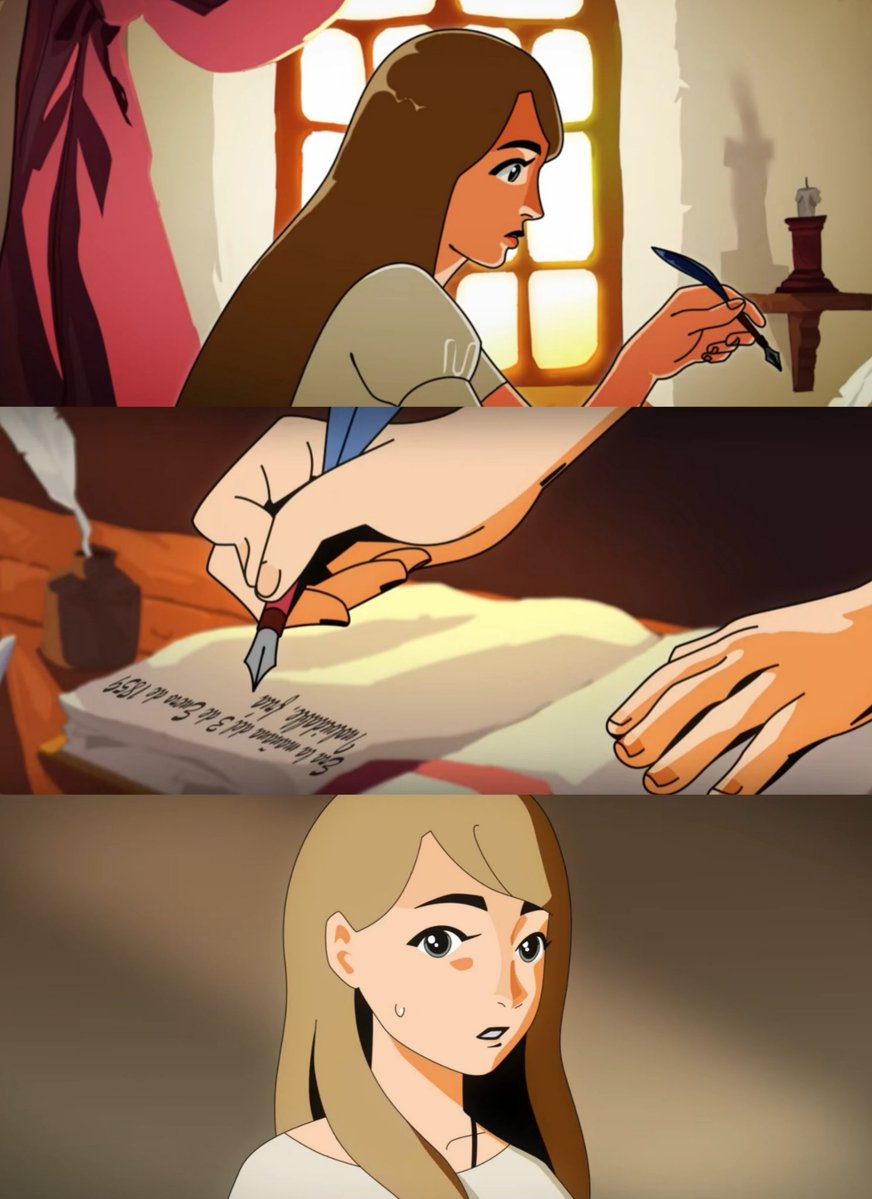
"It's easy to say that 'AI is inevitable', that 'it will take my job', and here I am making my animated series in Venezuela relaxed, without light, without water, and without money." https://t.co/xmv9gUufsU #IA #Animación #Venezuela (translated)

49300
20 minutos 2w

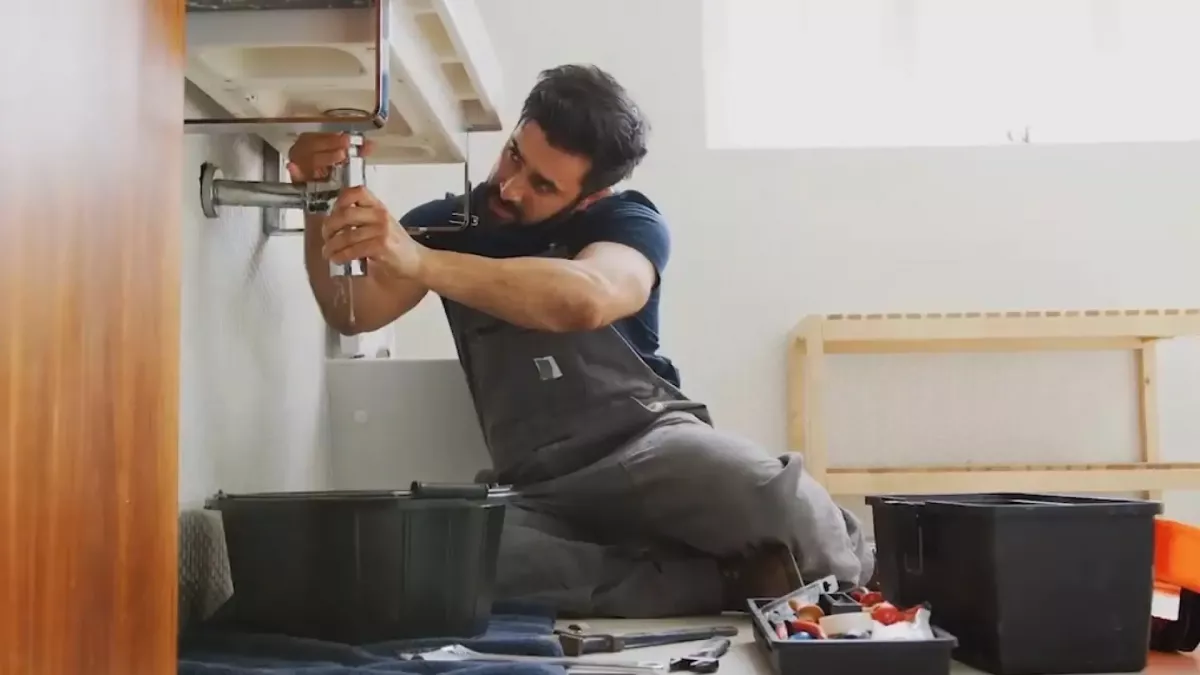
Joan, un fontanero, reflexiona sobre cómo los oficios tradicionales han ganado relevancia en el mercado laboral actual, destacando que el trabajo manual ahora se percibe como el futuro frente a la inevitable automatización que afecta a profesiones con estudios superiores. #OficiosDelFuturo #Fontanería #InteligenciaArtificial

www.20minutos.es
Joan, fontanero: "Resulta que ahora los oficios somos el trabajo del futuro"
1725
MAG 2w

- Otros +3 a la bolsa - Metimos gol - No nos metieron gol - Le ganamos a un serio candidato al título - La novena es inevitable https://t.co/4cmPysX0r2 #fútbol #victoria #deportes

18407
Didier Maïsto 2w

Guerre et Paix Il est des images qui tiennent tout seules, comme un tableau qu’on n’aurait pas commandé et qui, pourtant, dit plus vrai que tous les communiqués. L’un est debout. Blanc jusqu’au pupitre. Rouge de l’amour et du sang versé pour que nul homme ne soit jamais déclaré superflu. Il parle français, avec fermeté, et il ne parle pas pour lui. Il dit qu’une guerre n’est jamais « inévitable ». Qu’il ne faut pas s’y résigner. Que la paix n’est pas un équilibre des forces, mais un travail de chaque jour. Que la France a vocation d’être un artisan infatigable de cette paix. Et surtout ceci, qui devrait être gravé plus profondément encore que sur la pierre : la dignité inhérente à toute personne humaine trouve un écho dans notre devise. Liberté, égalité, fraternité ne sont pas des mots d’ornement. Ce sont des exigences. L’autre est assis. Il tente de donner le change en joignant ses mains et en acquiesçant parfois d’un léger mouvement de tête un discours où chaque mot le transperce comme un poignard. Il apparaît soudain si petit et si laid dans sa vérité. Derrière lui, le torchon étoilé. Pas le drapeau auquel ont cru tous ceux qui ont versé leur sang pour la France, mais l’emblème mortifère d’une Europe qui n’a jamais cessé de provoquer des guerres. Tout un symbole : un pouvoir crépusculaire qui rêve de conflit, quand le peuple n’aspire qu’à la paix. On ne peut s’empêcher d’y voir un tableau vivant. D’un côté, l’homme qui rappelle que nul n’est « rien », que chaque personne compte, que la fraternité n’est pas un slogan de fronton mais le refus de trier entre les êtres et de dédaigner « les gaulois réfractaires », « les illettrés », ceux « qui fument des clopes et roulent au diesel ». De l’autre, le souvenir tenace de celui qui a fait éborgner des manifestants sans états d’âme et dont le sang est une tache indélébile sur notre drapeau tricolore. L’œil était dans la rue et regardait Caïn. Oh, ce n’est pas une affaire de religion. C’est l’affaire de la France. La France qui a choisi de graver sur ses édifices publics trois mots qui interdisent le mépris. Liberté de se tenir debout. Égalité de dignité. Fraternité qui refuse qu’on abandonne quiconque au rang de quantité négligeable. L’un célèbre l’harmonie possible entre les hommes et refuse que la guerre devienne une habitude de l’esprit. L’autre, dans cette séquence terrible, paraît déjà ailleurs, comme si la verticalité de la parole l’avait laissé tout en bas, sur sa chaise, foudroyé sous les étoiles. Deux conceptions de l’humain. L’une qui relève. L’autre qui enterre. Tout est sous nos yeux. À nous de voir. Ou pas. Ainsi soit-il. #GuerreEtPaix #LibertéÉgalitéFraternité #DignitéHumaine

13361