WRLD

Search

#Legislação
Sen. John Barrasso 6h

Asked whether the President's action would constitute a violation of U.S. law, Republican Senator John Barrasso of Wyoming felt that Trump is focused on reducing energy costs and that "he has to make tough decisions." #Trump #Rússia #Congresso (translated)

Senadores dos EUA contra compra de gasóleo à Rússia
observador.pt

1817
Observador 6h

Six bipartisan US senators are asking Donald Trump to abandon a plan to purchase fuel from Russia, arguing that it would violate legislation prohibiting imports of Russian energy while the country continues to attack Ukraine. #Trump #Rússia #Congresso (translated)

observador.pt

Senadores dos EUA contra compra de gasóleo à Rússia
1818
Jeje ✨ 20h

Jeje questioned why the Electoral Public Ministry had not yet requested the annulment of Flávio Bolsonaro's slate. He stated that the TSE (Superior Electoral Court) had a consolidated understanding that the use of churches and religious leaders to promote candidacies could constitute an abuse of power and lead to the annulment of the registration and the ineligibility of those involved. He cited a decision from the TSE as an example, according to which statements made from the pulpit during public worship and in front of a large audience indicated that the structure and religious authority had been used to promote candidacies, and not only for spiritual purposes (TSE. Rel. Min. Antônio Carlos Ferreira. AREspe 0600354-26.2024.6.26.0220). He also mentioned Article 24, Item VIII, of the Electoral Code, which prohibited parties and candidates from receiving donations, including through advertising, from charitable and religious entities. #Eleições2024 #JustiçaEleitoral #AbusoDePoder (translated)

2059
Jornal Expresso 2d

The Commission for Religious Freedom concluded that the blessing held at the inauguration of a public school clearly violates current legislation. #javascript #adblocker #webdevelopment (translated)

expresso.pt
Benção na inauguração de escola pública "viola claramente" a lei, conclui Comissão da Liberdade Religiosa
2648
Observador 2d

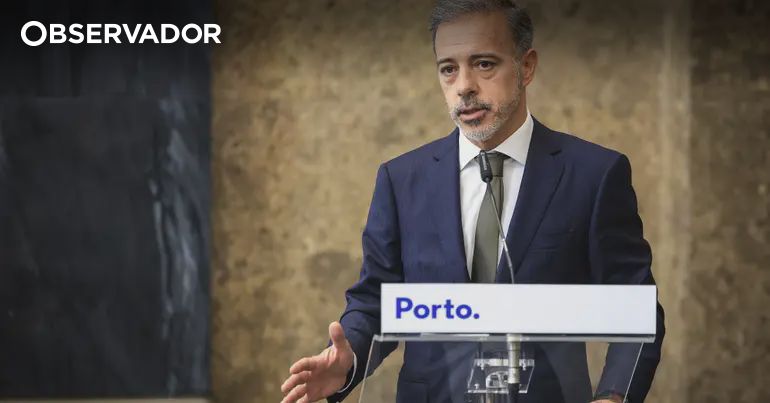
The president of the Porto Chamber, Pedro Duarte, announced that he intends to implement rules for souvenir shops in historical centers, awaiting national legislation that allows municipalities to regulate the commercial use of these spaces. #CâmaraMunicipal #LojasSouvenirs #LegislaçãoPorto (translated)

observador.pt

Autarca do Porto diz que lojas de "souvenirs" vão ter regras
2667
SPACE LIBERDADE  3d

A SPACE LIBERDADE wrote that Flávio Bolsonaro stated that a prison order from Alexandre de Moraes against Eduardo would have no effect. According to the publication, Flávio said that Eduardo was in the United States, where he would be exiled and protected by American legislation. https://t.co/htchNUgOix #FlávioBolsonaro #AlexandredeMoraes #EduardoBolsonaro (translated)

2909
Jornal Expresso 4d

Ten Portuguese startups are looking to expand their operations in the United States due to the lack of legislation, judicial system, and capital market comparable to those in the U.S. in Portugal. #JavaScript #AdBlocker #WebDevelopment (translated)

expresso.pt
Dez startups portuguesas procuram crescer nos EUA: “Portugal não tem uma legislação, justiça e mercado de capitais ao nível dos EUA"
1574
Observador 4d

The US government proposed legislation to ban from the market automotive brands in which the Chinese hold more than 15%, but Mercedes-Benz, which exceeds that limit, will be exempt from this penalty. #MercedesBenz #LegislaçãoEUA #IndústriaAutomotiva (translated)

observador.pt

EUA bane marcas com 15% nas mãos de chineses. Não a Mercedes
1687
Observador 5d

The article by Maria Helena Costa discusses how the legislation created in the 1980s and 1990s, by separating morality from criminality in prostitution, inadvertently resulted in the erosion of authority over public space, allowing the proliferation of exhibitionist behaviors without appropriate legal consequences. #EspaçoPúblico #Prostituição #Legislação (translated)

observador.pt

Quando a Lei Protege o Exibicionismo e Abandona os Cidadãos
1579
Jornal Expresso 5d

The PS is seeking to clarify whether there are other agreements between the Government and Chega, in addition to the recent legislation on rents. #JavaScript #WebDevelopment #AdBlocker (translated)

expresso.pt
PS quer saber se há mais acordos do Governo com o Chega além da lei das rendas
1467
Observador 6d

The nicotine pouches will be discussed in parliament on Wednesday, with experts divided over their effects as an alternative to tobacco and concerns about the allowed nicotine concentrations, which exceed those of smoking cessation options. #Saúde #Nicotina #Legislação (translated)

observador.pt
Bolsas de nicotina vão quarta-feira ao parlamento
1696
Krzysztof Graj 6d

Brazil’s synthetic voters – when AI manufactures public opinion They look like ordinary street interviews. A reporter approaches a passer-by in a Brazilian square and asks a simple question: who will you vote for? A young voter explains why Luiz Inácio Lula da Silva deserves another term. An elderly woman says Brazil needs Flávio Bolsonaro because he represents political renewal and greater security. The locations look plausible, the microphones are visible and the answers sound much like the brief political opinions heard in television vox pops around the world. None of the people are real. Ahead of Brazil’s presidential election on 4 October, fact-checking organisation Aos Fatos identified at least 50 TikTok videos in which artificial intelligence was used to manufacture voters, reporters and apparently spontaneous political interviews. Together, the videos had accumulated around 7.4 million views by mid-August. Some promoted Lula, others Flávio Bolsonaro, while another group used synthetic characters to ridicule or stereotype supporters of one side. Aos Fatos found no apparent evidence linking the accounts producing the videos to either presidential campaign. The opinion poll that never took place The format is important. These were not conventional deepfakes in which a recognisable politician is made to say something he never said. Instead, the creators reproduced the visual language of the vox pop – the short street interview used by broadcasters and social-media creators to illustrate what ordinary people supposedly think. In pro-Lula videos, synthetic voters described themselves as beneficiaries of social programmes or credited the president with improving their lives. In videos supporting Flávio Bolsonaro, artificial interviewees associated him with political renewal, public security and fighting corruption. Other clips were openly hostile: AI-generated characters presented as poor or living in parts of Brazil’s north-east were shown in dirty clothes or run-down surroundings, declaring support for Lula because they supposedly preferred welfare payments to work. The deception is therefore subtler than fabricating a candidate’s statement. It manufactures something that political communication normally treats as evidence of public sentiment. A real vox pop may be unscientific, but the people interviewed at least exist. These videos created the appearance that identifiable social groups – young people, pensioners, welfare recipients or residents of particular regions – were spontaneously expressing political preferences when no such encounters had taken place. An electoral-law specialist interviewed by Aos Fatos described the technique as the fabrication of a “social fact that never occurred”. That captures the central innovation: AI is being used not merely to falsify political speech, but to manufacture the impression of grassroots opinion. Fifty videos, but not one proven network The available evidence does not support describing the 50 posts as a centrally controlled influence operation. Aos Fatos located them through TikTok searches and recommendations produced by the platform itself, then examined the accounts responsible for publication. Most had relatively small individual audiences, although their combined reach was substantial. The first examples identified by the investigation appeared as early as March 2026. Activity increased in June and was concentrated particularly in July and the first half of August as Brazil’s election calendar intensified. Some accounts specialised in AI-generated videos generally, including fabricated podcast-style material. Others were explicitly political or supportive of a candidate, but Aos Fatos found no apparent links between those profiles and the official Lula or Bolsonaro campaigns. That distinction is essential. The evidence demonstrates a common technique and a shared political environment, not a single command structure. Some creators may have been motivated by ideology, others by engagement or monetisation. Publicly available evidence does not establish who commissioned the individual videos or whether any coordination existed between the accounts. This decentralised model also creates a different enforcement problem from a traditional bot network. There may be no headquarters to expose and no infrastructure whose removal disables the entire operation. The format itself can be copied by anyone with access to inexpensive generative-video tools. When the algorithm mixes real and synthetic citizens Aos Fatos documented another important feature of the phenomenon: TikTok’s recommendation system placed AI-generated interviews alongside genuine street interviews. For a user scrolling quickly through the platform, the transition between an authentic citizen and an entirely fabricated one could therefore be almost invisible. In 18 per cent of the 50 videos analysed, there was no indication that the people shown had been generated using AI. After Aos Fatos provided TikTok with the videos, the company said it had removed all of them for violating its rules on edited and AI-generated media. TikTok said its policies require creators to identify synthetic content and prohibit manipulated media capable of misleading users about matters of public importance or impersonating genuine journalistic material. The issue extends beyond one platform. Factchequeado’s review of Brazil’s 2026 election campaign found that synthetic endorsements and other deepfakes had become one of the most visible forms of AI-assisted electoral misinformation, alongside fabricated candidate statements and invented scenes. Brazil already had rules for synthetic politics Brazil entered the campaign with unusually detailed electoral rules governing artificial intelligence. The Superior Electoral Court, the TSE, requires electoral propaganda using synthetic multimedia to disclose clearly that AI was used. More importantly for the fake-voter videos, its rules prohibit synthetic audio or video used to favour or harm a candidacy when it creates or alters the image or voice of a living, deceased or fictitious person. The difficulty is attribution and enforcement. When a synthetic video is published by an official campaign, responsibility can be relatively straightforward to investigate. When it comes from an apparently independent account with no demonstrated relationship to a candidate, lawyers interviewed by Aos Fatos said responsibility is more likely to fall on the individual creator, while imposing electoral sanctions on a campaign would require evidence of a connection. For the final 72 hours before the election and the 24 hours following it, the TSE has imposed additional restrictions on newly published or republished synthetic material involving candidates or public figures, reflecting the particular difficulty of correcting fabricated content immediately before voting. From deepfake politicians to synthetic electorates The Brazilian case illustrates a broader change in political manipulation. The first generation of electoral deepfakes concentrated on famous people: make a politician appear to say something damaging, or fabricate an endorsement from a celebrity. Synthetic vox pops reverse the perspective. The politician can remain completely authentic; it is the electorate around the politician that is fabricated. That changes the psychological proposition of the message. Instead of saying the candidate believes this, the video suggests people like you believe this. Age, clothing, accent, neighbourhood and social class can all be generated to construct an artificial constituency around almost any political claim. There is no evidence that the 50 Brazilian videos identified by Aos Fatos constitute a single centrally directed campaign, nor evidence that they changed voting intentions. What they demonstrate is a technique whose barrier to entry has become extremely low. AI no longer needs to forge the politician. #DISINFORMED #Episode14 #Brazil #BrazilElection2026 #Elections #ElectionDisinformation #ArtificialIntelligence #AI #GenerativeAI #SyntheticVoters #SyntheticMedia #AIAvatars #AIGeneratedVideo #VoxPop #FakeInterviews #Astroturfing #AIPropaganda #PoliticalDisinformation #InfluenceOperations #InformationWarfare #SocialMediaManipulation #TikTok #PublicOpinion #ManufacturedConsent #SyntheticPublicOpinion #DigitalInfluence #Deepfakes #ElectionIntegrity #TSE #AosFatos #FactChecking #OSINT #MediaManipulation #WRLD (translated)

www.aosfatos.org
Eleitores gerados por IA fazem campanha no TikTok e põem em xeque regra do TSE
565
poponze 7d

Poponze wrote that Fernando Gabeira assessed the possible effects of a Flávio Bolsonaro election to the presidency. According to Gabeira, Bolsonaro had mentioned that he would relax environmental legislation, and his potential presidency could lead to strong climate denialism and intolerance towards indigenous peoples. Gabeira stated that the position attributed to Bolsonaro would advocate for the integration of indigenous peoples into mainstream society, leading to the disappearance of their cultures and traditions, and concluded that the outlook would not be promising. #MeioAmbiente #MudançasClimáticas #DireitosIndígenas (translated)

38700
République 7d

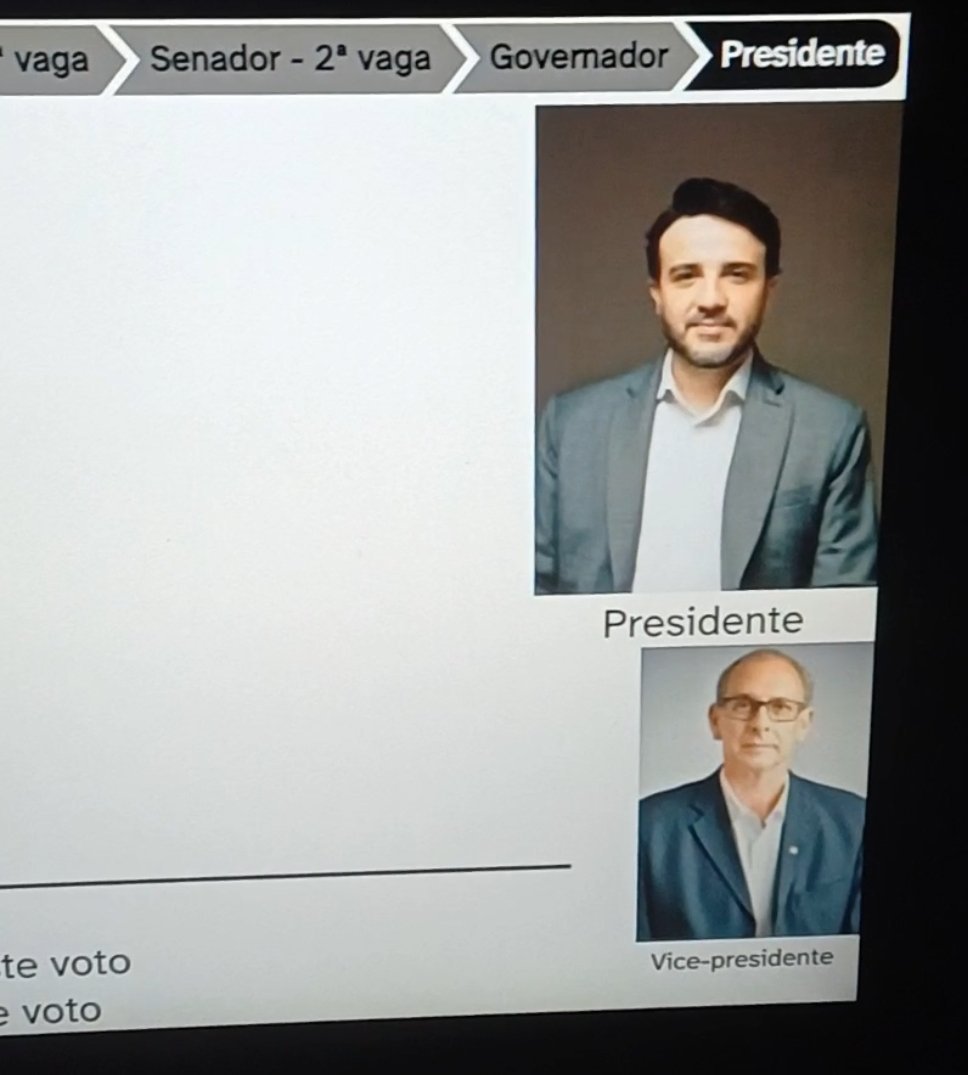
The Republic stated that a voter photographed, during the voting, the image of Renan Santos and his vice, Colonel Medina, at the ballot box. According to the publication, this practice was prohibited by electoral legislation. https://t.co/SLA0y7pfWW #Eleições2023 #Votação #LegislaçãoEleitoral (translated)

13974
Observador 1w

The article discusses the recent changes in public procurement legislation in Portugal, reflecting on whether the government's trust in companies and public managers will be beneficial, given the risks of financial opacity and favoritism that may arise with the new paradigm of greater autonomy and less bureaucracy. #ContrataçãoPública #ConfiançaGovernamental #Transparência (translated)

observador.pt
Contratação pública: fez bem o Governo confiar em nós
1479
Fernando Schüler 1w

Fernando Schüler wrote that judges and ministers who wanted to change the law should run for Congress and present a proposal. Otherwise, he stated, they should apply the laws defined by society. He mentioned that the topic was addressed in his article in Estadão. https://t.co/GZg4jHQ8Dy #Direito #Legislação #Justiça (translated)

30525
Mídia NINJA 1w

NINJA Media stated that, two days before the election, Meta removed a journalistic post in Brazil about the suspension of U.S. consular services. According to the organization, Instagram cited "electoral legislation," but did not specify which rule had been violated or if there was a court order. NINJA Media added that, hours later, a second post about the removal was also restricted. #Censura #LiberdadeDeImprensa #Eleições2023 (translated)

12657
Blog do Noblat 2w

Pastor Victório Galli, former federal deputy and former advisor to ex-president Jair Bolsonaro, defended on this Wednesday (30) the bill he authored that proposed to strip Our Lady of Aparecida of the title of patron saint of Brazil, obtained in 1930. The statement was made in an interview with UOL. "What harm is there in a bill like this that was authored by me being brought to the floor? The House of Deputies is a resonance house of the people, it is where discussions happen, it is where things are spoken about, that’s why it’s a parliament. The word parliament comes from 'parler,' it’s about talking, it’s about discussing things. So, I don’t see anything wrong with this matter," Galli said. #Política #Religião #Legislação (translated)

12932
Observador 2w

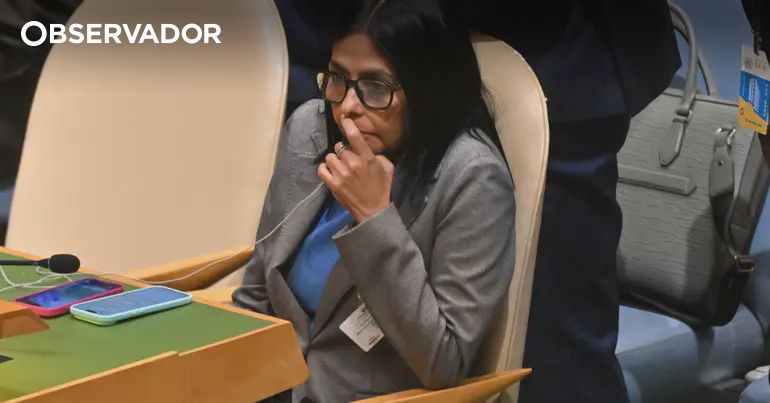
Delcy Rodríguez, the acting president of Venezuela, acknowledged the abusive use of the law against hatred, which has been used to justify political detentions, and stated that a reform of the legislation is necessary, seeking to advance the decriminalization of behaviors previously punished under this law. #Venezuela #LiberdadeDeExpressão #DireitosHumanos (translated)

observador.pt
Delcy Rodríguez reconhece "uso abusivo" de lei contra o ódio
1489
Bia Kicis 2w

🚨Did the Supreme close the TSE? While everyone is asking that, I present PL 5496. It makes it clear: a Supreme minister who invades the competence of another Power or court is held accountable for a crime of responsibility. Enough of excesses. It's time to put a brake on it. And it's precisely because of projects like this that I hope to be in the Senate in 2027, with your vote. Watch and comment what you think! #Supremo #Política #Legislação (translated)

24177