WRLD

Search

#Monarchy
Paul St-Pierre Plamondon 6d

Our national destiny will be achieved one day. We are going to do what we have to do to get the monarchy out of Quebec, repatriate those funds, and send them to social causes. #QuebecElection #PartiQuebecois #IndependenceReferendum

Separatist party projected to win Quebec election, adding new test to Canada's unity
www.bbc.co.uk
2263
Adam Mazguła 3w

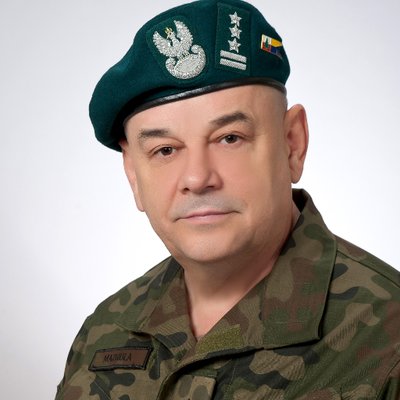
Ruszył proces bezczelnego nadczłowieka Karola Nawrockiego przeciwko emerytowi wojskowemu Adamowi Mazgule. Wróg polskiej Konstytucji i demokratycznej Polski, wspierany przez zorganizowaną mafię przestępczą i ziobrowych prokuratorów, swoją potężną kancelarię i 2-tysięczną bandę doradców, przeciwko pułkownikowi w stanie spoczynku Wojska Polskiego Adamowi Mazgule wspieranego przez cywilnych przyjaciół, o naruszenie dóbr. No właśnie, czyich i jakich dóbr? Czy Karol Nawrocki może nie rozliczyć się z własnego życia, gwałcić polską konstytucję, wetować rozwój Polski, angażować się politycznie, budując neonazizm, prorosyjskość i korzystać z całkowitego immunitetu? Czy może dla osłony swojego bezczelnego bezprawia zamykać usta obywatelom poprzez prokuratury, które jego nie mogą oskarżać, ale obywateli – bez przeszkód? Powstaje więc pytanie, co jest istotniejsze z punktu widzenia interesu społecznego: wpisy na Facebooku Mazguły czy zniszczenie demokratycznej Polski przez Nawrockiego? Gdzie jest więc konstytucyjna równość wobec prawa (art. 32 Konstytucji), przecież Rzeczpospolita Polska zapewnia wolności i prawa człowieka i obywatela (art. 5 Konstytucji) oraz każdemu zapewnia wolność wyrażania swoich poglądów oraz pozyskiwania i rozpowszechniania informacji (art. 54 Konstytucji). Czy jeśli Nawrocki ma wszystkie prawa monarchy zgodnie z Kodeksem karnym, to czy Konstytucja nie jest martwa, jak chce Nawrocki i jego zamachowcy na Polskę? Co jest ważniejsze: kodeks pod politycznych pajaców czy konstytucja naszego narodu? A co z wolnością wypowiedzi i informacji Karty Praw Podstawowych Unii Europejskiej: Każdy ma prawo do wolności wypowiedzi. Prawo to obejmuje wolność posiadania poglądów oraz otrzymywania i przekazywania informacji i idei bez ingerencji władz publicznych… (art. 11). W praktyce to zamachowiec na Polskę ma władzę i prawa, a ja tylko obowiązki padać chamowi do stóp, bo obcy namiestnik traktuje mnie tak, jakby był właścicielem mojego życia, i to tylko dlatego, że od dziecka służę mojemu narodowi i Konstytucji w mundurze, a on fascynacji przestępczością i kibolstwu walczącemu o bezprawie? W każdym normalnym demokratycznym kraju taki proces byłby niemożliwy. Bo nie ma tam tak bezczelnego przepisu przeciwko Konstytucji, jak w polskim Kodeksie karnym, który działa tylko w jedną stronę. Prawo w Unii Europejskiej i USA pozwala nawet na skrajne ubliżanie politykom, bo są wybierani i oceniani przez naród i muszą mieć „grubszą skórę”, a ja nawet nie ubliżam, tylko ośmielam się pisać prawdę. W Polsce niby rządzi rząd, ale znaczna część społeczeństwa żyje pod butem zmanierowanej, bezczelnej i antypolskiej mafii politycznej, której Karol Nawrocki jest namiestnikiem na Polskę. A to dostateczny powód, aby z nią walczyć, a nie jej służyć. Jestem polskim żołnierzem i przysięgałem służyć Polsce i jej Konstytucji, a nie być ochraniarzem antypolskiej i neonazistowskiej organizacji obcych interesów. Proces został utajniony, więc mało o nim, ale dzień upłynął na rozpatrywaniu wniosków obrony o oddalenie oskarżenia i innych oraz prokuratury, jednak wszystkie zostały odrzucone. Sprawa zacznie się w praktyce w dniu 29 października o 9:30. Bardzo dziękuję organizacjom społecznym, które w mojej obronie włączyły się do procesu: Stowarzyszeniu Wolne Wybory i Maciejowi Skubiszewskiemu, Fundacji Collegium Nobilium Novum i Włodzimierzowi Zydorczakowi oraz Stowarzyszeniu Kooperatywa Pracy Organicznej i Jakubowi Urbanowiczowi. Bardzo dziękuję za wsparcie przybyłym przyjaciołom z całej Polski, z KOD Białystok, Obywatelom RP z Warszawy, koleżankom i kolegom z Zabrza, Poznania, Krakowa, Białej Podlaskiej, Bytomia i Opola. To było dla mnie ważne. Dziękuję za relacje Piotrowi Wrońskiemu i Mariuszowi Pokrzywko. Adam Mazguła #PrawdąWOczy #WPoczuciuOdpowiedzialności #TarczaWolnościSłowa #BronimyKonstytucji #ŻołnierzGorszegoSortu #BronimyKonstytucji #WolnośćSłowa #Demokracja

12357
Philip Pilkington 4w

It looks like the Saudi monarchy are about to do a suicide run. Imagine if they'd just stopped the blockade... So much easier... Too late now... 🇸🇦 #SaudiArabia #Blockade #Monarchy #SA

Philip Pilkington 4w

It looks like the Houthis are eliminating the Saudi air force. If the Saudis don't figure this out pretty quickly the monarchy might just end up collapsing. 🇾🇪🇸🇦 #Houthis #SaudiArabia #MiddleEast #YE #SA

233
Gunther Fehlinger-Jahn Sep 10

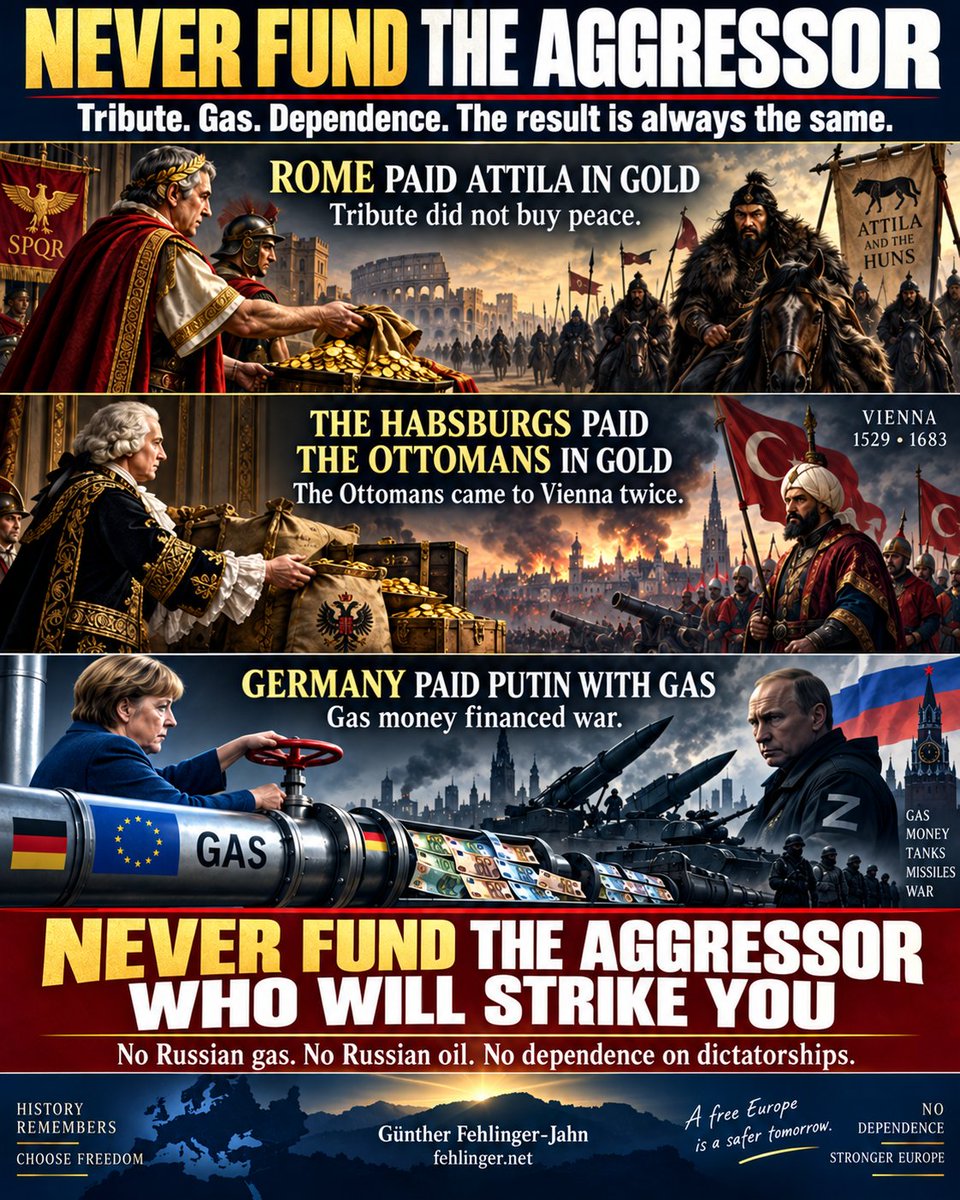
NEVER FUND THE AGGRESSOR WHO MAY ONE DAY STRIKE YOU. History has warned Europe again and again. Rome paid Attila tribute in gold. It did not buy lasting peace. Attila still invaded Roman territory and marched into Italy. The Habsburg Monarchy paid tribute to the Ottoman https://t.co/INTgeRL25l #HistoryLessons #NeverForget #PeaceThroughStrength #EU #IT #AT #OT

233
rmf24.pl Aug 28

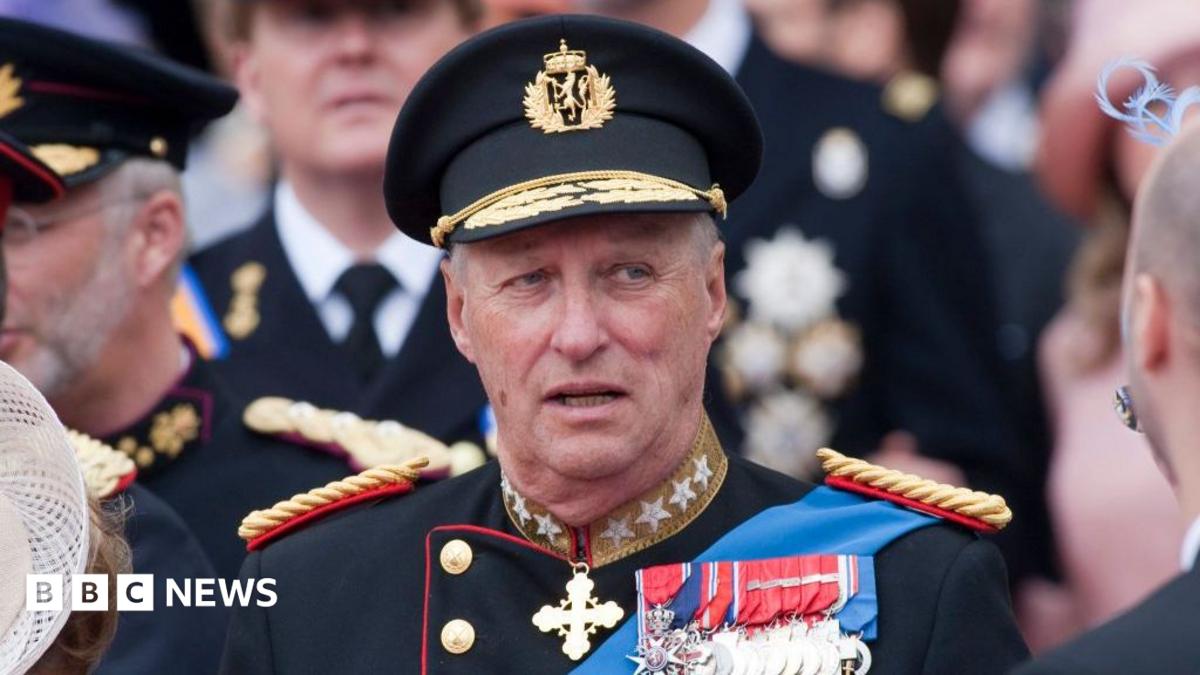
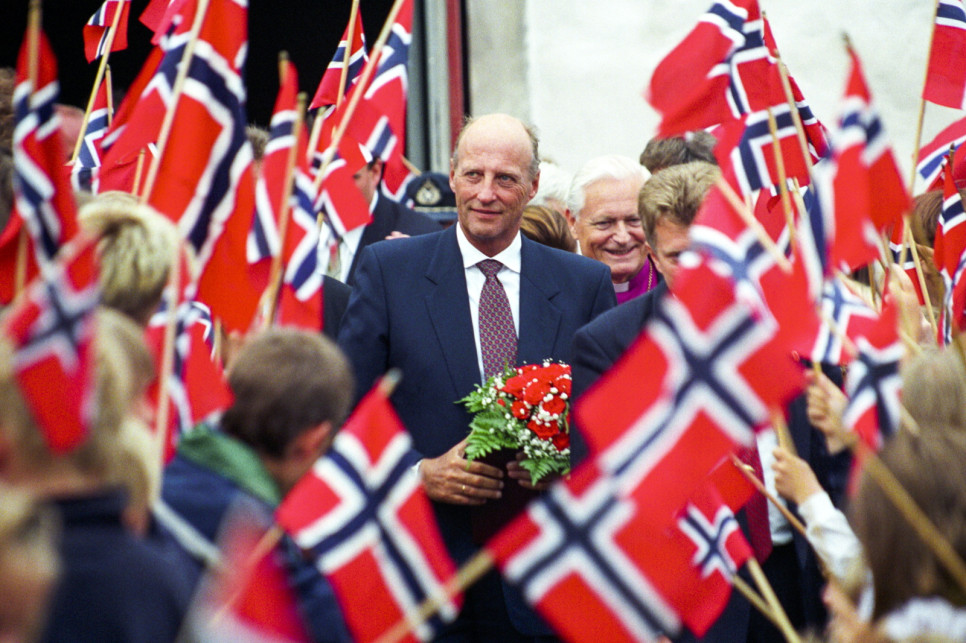
W piątek rano zmarł król Norwegii Harald V, a tron objął jego syn, książę koronny Haakon, co skłoniło do porównań z historyczną wpadką norweskiej telewizji NRK przy ogłoszeniu śmierci poprzedniego monarchy, króla Olafa V. #HaraldV #Norwegia #monarchia

www.rmf24.pl
Śmierć króla i potężna wpadka Norwegów. To nie tak miało być
11136
Adham Hasanin Aug 11

A Crown Instead of the Barracks: An Idea From Outside the Box Could Egypt’s exiled opposition use constitutional monarchy to dismantle the legitimacy of the 1952 coup? By Adham Hasanin Egyptian journalist and political writer, based in the Netherlands To understand what follows, a reader unfamiliar with Egypt needs one basic fact: since 1952, Egypt has never been governed by anyone who did not first wear a military uniform. Gamal Abdel Nasser, Anwar Sadat, Hosni Mubarak, and today Abdel Fattah el-Sisi four men, four eras, one common origin. All rose through the armed forces. All inherited a state built by a coup that year, when a group of officers calling themselves the "Free Officers" overthrew King Farouk I and, within a year, abolished the monarchy altogether and declared a republic. For seventy-three years, the underlying equation has not changed: the army rules, power passes from one officer to the next, and legitimacy is drawn from the barrel of a gun rather than the ballot box. Every conceivable form of opposition has been tried legal parties and banned ones, Islamist movements, liberal and leftist coalitions, the 2011 popular uprising, and the 2013 elections whose result was overturned by force within a year. All of them hit the same wall: a military institution that reproduces itself under different names, while the core of the system remains untouched. So what if the problem, all along, has not simply been who rules, but the constitutional framework that makes military rule possible in the first place? And what if the answer lies not in swapping one president for another, but in dismantling the underlying equation itself, through a framework Egyptian opposition movements have never seriously tried: a purely ceremonial constitutional monarchy, on the model of Belgium, the Netherlands, or Spain where the head of state becomes a symbol above the political fray, while the army is permanently expelled from politics and returned to its barracks. This is not a call to revive a particular family, nor nostalgia for a golden age that never quite existed. It is a proposal for a political and strategic tool that has not yet been used in the intellectual arsenal of Egypt’s opposition in exile a tool that deserves serious discussion, regardless of whether it is ever literally realised or simply serves to expand the boundaries of what is politically thinkable. I. Why 1952, Not 2013 or 2011, Is the Root The strategic error made by most Egyptian opposition movements from the Muslim Brotherhood to the April 6 Youth Movement to the various civil opposition parties has been treating each political crisis as an isolated case: Mubarak was corrupt and had to be toppled; Sisi staged a coup that must be condemned; the interim military council was a transitional phase to be endured. This piecemeal approach treats the symptoms while leaving the original illness untouched. That original illness is the very structure of legitimacy established by the coup of 23 July 1952. The Egyptian republican system, from Nasser to today, has never built its legitimacy on a genuine democratic social contract. Instead, it has rested on a fixed trinity: the rhetoric of "revolution against feudalism and colonialism," charismatic individual leadership, and military protection of the regime framed as the guarantor of stability. This trinity has repeated itself from Nasser to Sadat to Mubarak to Sisi, with only cosmetic variations. Each new president was never a break from the system he was its continuation. When the opposition says "let us return to the constitutional framework that preceded the coup," it is not criticising a particular policy. It is declaring that the legal foundation of everything that came after 1952 was illegitimate from the start. Here lies the rhetorical power of "returning to the pre-1952 order": it does not merely demand swapping one ruler for another. It withdraws historical legitimacy from the entire republican military system including today’s regime, which draws its own declared legitimacy from that same "1952 legacy." II. Why a "Ceremonial Crown," Not "the Return of a Ruling Family" Here is the most important distinction anyone advocating this idea seriously must grasp: the project does not rest on restoring any particular individual from the Muhammad Ali dynasty, nor on nostalgia for King Farouk or his ancestors. The real power of the idea lies in the constitutional form, not in the person who happens to sit on the throne. Three successful European democracies illustrate the model clearly. Belgium, where King Philippe is a purely constitutional symbol with no real executive power, while the state is run through an elected parliament and a complex coalition government reflecting the country’s linguistic and political diversity. The Netherlands, where King Willem-Alexander formally opens the parliamentary year and signs laws, but where actual decision-making rests with the prime minister and the elected parliament. And Spain, where the king represents symbolic continuity of the state above party politics, while the military and security services answer entirely to civilian authority a transition achieved after the death of the dictator Francisco Franco in 1975, when King Juan Carlos I voluntarily relinquished the extensive executive powers he had inherited and backed free elections, most dramatically in February 1981, when he personally ordered the armed forces to remain loyal to the constitution during an attempted military coup, causing it to collapse within hours. The common thread across these three models is not "the presence of an ancient royal family." It is the principle of separating symbol from power. The monarch in these countries does not rule; he represents. He issues no political decisions; he provides the continuity and symbolic stability that allows party political competition to revolve beneath him, without every transfer of power becoming an existential crisis of legitimacy. This is precisely what Egypt’s military republican system lacks: a neutral mechanism for guaranteeing state continuity that does not depend on the person of the ruler or his security apparatus. When Egypt’s military-republican president is absent, it is always the army that fills the vacuum, because it is the only institution built to be the "guarantor of stability." Under a ceremonial monarchical model, by contrast, it is the king not the army who represents that symbolic guarantee, genuinely opening the door to removing the military institution from the political equation altogether. III. Egypt’s Standing Under the Monarchy: An Honest Reckoning, Not Blind Nostalgia For a Western reader with little prior knowledge of Egypt’s monarchical period (1922–1952), it helps to know this: Egypt was nominally independent under its own king from 1922, but Britain retained enormous informal control over the country’s foreign policy, military bases, and the Suez Canal throughout the period a reality that shaped everything that follows. Any honest invocation of "Egypt’s standing under the monarchy" must avoid the trap of mythologised nostalgia that many advocates of this idea fall into. Egypt in that era was no lost paradise, and any honest article must say so plainly. The Egyptian pound, for instance, often invoked as a symbol of "national currency strength" in that period, was not strong because of independent Egyptian monetary policy. It was pegged to the British pound sterling as part of Egypt’s complete colonial financial dependency until 1947, with Egypt exercising no independent oversight of its own currency whatsoever. The pound’s strength, in other words, was not a sovereign Egyptian achievement it was a reflection of British imperial power ruling Egypt from behind the throne. But this does not mean Egypt lacked a genuine regional standing worth studying. Cairo, in the 1930s and 1940s, was the undisputed cultural capital of the entire Arab world: the Egyptian film industry produced more than half of all Arabic-language cinema; its theatre scene, led by figures like Youssef Wahbi and Naguib al-Rihani, and its music, with Umm Kulthum and Mohammed Abdel Wahab, set the standard across the region; Cairo University was the first modern university in the Arab world; and the Egyptian press was the reference point for Arab public opinion from the Atlantic to the Gulf. Cairo was, quite simply, to the Arab world what Paris was to Francophone Europe: an unrivalled centre of cultural and intellectual gravity. This standing was not necessarily a product of monarchy itself, so much as a product of a relative space of political and press pluralism that allowed Egyptian civil society to flourish, despite all the flaws of the political system and the interference of both palace and occupier. The lesson here is not "bring back the king and the standing will return." It is: when even a limited margin of civic freedom exists, Egypt flourishes culturally and intellectually almost by its own nature. And that margin is precisely what has been entirely absent across the past seven decades of unchallenged military rule. IV. What Reform Would Actually Require Not Repeating the Old Mistakes Any serious advocacy of this model must include, even briefly, a clear vision for avoiding the flaws of the old monarchical system itself otherwise the proposal collapses into simply replacing one form of authoritarianism with another wearing a different crown. First, the armed forces would need to be placed fully under a civilian ministry of defence, with its budget subject to transparent parliamentary oversight the exact opposite of its current status as a state-within-a-state, and equally opposed to its role under the monarchy, when it often served as an instrument of British influence. Second, a judiciary fully independent of both palace and government alike, unlike the old model, which saw direct royal interference in political life as when King Fuad I dismissed the elected government of Prime Minister Saad Zaghloul’s successor, Mustafa al-Nahhas, in 1928, in one of the clearest "constitutional coups" in modern Egyptian history. Third, a parliament that genuinely represents the people rather than landowners and the aristocracy, as was the case before 1952, when membership in the Senate was effectively conditional on the ability to pay land taxes meaning political representation was, by law, restricted to the wealthy. Fourth, genuine economic sovereignty, with a truly independent national currency rather than one pegged to a foreign power’s currency, unlike the historical dependency of the Egyptian pound on sterling. These four principles are enough to clarify that the project on offer is not a literal "return to the past," but a borrowing of the constitutional form (symbolic monarchy) combined with an explicit rejection of its old substance (colonial dependency, palace interference, parliamentary feudalism). V. The Role of Egyptian Movements in Exile: Between Goal and Instrument This raises the most practical question of all: how might Egypt’s opposition abroad actually adopt this idea, and in what capacity? The honest answer is that the power of this proposal does not necessarily lie in its literal fulfilment, but in its dual strategic function. On one hand, it can be advanced as a genuine political goal adopted by broad coalitions of Egyptian movements coalitions that might include Islamists, liberals, leftists, and traditional monarchists, united around a single shared premise: rejecting the legitimacy of the 1952 order and everything that followed from it, even if they later disagree over the precise final shape of the state. On the other hand and this matters more in practice the idea can be deployed as a rhetorical instrument of pressure to widen a Egyptian political debate currently trapped between two false choices: "continued military rule" or "no alternative, chaos awaits." When the opposition puts forward a clearly defined third model a European-style constitutional monarchy it breaks this false binary and opens new intellectual space in Egyptian public discourse, even if the project is never realised in its literal form. This kind of "leverage idea" is common in the history of political movements worldwide: it is not necessarily proposed to be fulfilled immediately in full, but to redraw the boundaries of the politically possible, and to force the existing regime to defend its legitimacy rather than simply assume it. Conclusion: An Invitation to Debate, Not a Ready-Made Prescription This article does not claim that restoring a monarchical form would magically resolve Egypt’s chronic crisis of legitimacy, nor does it ignore the immense difficulties facing any transformative project under a military institution as economically and securitywise entrenched as Egypt’s is today. But it raises a question that deserves serious debate among Egypt’s opposition in exile, rather than automatic dismissal simply for being unfamiliar: Has the Egyptian opposition exhausted every available tool for dismantling the legitimacy of 1952, or has it remained trapped in the same old binary swapping one ruler for another while the framework that makes military rule possible remains untouched? The idea is on the table now, not as a finished solution, but as an overdue invitation to think outside the box.

354
Tuomas Malinen Jul 23

The IRGC has directly warned the British monarchy not to meddle. In the best case, Iran sinks our whole utterly corrupted leading class, what Pussy-Putin has been too afraid to do. @MedvedevRussiaE @AGDugin #IRGC #BritishMonarchy #Iran #IR #GB #RU

118
Martin Kupka Jul 21

„Stát jsem já.“ Zákony i státní aparát už začínají nepokrytě sloužit jako nástroj ochrany a rozmnožování majetku Andreje Babiše. Stačilo půl roku vlády téhle koalice a začínáme se podobat víc dvoru absolutního monarchy než právnímu státu. https://t.co/GfNqqINtsp #PrávníStát #AndrejBabiš #Absolutismus #CZ

2369
Rzeczpospolita Jun 25

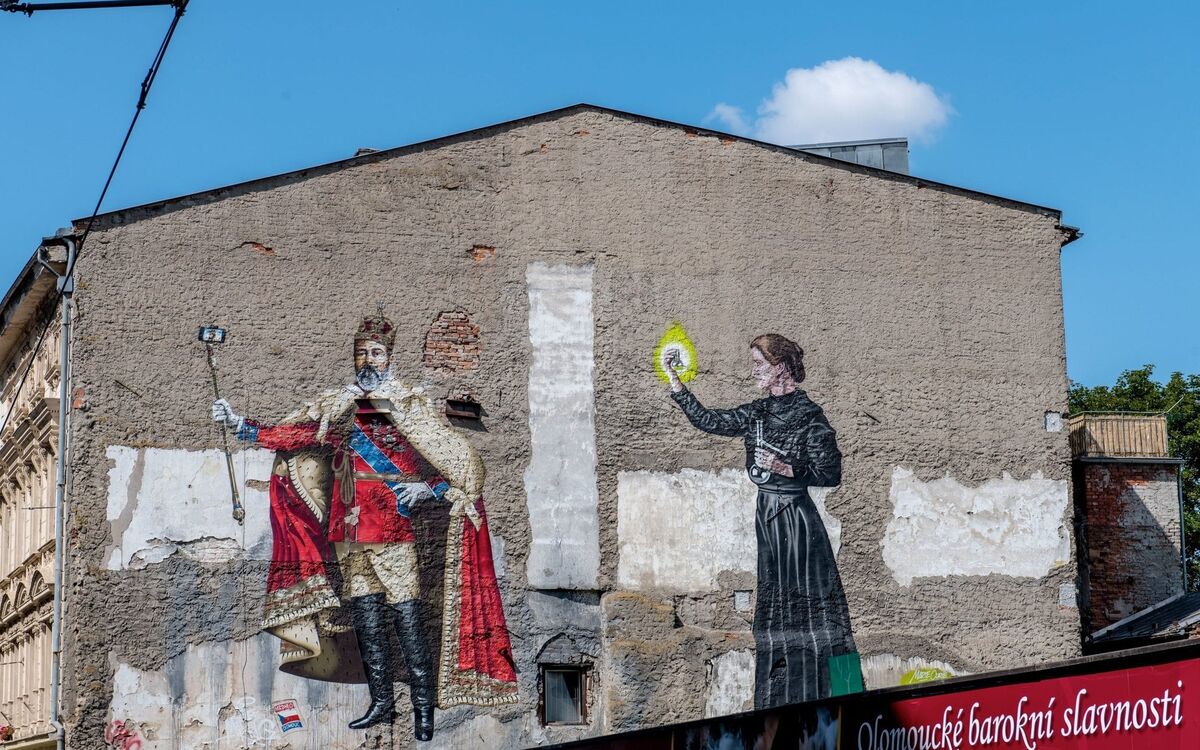
Mural w Ołomuńcu, przedstawiający Marię Skłodowską-Curie z przyrządami naukowymi obok króla Edwarda VII z selfie stickiem, kontrastuje ze sobą, symbolizując różnicę między zasługą a dziedzictwem, a także podkreślając znaczenie osiągnięć w nauce i pracy w przeciwieństwie do łatwego splendoru monarchy. #MariaSkłodowskaCurie #mural #nauka

edukacja.rp.pl
Mural jako lekcja pamięci
17253
Alfons López Tena 🦇 Jun 25

US laws and institutions didn’t provide the most important protection against monarchy and madness. The real guardrails were manners, dignity, decency. Politicians feared disgrace, to appall supporters, with behavior too regal and repugnant. But not Trump https://t.co/IBh1Dfa0R2 #Decency #Dignity #Trump #US

Delo Jun 15

Sin kronske princese Mette-Marit, Marius Borg Høiby, je bil obsojen na štiri leta zapora zaradi dveh posilstev in drugih kaznivih dejanj, kar je povzročilo škandal znotraj norveške kraljeve družine, kljub temu da uradno ni član monarchy. #Norveška #kraljevska_družina #Marius_Borg_Høiby

www.delo.si
Sin kronske princese za štiri leta v zapor
10129
BBC May 15

The article discusses the upcoming funding cuts to the British monarchy, highlighting the complex and opaque nature of royal finances and the increased demand for transparency following the scandal involving Prince Andrew, which has raised public scrutiny and questions regarding the value of the monarchy amid current economic challenges. #RoyalFinances #Transparency #Monarchy #GB

www.bbc.com
Royal finances face a cut. But will much really change?
8973
BBC May 15

The article discusses the increasing scrutiny of royal finances in the UK following a funding cut to the Sovereign Grant and controversies surrounding Andrew Mountbatten-Windsor, emphasizing the need for greater transparency amid public concerns about the monarchy's value for money and financial practices. #RoyalFinances #Transparency #PublicFunding #GB #US

www.bbc.com
Royal finances face a cut. But will much really change?
8973
BBC May 15

The article discusses the increasing scrutiny of royal finances in the UK following a funding cut to the Sovereign Grant and controversies surrounding Andrew Mountbatten-Windsor, emphasizing the need for greater transparency amid public concerns about the monarchy's value for money and financial practices. #RoyalFinances #Transparency #PublicFunding #GB #US

siol.net
Vingegaardov rojak o Pogačarju: "Jonasa želi spraviti v krsto"
8973
BBC May 15

The article discusses the complexities and challenges surrounding the royal finances of the British monarchy, highlighting an impending reduction in the Sovereign Grant, increased scrutiny following scandals, and the public’s growing demand for transparency and accountability regarding royal funding. #RoyalFinances #Transparency #PublicFunding #GB #US

www.bbc.com
Royal finances face a cut. But will much really change?
8375
BBC May 15

The article discusses the impending financial challenges facing the British monarchy, particularly the anticipated reduction in the Sovereign Grant due to a recent scandal involving Andrew Mountbatten-Windsor, which has sparked heightened scrutiny and calls for greater transparency regarding royal finances amidst public concerns about the value for money provided by the Royal Family. #RoyalFinances #Transparency #Monarchy #GB

www.bbc.com
Royal finances face a cut. But will much really change?
8973
BBC May 15

The article discusses the upcoming funding cuts to the British monarchy, which will mark the first reduction in public financing since the introduction of the Sovereign Grant in 2012, amidst heightened scrutiny following recent scandals and a general demand for greater transparency in royal finances. #RoyalFinances #Monarchy #Transparency #GB #US

www.bbc.co.uk
Royal finances face a cut. But will much really change?
8375