The Public Ministry is investigating suspicions regarding the lottery platform for affordable housing by the Lisbon City Council, which had been suspended for three months after an external audit identified weaknesses in the system, although the municipality has resumed the lotteries on this same platform. #HabitaçãoAcessível #MinistérioPúblico #CâmaraDeLisboa (translated)
At a rally in Clarksville, Tennessee, Donald Trump claimed that he could say the biggest nonsense and the audience would applaud him, highlighting his connection with the public despite his current unpopularity. #Trump #EstadosUnidos #Autocracia (translated)

The author of the article wrote that Audi sold almost one-fifth fewer cars in the third quarter; compared to 2023, sales had even dropped by 50 percent. He explained that the decline of the German automotive industry is accelerating dramatically, and an economic turnaround is only possible with the AfD. https://t.co/8Uh0xUyoTy #Audi #Autoindustrie #Wirtschaft #DE (translated)
🚨 IA à l’école : tuteur pour les élèves, assistant pour les agents, formation massive. La feuille de route 2026-2027 de l’Éducation nationale, utile aussi aux acteurs de la prévention. 📒 Une IA utile, humaine et souveraine pour les services publics » — Feuille de route 2026 / 2027 ✍️ Ministère de l'Education nationale Capsules Audio de Pratiques en Santé 🎙️🎥 https://www.youtube.com/watch?v=N0S26wLjpyk Analyse de Pratiques en Santé et lien vers la source ℹ️➕ https://www.pratiquesensante.com/blog/pratiques-15/une-ia-utile-humaine-et-souveraine-pour-les-services-publics-feuille-de-route-2026-2027-6253 📌Pour les personnels de l'Éducation nationale, le document présente les outils d'IA que le ministère met à leur disposition ou prévoit (p. 2-5). Pour les enseignants, ce sont des outils d'appui à la préparation des séquences, à l'évaluation, à la différenciation et à la correction, ainsi qu'un tuteur IA pour les élèves. Pour les personnels administratifs, ce sont l'Assistant IA souverain et des fonctions d'IA dans la messagerie, dont une réécriture des communications pour l'accessibilité. Le document situe aussi l'offre de formation, avec le Lab IA ouvert depuis mars 2026, les plans académiques déjà déclinés et Pix IA, inscrit au calendrier (p. 4-5). Il indique enfin comment s'impliquer : par les communautés CRÉIA et GARRYA, par la Forge des communs numériques éducatifs ou par l'appel à projets pour l'appui au geste professionnel enseignant prévu au T3-T4 2026 (p. 2, 4, 5). Les acteurs extérieurs à l'Éducation nationale qui interviennent en milieu scolaire, en particulier en prévention, en promotion de la santé, dans le social ou l'associatif, y trouveront de quoi comprendre l'environnement numérique des écoles et des établissements. Ils y découvriront les outils d'IA que les élèves et les personnels vont progressivement utiliser, le principe affirmé de contrôle humain sur la machine et le cadre d'usage de l'IA en éducation publié en 2025, qui sert de référence commune (p. 2). Le calendrier leur permet aussi d'ajuster leurs interventions sur les usages numériques à l'état d'avancement annoncé (p. 5), en vérifiant les déploiements réels auprès de l'académie concernée. 🇬🇧:A useful, human and sovereign AI for public services » — Roadmap 2026 / 2027 - A useful, human and sovereign AI for public services » — Roadmap 2026 / 2027 #️⃣ #pratiquesensante #IntelligenceArtificielle #IAenÉducation #ÉducationNationale #LittératieNumérique #FALC #ServicePublic #MilieuScolaire

The author wrote that VW sold 14 percent fewer vehicles and Audi's sales had declined by almost one fifth. https://t.co/LVZpuimGqU #VW #Automobil #Absatz #DE (translated)
Folha de S.Paulo reported that indigenous people received audio threats of invasion of their territories if Flávio Bolsonaro wins the elections. https://t.co/qWg1Z5Masp #Indígenas #DireitosHumanos #Eleições2024 (translated)
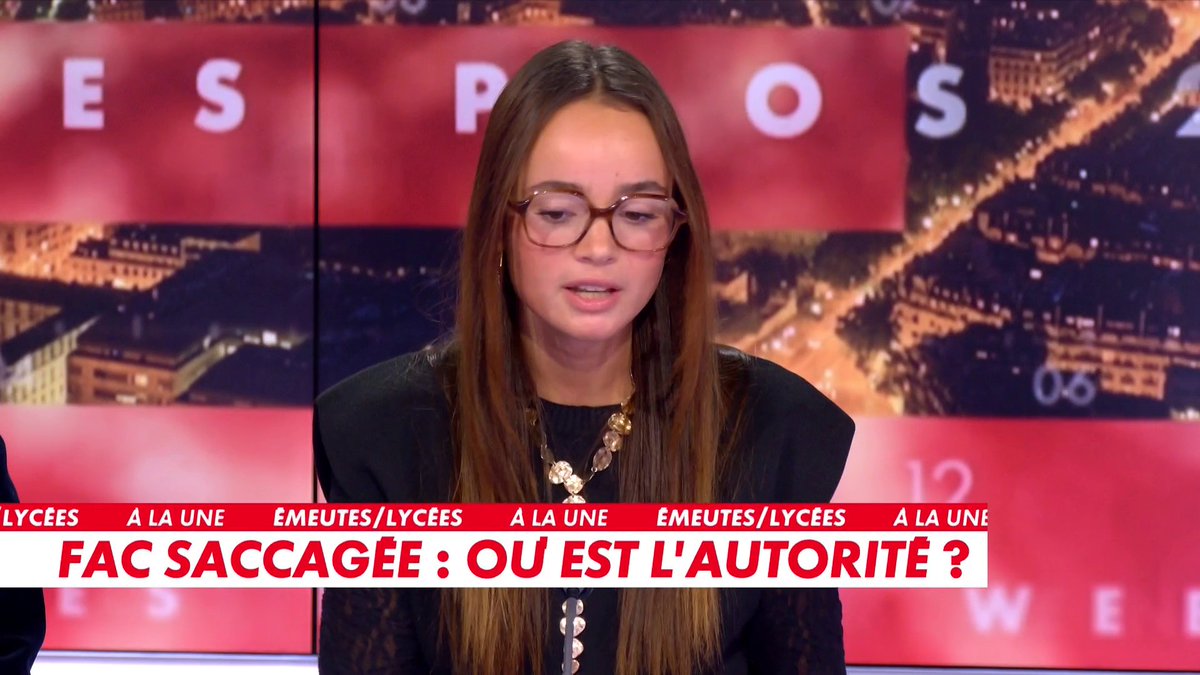
Destination Télé indicated that Louise Montangon had gathered 814,000 viewers on CNEWS at 8 PM the day before, with a peak at 976,000 at 8:46 PM. The account also reported 612,000 viewers for C politique on France 5, 422,000 for BFMTV, and 271,000 for LCI. It cited a statement from Montangon calling on teachers to stop seeing themselves as activists. https://t.co/UrEk2P9Aqj #Télévision #Audience #Média (translated)
The Poland News reported that in Poznań, a 29-year-old woman lost control of a speeding Audi and crashed into a tram stop. The car reportedly spun several times on the road before coming to a stop in the middle of the street. According to reports, the driver fled the scene, abandoning the car, and police apprehended her several hours later at one of the hostels in Poznań. The account stated that the woman had a court-imposed ban on driving motor vehicles and was sober at the time of her arrest. No one was injured in the incident. The 29-year-old was to face charges, including violating the ban and endangering traffic safety; she faced up to 5 years in prison for the violation. #Poznań #wypadek #prawo (translated)
🧭 40 ans après la Charte d’Ottawa, Theresa Tam soutient qu’il ne faut pas remplacer les principes de la promotion de la santé, mais les appliquer aux crises actuelles. 📒 La promotion de la santé à l’ère des bouleversements : appliquer des principes durables dans un monde qui change ✍️ Theresa Tam, Agence de la santé publique du Canada, Ottawa Health promotion in an era of disruption: applying enduring principles in a changing world Capsules Audio de Pratiques en Santé 🎙️🎥 https://www.youtube.com/watch?v=JVxNrN_JZ9U Analyse de Pratiques en Santé et lien vers la source ℹ️➕ https://www.pratiquesensante.com/blog/pratiques-15/la-promotion-de-la-sante-a-l-ere-des-bouleversements-appliquer-des-principes-durables-dans-un-monde-qui-change-6252 📌 Pour les acteurs de la promotion de la santé, cet éditorial permet de relire les principes de la Charte d'Ottawa au regard des bouleversements récents décrits par l'autrice : COVID-19, urgences climatiques, crise des drogues toxiques, évolutions démographiques, transformation numérique, défiance et désinformation (p. 1). Il apporte des arguments pour défendre trois idées : investir dans le bien-être renforce aussi la résilience face aux crises (p. 1-2) ; la promotion de la santé gagne à sortir des silos et à s'associer à la gestion des urgences, aux soins, à l'éducation et aux politiques sociales, environnementales, économiques et numériques (p. 2, p. 3-4) ; les espaces numériques, en particulier ceux des enfants et des jeunes, font désormais partie des milieux de vie à prendre en compte (p. 3). Il invite enfin à choisir des mots qui parlent aux décideurs et aux communautés, comme bien-être, résilience communautaire, confiance ou cohésion sociale, sans renoncer au fond de la démarche (p. 3). 🇬🇧: Health promotion in an era of disruption: applying enduring principles in a changing world - https://www.pratiquesensante.com/en/blog/practices-15/health-promotion-in-an-era-of-disruption-applying-enduring-principles-in-a-changing-world-6252 #️⃣ #pratiquesensante #PromotionDeLaSanté #ChartedOttawa #BienÊtre #Résilience #ÉquitéEnSanté #SantéNumérique #Intersectorialité

Volkswagen is experiencing severe blows due to reduced sales in China and a decline in its premium brand Audi, resulting in a global decrease of 14.3% in car deliveries in the third quarter. #Volkswagen #VentesAutomobiles #Chine (translated)

Volkswagen recorded a 14.3% decline in car sales in the third quarter, selling about 1.89 million vehicles, while Audi experienced a drop of nearly 20%. #Volkswagen #VentesAutomobiles #Chine (translated)
Audi recorded another dramatic decline in sales figures in the third quarter of 2026, with almost one-fifth fewer vehicles delivered compared to the previous year, attributed to strategic missteps and intensified competition. #Audi #Verkaufszahlen #Automobilindustrie (translated)

Emanuel Boeminghaus said that Volkswagen delivered 1.89 million vehicles worldwide in the third quarter of 2026 - about 315,000 fewer than in the same period last year, a decline of 14.3 percent. In China, sales fell by 38.5 percent. Boeminghaus described Volkswagen and Audi as being in free fall. For the first nine months of 2026, he mentioned over six million vehicles sold worldwide. This is about 600,000 cars or 9 percent fewer than in the same period last year. According to the figures, the decline accelerated in the third quarter. https://t.co/VCQeOmmFby #Volkswagen #Automobilindustrie #Absatzkrise (translated)
Emanuel Boeminghaus wrote that the current numbers from Audi and VW have overtaken the debate about the cut of 50,000, 100,000, or 150,000 jobs. For both companies, it has now become about their own survival. The decline is happening faster than the corporations can react, and it is costing companies of this size a lot of money, he explained. The unions can no longer demand anything but can only pray, Boeminghaus wrote. #Automobilindustrie #Arbeitsplätze #Wirtschaft (translated)
Emanuel Boeminghaus wrote that Audi delivered 314,905 vehicles in the third quarter of 2026, which is a 19.7 percent decrease compared to the same period last year. In the second quarter, the decline was still around 8 percent. In the first nine months, sales dropped by 11.4 percent to 1.04 million vehicles. The declines were particularly strong in China, with nearly 25 percent, and in the USA, with around 17 percent. Boeminghaus cited high competitive pressure, US tariffs, and model changes as burdens. In Germany and Europe, however, Audi recorded slight increases. Boeminghaus described the development as a significant slump and wrote that the first German car manufacturer is experiencing a "flow separation." He cited t-online and dpa-AFX from October 12, 2026, as sources. https://t.co/BspP4hRPpM #Automobilindustrie #Absatzkrise #Audi (translated)
Audi has sold 11.4 percent fewer cars this year, with sales in China down by almost a quarter and by 17.3 percent in the USA, while business in Europe increased. #Audi #Automarkt #China (translated)

The regulatory authority RTR must initiate a procedure to revoke the license of Oe24.tv after the broadcaster allowed discriminatory remarks about the Chinese people in an interview with former BZÖ politician Stefan Petzner, which were classified as serious legal violations under the Audiovisual Media Services Act. #Hassrede #Medienverantwortung #CoronaPandemie (translated)

LETTERE MERIDIANE — “TEATRO-EDICOLA” OF SAN SEVERO CONQUERS THE WORLD SOURCE: https://www.letteremeridiane.org/2026/10/il-teatro-edicola-di-san-severo-conquista-il-mondo/?fbclid=IwY2xjawU4oqFleHRuA2FlbQIxMQBwZG9mAXNydGMGYXBwX2lkEDIyMjAzOTE3ODgyMDA4OTIAAR5rVEwYs6UUXg7v-P0SyIQ_DRb_F6ZiY58OcseYoV4J7atcTiERnhWaqKM2pw_aem_Njle1jq1XLzHr93KLBUcVA After “Broadway World”, the “Los Angeles Journal”, “The Psychologist (British Psychological Association)” and Hollywood Beat Magazine, its “academic consecration” has now arrived courtesy of Stanford University. As I have already emphasised in my article on the revival of the GIO Festival in Foggia, celebrated by BroadwayWorld for the world stage premiere of the Giordano’s opera Marina (1888), the province of Foggia has long ceased to be peripheral. It happens when it finds an idea that shifts the coordinates: well, in San Severo, 40 kilometres from Foggia, it has happened again. Only this time an orchestra was not needed; six chairs were enough. The celebrated Teatro-Edicola of San Severo artistic director Francesco Gravino of the theatre company Foyer ’97 has been featured in the academic journal “Stanford Social Innovation Review (SSIR)” as an academic case study. The news, relayed on 19 September 2026 by ANSA Nazionale, looked like a misprint. Then it became clear that it was not. SSIR, an award-winning publication covering multisectoral solutions to global problems, included the project in its Dispatches section with the reportage “The Six-Seat Revolution”. It is the inverse trajectory to that of the GIO Festival: not a forgotten opera returning to a grand historic Italian horseshoe theatre, but an entire theatre reborn inside a disused place, forgotten by man. There are moments when past and future intertwine to create something visionary, innovative, artistically “revolutionary”: San Severo experienced one of those moments on the morning of 27 March 2026, during World Theatre Day, when the shutter of a newsstand closed for six years in Via Matteo Tondi was reopened “not to sell newspapers, but to offer stirring stories”, to quote Gravino’s motto. The idea of the visionary Francesco Gravino, artistic director, stage director and actor of the San Severo company Foyer ’97, active for at least 30 years in Capitanata, centred on the kiosk, hexagonal in metal and glass, granted free of charge by its owner Pino Frau, by now an urban relic created by the publishing crisis of the early 2000s: today in Italy active newsstands have fallen from about 35,000 in 2005 to about 20,000 in 2024, a decline of 42.8%. Gravino and eleven other actors restructured it in two weeks of work, without institutional funding, and transformed it into what is now under examination by the London commission of Guinness World Records as the “world’s smallest theatre”. The formula is deliberately austere: six spectators at a time outside, actors inside at less than a metre’s distance, 15-minute performances, continuous rotation from 11:00 to 20:45, texts ranging from Goldoni to Chekhov, from Ibsen to Dacia Maraini. On the door a QR code with an original theatrical warning: “Warning! This QR code transforms passers-by into actors. Scan only if ready.” The numbers immediately showed that it was no boutade: more than 60 people in a single afternoon, three inaugural days that sold out. But above all a positive echo that went beyond the borders of San Severo. “Broadway World” (just as in the previous case of the GIO Festival), the world’s most influential theatre criticism outlet with over 5.5 million monthly views, devoted exclusive coverage to it on 27 April 2026: “An Abandoned Italian Newsstand Just Became the World’s Smallest Theatre”. Not a mere listing, but an analysis: “There is no foyer, there is no balcony, there is no grid. There is barely a wing. What there is is something almost unrecognisable as an evening at the theatre, and for that very reason it is all the more powerful.” “Broadway World” captured Gravino’s manifesto idea: “This is a theatre of proximity. In an era of digital distance, we are putting human contact back at the centre,” framing it as “More than a clever exercise in site-specific theatre. It is a reappropriation.” All of this, in a Mezzogiorno of Italy often narrated only in terms of organised crime and marginalisation. To that seal of approval was added another, even more disorienting for a newsstand in San Severo: the “Los Angeles Journal”, one of the most influential publications on the West Coast for the performing arts. On 12 May 2026, it headlined thus: “San Severo’s Teatro-Edicola as an Innovative Model for Los Angeles Theaters?” opening as follows: “In a city in southern Italy that Hollywood has never heard of, a theatre director has just built the smallest stage in the world: six seats, fifteen minutes, zero distance. Los Angeles should pay attention.” The “Los Angeles Journal” does not indulge in folklore, but places the kiosk in Via Matteo Tondi alongside the prestigious 1,600-seat Ahmanson Theatre in Los Angeles, the Pantages of Broadway in Hollywood, the 99-seat plan of Rogue Machine, the Odyssey, the Victory Theatre and the Hollywood Fringe. It even recalls Ethan Marks’s Electrical Box Theatre, a veritable electrical box lined with red velvet in downtown Los Angeles, to argue that Gravino has taken to the extreme the question Los Angeles has been asking itself for decades: How small can a stage become before it ceases to be a stage? And it recognizes the San Severo urban model: almost zero cost, two weeks of work and six chairs, in return for immediate provincial, regional and national media coverage, recognition by the San Severo’s Municipal Administration, and a format exportable anywhere. Then, the third American piece came from “Hollywood Beat Magazine” on 20 April 2026: Six seats. Fifteen minutes. One actor. No stage. The magazine recounts the kiosk in Via Tondi left disused for almost six years, the contemporary six-seat cultural outpost, placing Francesco Gravino in a distinguished genealogy: Richard Schechner and environmental theatre, Jerzy Grotowski and poor theatre, Nicolas Bourriaud and relational aesthetics. But it closes with pragmatism: it is not a thesis, it is fixing a street corner, that is, repairing an urban street corner by asking not how large a theatre can become, but how small it must become again to recover its original power. And finally, the celebrated London-based “The Psychologist”, the journal of the “British Psychological Society (BPS)”, the oldest psychological society in the world, transformed the Teatro-Edicola into a scientific case study: on 30 July 2026 it published “The world’s smallest theatre — and Psychologists’ next act”, starting from the same detail, the morning of 27 March when the metal shutter of the hexagonal kiosk in Via Tondi reopened after six years, six people inside, an actor at less than a metre’s distance beginning Chekhov. It describes the formula: six spectators, 15 minutes, 11 actors over 10 hours, from Goldoni to Euripides, inside a kiosk where the fourth wall does not break because architecturally it never existed. But the BPS goes a step further: it cites the 2025 studies by Damien Gabriel in IBRO Neuroscience Reports, that live performance generates measurably stronger emotional and physiological activation than video, and introduces Edward Hall’s proxemics: below one metre is intimate space, reserved for doctors, close friends, lovers. In that one-square-metre space, the actor’s breath is audible, micro-expressions legible, the self-other boundary becomes permeable. The Teatro-Edicola “does not make theatre better, it makes it inevitable”. And it is here that one understands why Stanford is studying it as an academic case study in social innovation, not as a case of artistic originality. In Italy, meanwhile, the national media circuit had already picked up the phenomenon: RaiNews — TG2 Storie brought it to RaiDue at midnight on 19 April. RTL 102.5 devoted space to the format conceived by Gravino and developed by Foyer ’97 in the heart of San Severo in Via Tondi, defining it as a permanent micro-stage capable of bringing theatre into public space. ANSA.it, Gazzetta del Mezzogiorno, La Repubblica, TG2000, Radio Capital, Swiss RSI, ANSA Brazil and many others followed. And for the record: Fiorello praised it in La Pennicanza as an artistic case inspired by his Edicola Fiore, and Biagio Antonacci, on his tour in the Augustan amphitheatre of Lucera, made a “fact-finding” stop at the Teatro-Edicola singing the celebrated and nostalgic Iris in front of an audience certainly larger than the “six seats”. Francesco Gravino’s theatre company Foyer ’97 was not born yesterday: behind it lie the Teatro-Cantina of 2016, the underground theatre, and in 2011 a performance on the bell tower of a church in the centre of San Severo at 45 metres high. The Teatro-Edicola completes, in Gravino’s words, “the entire vertical extension of theatre: underground, street level, rooftop”. And it is preparing for its thirtieth anniversary in 2027 aiming to purchase the kiosk to make it permanent, exporting the “San Severo Model” to Rome, Lucca, and to the festivals of Santarcangelo and Todi. As with the GIO Festival, someone might dare to claim that it is merely a stunt, but when BroadwayWorld places you alongside the Los Angeles Opera House, the “Los Angeles Journa”l proposes you as a model for Hollywood, “Hollywood Beat Magazine” reads you through Grotowski and the “British Psychological Society” uses you to explain mirror neurones, it is no longer a stunt but an excellent artistic and academic positioning. To those who still whisper that Foggia and Capitanata are provincial, the answer is now written on two opposite and complementary fronts: on 5 June in Foggia a 138-year-old opera found the stage again at the Giordano ending up on BroadwayWorld; on 27 March in San Severo a 4-square-metre kiosk invented a stage that did not exist, ending up at Stanford, in Los Angeles, in Hollywood and in London. The periphery, when it has a precise idea, becomes the centre. Even with six chairs. Luciano Magaldi Sardella

When I saw the video, I understood where the recordings had been made: the air conditioning unit. I inspected it but found nothing. I realized they had been able to install and uninstall the microcamera with extreme ease. The quality of the images and audio was very good despite the darkness: it must have been a very sophisticated product. #tecnooppressione #sorveglianza #dirittiumani (translated)