WRLD

Search

#pragmatism
Luciano Magaldi Sardella (PhD) 45m

LETTERE MERIDIANE — “TEATRO-EDICOLA” OF SAN SEVERO CONQUERS THE WORLD SOURCE: https://www.letteremeridiane.org/2026/10/il-teatro-edicola-di-san-severo-conquista-il-mondo/?fbclid=IwY2xjawU4oqFleHRuA2FlbQIxMQBwZG9mAXNydGMGYXBwX2lkEDIyMjAzOTE3ODgyMDA4OTIAAR5rVEwYs6UUXg7v-P0SyIQ_DRb_F6ZiY58OcseYoV4J7atcTiERnhWaqKM2pw_aem_Njle1jq1XLzHr93KLBUcVA After “Broadway World”, the “Los Angeles Journal”, “The Psychologist (British Psychological Association)” and Hollywood Beat Magazine, its “academic consecration” has now arrived courtesy of Stanford University. As I have already emphasised in my article on the revival of the GIO Festival in Foggia, celebrated by BroadwayWorld for the world stage premiere of the Giordano’s opera Marina (1888), the province of Foggia has long ceased to be peripheral. It happens when it finds an idea that shifts the coordinates: well, in San Severo, 40 kilometres from Foggia, it has happened again. Only this time an orchestra was not needed; six chairs were enough. The celebrated Teatro-Edicola of San Severo artistic director Francesco Gravino of the theatre company Foyer ’97 has been featured in the academic journal “Stanford Social Innovation Review (SSIR)” as an academic case study. The news, relayed on 19 September 2026 by ANSA Nazionale, looked like a misprint. Then it became clear that it was not. SSIR, an award-winning publication covering multisectoral solutions to global problems, included the project in its Dispatches section with the reportage “The Six-Seat Revolution”. It is the inverse trajectory to that of the GIO Festival: not a forgotten opera returning to a grand historic Italian horseshoe theatre, but an entire theatre reborn inside a disused place, forgotten by man. There are moments when past and future intertwine to create something visionary, innovative, artistically “revolutionary”: San Severo experienced one of those moments on the morning of 27 March 2026, during World Theatre Day, when the shutter of a newsstand closed for six years in Via Matteo Tondi was reopened “not to sell newspapers, but to offer stirring stories”, to quote Gravino’s motto. The idea of the visionary Francesco Gravino, artistic director, stage director and actor of the San Severo company Foyer ’97, active for at least 30 years in Capitanata, centred on the kiosk, hexagonal in metal and glass, granted free of charge by its owner Pino Frau, by now an urban relic created by the publishing crisis of the early 2000s: today in Italy active newsstands have fallen from about 35,000 in 2005 to about 20,000 in 2024, a decline of 42.8%. Gravino and eleven other actors restructured it in two weeks of work, without institutional funding, and transformed it into what is now under examination by the London commission of Guinness World Records as the “world’s smallest theatre”. The formula is deliberately austere: six spectators at a time outside, actors inside at less than a metre’s distance, 15-minute performances, continuous rotation from 11:00 to 20:45, texts ranging from Goldoni to Chekhov, from Ibsen to Dacia Maraini. On the door a QR code with an original theatrical warning: “Warning! This QR code transforms passers-by into actors. Scan only if ready.” The numbers immediately showed that it was no boutade: more than 60 people in a single afternoon, three inaugural days that sold out. But above all a positive echo that went beyond the borders of San Severo. “Broadway World” (just as in the previous case of the GIO Festival), the world’s most influential theatre criticism outlet with over 5.5 million monthly views, devoted exclusive coverage to it on 27 April 2026: “An Abandoned Italian Newsstand Just Became the World’s Smallest Theatre”. Not a mere listing, but an analysis: “There is no foyer, there is no balcony, there is no grid. There is barely a wing. What there is is something almost unrecognisable as an evening at the theatre, and for that very reason it is all the more powerful.” “Broadway World” captured Gravino’s manifesto idea: “This is a theatre of proximity. In an era of digital distance, we are putting human contact back at the centre,” framing it as “More than a clever exercise in site-specific theatre. It is a reappropriation.” All of this, in a Mezzogiorno of Italy often narrated only in terms of organised crime and marginalisation. To that seal of approval was added another, even more disorienting for a newsstand in San Severo: the “Los Angeles Journal”, one of the most influential publications on the West Coast for the performing arts. On 12 May 2026, it headlined thus: “San Severo’s Teatro-Edicola as an Innovative Model for Los Angeles Theaters?” opening as follows: “In a city in southern Italy that Hollywood has never heard of, a theatre director has just built the smallest stage in the world: six seats, fifteen minutes, zero distance. Los Angeles should pay attention.” The “Los Angeles Journal” does not indulge in folklore, but places the kiosk in Via Matteo Tondi alongside the prestigious 1,600-seat Ahmanson Theatre in Los Angeles, the Pantages of Broadway in Hollywood, the 99-seat plan of Rogue Machine, the Odyssey, the Victory Theatre and the Hollywood Fringe. It even recalls Ethan Marks’s Electrical Box Theatre, a veritable electrical box lined with red velvet in downtown Los Angeles, to argue that Gravino has taken to the extreme the question Los Angeles has been asking itself for decades: How small can a stage become before it ceases to be a stage? And it recognizes the San Severo urban model: almost zero cost, two weeks of work and six chairs, in return for immediate provincial, regional and national media coverage, recognition by the San Severo’s Municipal Administration, and a format exportable anywhere. Then, the third American piece came from “Hollywood Beat Magazine” on 20 April 2026: Six seats. Fifteen minutes. One actor. No stage. The magazine recounts the kiosk in Via Tondi left disused for almost six years, the contemporary six-seat cultural outpost, placing Francesco Gravino in a distinguished genealogy: Richard Schechner and environmental theatre, Jerzy Grotowski and poor theatre, Nicolas Bourriaud and relational aesthetics. But it closes with pragmatism: it is not a thesis, it is fixing a street corner, that is, repairing an urban street corner by asking not how large a theatre can become, but how small it must become again to recover its original power. And finally, the celebrated London-based “The Psychologist”, the journal of the “British Psychological Society (BPS)”, the oldest psychological society in the world, transformed the Teatro-Edicola into a scientific case study: on 30 July 2026 it published “The world’s smallest theatre — and Psychologists’ next act”, starting from the same detail, the morning of 27 March when the metal shutter of the hexagonal kiosk in Via Tondi reopened after six years, six people inside, an actor at less than a metre’s distance beginning Chekhov. It describes the formula: six spectators, 15 minutes, 11 actors over 10 hours, from Goldoni to Euripides, inside a kiosk where the fourth wall does not break because architecturally it never existed. But the BPS goes a step further: it cites the 2025 studies by Damien Gabriel in IBRO Neuroscience Reports, that live performance generates measurably stronger emotional and physiological activation than video, and introduces Edward Hall’s proxemics: below one metre is intimate space, reserved for doctors, close friends, lovers. In that one-square-metre space, the actor’s breath is audible, micro-expressions legible, the self-other boundary becomes permeable. The Teatro-Edicola “does not make theatre better, it makes it inevitable”. And it is here that one understands why Stanford is studying it as an academic case study in social innovation, not as a case of artistic originality. In Italy, meanwhile, the national media circuit had already picked up the phenomenon: RaiNews — TG2 Storie brought it to RaiDue at midnight on 19 April. RTL 102.5 devoted space to the format conceived by Gravino and developed by Foyer ’97 in the heart of San Severo in Via Tondi, defining it as a permanent micro-stage capable of bringing theatre into public space. ANSA.it, Gazzetta del Mezzogiorno, La Repubblica, TG2000, Radio Capital, Swiss RSI, ANSA Brazil and many others followed. And for the record: Fiorello praised it in La Pennicanza as an artistic case inspired by his Edicola Fiore, and Biagio Antonacci, on his tour in the Augustan amphitheatre of Lucera, made a “fact-finding” stop at the Teatro-Edicola singing the celebrated and nostalgic Iris in front of an audience certainly larger than the “six seats”. Francesco Gravino’s theatre company Foyer ’97 was not born yesterday: behind it lie the Teatro-Cantina of 2016, the underground theatre, and in 2011 a performance on the bell tower of a church in the centre of San Severo at 45 metres high. The Teatro-Edicola completes, in Gravino’s words, “the entire vertical extension of theatre: underground, street level, rooftop”. And it is preparing for its thirtieth anniversary in 2027 aiming to purchase the kiosk to make it permanent, exporting the “San Severo Model” to Rome, Lucca, and to the festivals of Santarcangelo and Todi. As with the GIO Festival, someone might dare to claim that it is merely a stunt, but when BroadwayWorld places you alongside the Los Angeles Opera House, the “Los Angeles Journa”l proposes you as a model for Hollywood, “Hollywood Beat Magazine” reads you through Grotowski and the “British Psychological Society” uses you to explain mirror neurones, it is no longer a stunt but an excellent artistic and academic positioning. To those who still whisper that Foggia and Capitanata are provincial, the answer is now written on two opposite and complementary fronts: on 5 June in Foggia a 138-year-old opera found the stage again at the Giordano ending up on BroadwayWorld; on 27 March in San Severo a 4-square-metre kiosk invented a stage that did not exist, ending up at Stanford, in Los Angeles, in Hollywood and in London. The periphery, when it has a precise idea, becomes the centre. Even with six chairs. Luciano Magaldi Sardella

www.letteremeridiane.org
Il teatro-edicola di San Severo conquista il mondo
49
Petr Bystron 2d

The author wrote that Donald Trump relied on pragmatism and relaxation, aiming to resume Russian energy flows and put an end to attacks on infrastructure. In contrast, Germany and the EU stuck to a confrontational policy, risking self-isolation according to the author. https://t.co/3thghI0rm9 #Trump #Energiepolitik #EU #DE #US #RU (translated)

3172
Saskia Ludwig 3d

Saskia Ludwig wrote to Karin Prien that there are already three leftist parties and her approach to engage with the Left has clearly failed. Boris Rhein was completely right, Ludwig explained. From her perspective, Germany's historical task consists of compromise, pragmatism, and reality-based politics instead of implementing ideologies. https://t.co/ASQPqLRooO #Politik #Parteien #Pragmatismus (translated)

2901
O Jornaleiro 3d

The journalist stated that Flávio Bolsonaro's campaign had asked the Electoral Court for the suspension of 32 Instagram pages until after the second round, the removal of 221 posts, and restrictions on other profiles, including media outlets and parliamentarians. According to the author, another 16 profiles were mentioned in requests for removal, content restriction, or monitoring, without a request for complete suspension. Among the profiles he recommended to follow and support, the journalist mentioned Mídia Ninja, Pragmatismo, Thiago Resiste, Leonel Radde, Gleisi Hoffmann, CUT Brasil, PT na Câmara, Maria do Rosário, Pimenta, Rogério Correia, and Duda Salabert. He also cited, among the accounts targeted by other measures, Brasil com Lula, PT-RJ, Pedro Uczai, PT Boa Viagem, and Ana Paula Lima. The author criticized the requests and stated that the petition included profiles without posts classified as false in the table presented by the lawyers. He also said that the requests were awaiting a judicial decision and that, in that action, there was no order to suspend accounts on X. The publication indicated the TSE as the source, in the process AIJE 0602742-32.2026.6.00.0000. #LiberdadeDeExpressão #Censura #Eleições2023 (translated)

2904
David Rangl 5d

David Rangl shared part of the speech by writer Radka Denemarková at the opening of the Frankfurt Book Fair, where Czech Republic was the guest of honor, and urged people to read. In her speech, Denemarková stated that, in her opinion, one cannot separate politics from literature at a time when Europe is heading towards authoritarianism, the power ambitions of individuals can plunge a state into chaos, and two former collaborators of the communist State Security are part of the Czech government. According to her, democracy has been limited by society to business and economic pragmatism. She also mentioned the threat that continental China poses to free Taiwan, the defense of Ukrainian freedom at the cost of many human lives, and the normalization of new fascisms, totalitarianisms, and genocides. #literatura #politika #Frankfurtskýknižníveletrh (translated)

2933
Marta Kos 6d

The author said that, together with Member States, they had made more progress on enlargement in the previous two years than in the past two decades. They wrote that the Union should now prepare for expansion, and said a communication published that day set out an approach based on realism and pragmatism. https://t.co/WGTgwE4kFF #EUenlargement #Unity #Pragmatism #EU

2940
Barry Malone 6d

The author argued that realpolitik, pragmatism and concerns about “electability” led to centrist compromise and incremental change, despite the country needing more radical change. They said they admired the Greens for holding their position on a range of issues, regardless of whether those positions were considered electable.

2941
Miroslav Krobot 6d

Theater and film director Miroslav Krobot described Havel's way of thinking in an interview as "young," unburdened by the utilitarianism and pragmatism more typical of older age. #TurkovaNehoda #PředčasnéVolby #Havel90 (translated)

R5M: Policie zveřejnila závěry z vyšetřování Turkovy nehody | Česko si připomíná Havlovy nedožité devadesátiny
denikn.cz
1811
Maddalena Loy 6d

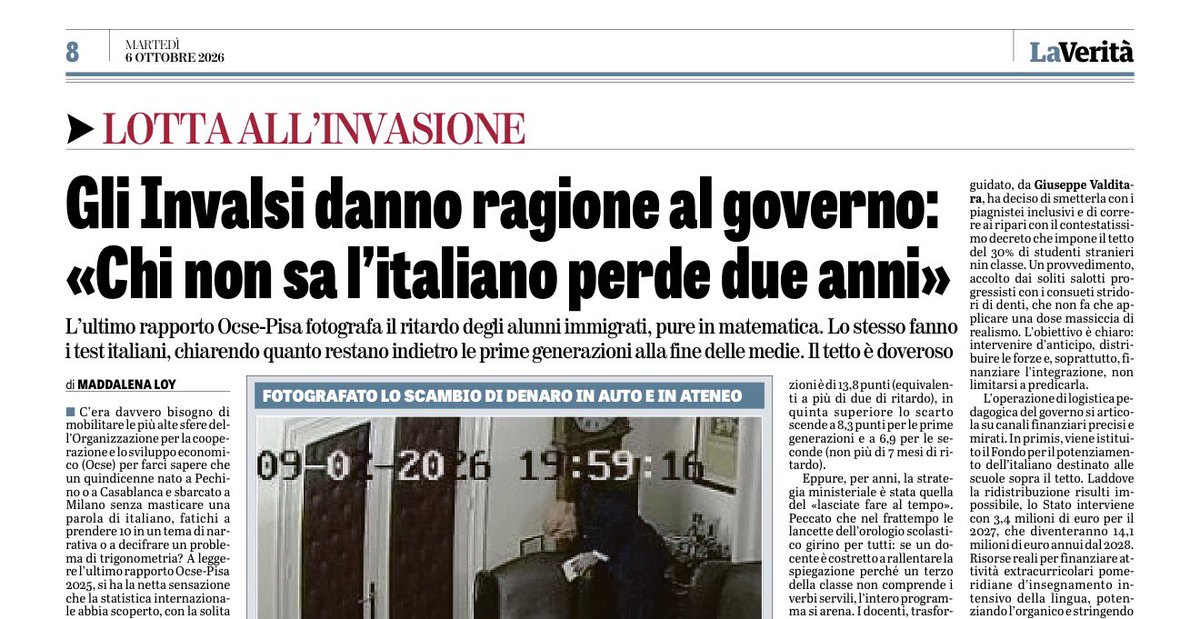
Maddalena Loy had written today in La Verità that the data from the OECD and Invalsi showed, in her opinion, a delay of foreign students equivalent to 1.64 years in mathematics and 1.22 in reading. She attributed to the Italian school a deterioration of skills and a penalization of merit, arguing that the 30% cap set by the Ministry was a pragmatic measure to protect public schools. #scuola #istruzione #inclusione (translated)

3056
Maddalena Loy 7d

Maddalena Loy wrote in Panorama that the German establishment had prepared to counter a populist figure with a paramilitary image, but found itself facing Alice Weidel, a former Goldman Sachs analyst. According to Loy, while her opponents focused on Weidel's personal contradictions, the AfD leader challenged the official positions of the CDU and progressives by relying on ruthless economic pragmatism. Loy cited the historic electoral results in the eastern Länder and the polls which, according to her, indicated the AfD as the leading German party. She argued that these results had rendered the quarantine ineffective and left the left stagnant. According to the author, even in Germany they had not anticipated Weidel's rise. #Germania #politica #elezioni (translated)

11691
Martin Bartkovský 2w

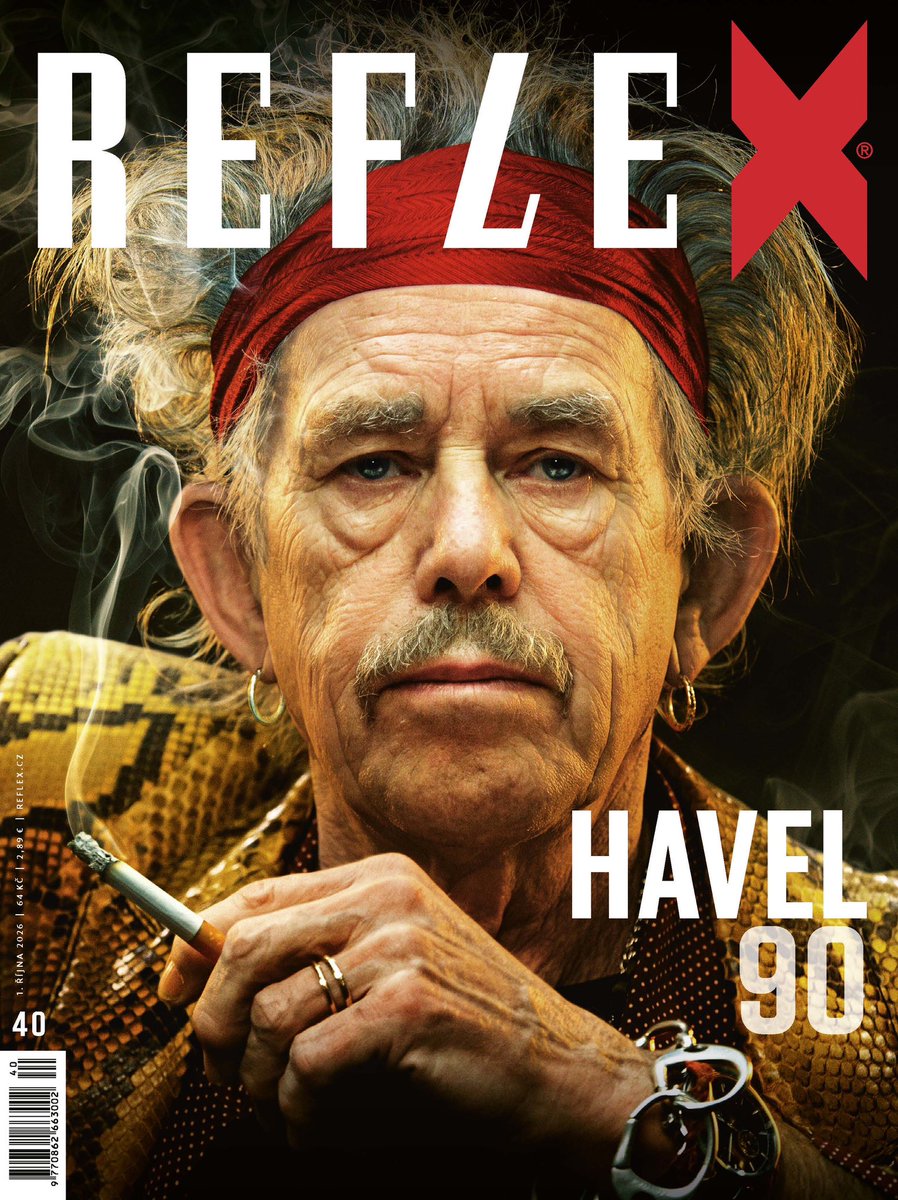
A very nice issue of Reflex has just come out today. I would be glad if you would give it a chance. Here is my editorial on it: HOW SHOULD WE REMEMBER VÁCLAV HAVEL? I often say that I am "as old as the revolution," by which I obviously mean the Velvet one. And this alone brings a whole set of advantages. Your age always reflects the anniversary of the fall of the communist regime in Czechoslovakia, so you remember it well. I am not burdened by the sins of the past, having to decide whether to collaborate with the regime or not. Likewise, I do not have to blame myself for missing the harsh onset of capitalism and coupon privatization. I had to learn to speak first. And to walk. Those of us born in the early '90s sometimes tend to refer to ourselves as "Havel's children." But how can I identify with a person I didn't properly experience in adulthood, yet who so fundamentally shaped the state I grew up in? And how should I, as well as our entire nation, actually remember Havel? I cannot remember Havel like many other older journalists do. I leave it to my more experienced colleagues. I have only one small personal memory of him. I was about eight years old, and we were on a school excursion in Prague. My classmate and I were lagging at the end of our class line. There was a long queue at Wenceslas Square, and we walked along it. We got a bit distracted and created a gap. And into that gap stepped a crowd of people, in the middle of which walked Václav Havel. We both started staring at him and quickly exclaimed, "Good day, Mr. President," and he replied to us with his typical stammering 'r': "Hello, boys," and then disappeared into a bookstore to sign his books. The queue was standing there for him. It was the year he was dealing with health complications, delivered the famous Rudolfín speech, and signed the absolutely fundamental Czech-German declaration. But I only remember the "hello, boys." And that’s all. When he died in 2011, I was starting in the media, so I was only responsible for some minor media outputs around the funeral. Otherwise, I perceived him as the person whose picture hung next to the blackboard throughout my school life. On television, he appears either as a "gumshoe" in a satirical sketch or giving some speech that is too complicated for my child self to listen to. My opinions of him have therefore formed mostly indirectly, like for most people in our country. Through plays and compulsory reading in school, recordings of speeches, and the exceptional film Citizen Havel, where he allowed us to peer candidly into his private life. I never succumbed to the need to idolize him; I was most fascinated by the fact that despite such a rich life, he was essentially a "normal guy" who enjoyed life and who, even in the presidential office, could fulfill his dreams. A smoke with the Rolling Stones, meditation with the Dalai Lama, a beer with Clinton. None of that made him a better politician. Personally, it made him a human to me. The point of Havel's legacy and its breadth is, in my opinion, that everyone can remember him in their own way. Some remember him as the best person in history, others as a brilliant politician who is missed by the Czech Republic. Others see him as a naive believer in truth who preferred grand gestures over political pragmatism. Some as a womanizer, others as a great world author of absurd drama. Historians and philosophers still debate his legacy to this day. So vehemently that due to one "ezonomist" and pseudophilosopher on an electric unicycle, his name was removed from the library's title. But I would like to highlight one thing about him that seems increasingly rare in today's world. He managed to grow old without becoming bitter. He did not turn into a grump shouting at the clouds. He did not allow himself to be dominated by eternal contrarianism and being against all mainstream opinions at any cost. At the same time, he wasn't afraid to confront the mainstream until the end. I would wish for all of us to grow old like Havel. It’s a pity he was given only 75 years. I would have liked to listen to him even at ninety, which he would have celebrated this year. #VáclavHavel #Reflex #historie (translated)

11781
Bonifacio Castellane 2w

Dire che l'11% non conta è da cretini. Dire che ha preso molto perché Reggio Calabria lo ha favorito è chiaramente sbagliato. Dire che l'operazione di Vannacci a Reggio Calabria è fallita è la verità. Dire che Reggio Calabria è un test indicativo per le politiche dell'anno prossimo è una roba che neanche un analfabeta della politica potrebbe dire... C'è molta emotività su Vannacci. Consiglio calma, realismo e pragmatismo. Perdere il Quirinale non sarà perdonato. #politica #ReggioCalabria #Vannacci

12963
Felipe Leme 2w

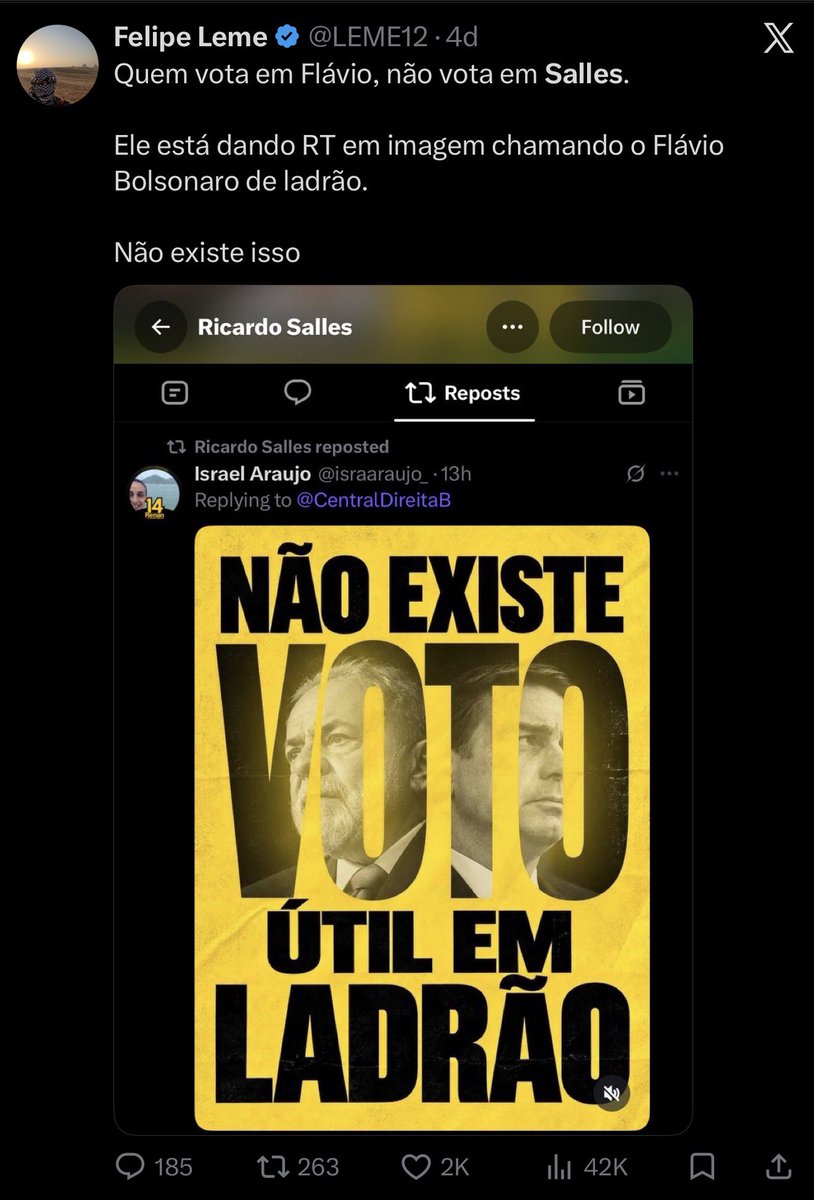
A desistência do Salles foi um trabalho bem concluído de quem abraçou a candidatura de Flavio e tem o mínimo de pragmatismo. Fui chamado de vendido pro 5º Elemento e duginista por expor a verdade, mas valeu a pena. Vitória de todos nós! https://t.co/13zJCF78LL #Política #Eleições2024 #Vitória

13435
MEMIS 2w

Sverige är illa ute och jag tror inte vår så kallade höger fixar detta. Fattar man allvaret så delar man inte ut 210 000 medborgarskap till primärt u-landsmänniskor. Behövs pragmatism och handlingskraft nu. Inte opportunistiska broilers som alltid är sjua på bollen. #Sverige #politik #kris

17156
Luz Mely Reyes 3w

Buenos días gente bella, Aquí van mis primeras impresiones sobre los acontecimientos del 22 de septiembre. Al mismo tiempo que Delcy Rodríguez se daba un baño de burocracia internacional en la ONU y se reunía con Donald Trump, María Corina Machado confirmaba su séptimo intento frustrado de regresar a Venezuela. Como la política venezolana de los últimos meses se parece cada vez más a una temporada de The Apprentice: Caracas Edition, para mí resulta indispensable asumir que casi todo lo que vemos en pantalla son puros efectos especiales. ¿A qué me refiero? Es más que evidente que la administración Trump avanza con un plan propio cuyo objetivo es el control y la rentabilidad de los recursos energéticos venezolanos. Mientras van por el botín, porque "al vencedor le pertenecen los despojos", nos entretenemos con el desfile de gestos rituales y encuentros privados filtrados a conveniencia por la parte interesada. Pedro J. Ramírez leyó hoy, en la mañana madrileña, el saludo de Delcy a Pedro Sánchez como el de una novia que se despide de un pretendiente menor porque ya tiene pactada la boda con un magnate. La metáfora es chocante, sí, pero describe a la perfección el pragmatismo del poder: el bromance D-D (Donald & Delcy) va viento en popa. Sin embargo, aquí todos parecen jugar a engañarse. La oposición, incluso la que se sienta a colaborar, busca desesperadamente justificar sus pasos para no admitir que quedó relegada a un papel de reparto. Y, de la misma manera, la cúpula del chavismo 3.0 se consuela con esa vieja máxima de "doblarse para no partirse". En el camino, a quien terminaron quebrando fue al país entero. Lo que viene en los próximos meses no es una apertura milagrosa, sino muy posiblemente el desmantelamiento formal de lo que queda de PDVSA y la sustitución silenciosa del régimen de explotación petrolera. Y eso sin que sus beneficios lleguen rápidamente a la población, porque esta es una industria lenta y porque la redistribución de la renta será aún más complicada por los nuevos modelos de negocio. Es posible que estemos ante el cambio de paradigma más radical de los últimos 60 años: el paso del Estado rentista propietario a una especie de factoría extractivista a bajo costo. Mientras Delcy y María Corina tragan sapos y cocodrilos, lamentablemente la mayoría de los venezolanos están tragando es mierda. ¡Abracitos! #Venezuela #Política #Energía

11548
V
Viktor Barth-Kron 3w

Konstruktiv pragmatism: Om Vänsterpartiet får göra Mohamed Abdukardir Ali till EU-minister kan de ta in en ersättare i riksdagen utan extra kostnad, samtidigt som alla kommer ha glömt bort honom om en månad. #politik #Vänsterpartiet #EUminister

19633
Gr@ntlɘr 🥨🍺 3w

Was für eine Shitshow um die LINKE in Berlin. Wer hat denn die Geister der alten SED, neuen Clanfreunde und jungen Antisemiten aus der geschrumpften Volkspartei Union kräftig mit gerufen? Wer hat sie umgarnt und für seine Macht gebraucht? Was predigen denn Köpfe der CDU wie Daniel Günther seit Jahren? Wer regiert denn im Osten von Gnaden der LINKE und muss seine Gesetze von denen schleifen lassen, Mario Voigt und Michael Kretschmer? Und wer hat in der einst konservativen CSU den Weg zur Kanzlerwahl geebnet, Herr Dobrindt? Und war es nicht ausgerechnet Markus Söder, der vor Sachsen-Anhalt für Pragmatismus gegenüber der LINKE warb? Was vergessen? #LINKE #Berlin #Politik

11907
Di.se 3w

Sverigedemokraternas framtida vägval, mellan radikalisering och fortsatt pragmatism, utgör en avgörande fråga för det svenska näringslivet och den politiska framtiden i Sverige, enligt Markus Uvell. #Sverigedemokraterna #näringsliv #politiskdebatt

www.di.se
SD:s vägval en nyckelfråga för näringslivet
7532
Bojkot Babišových výrobků 3w

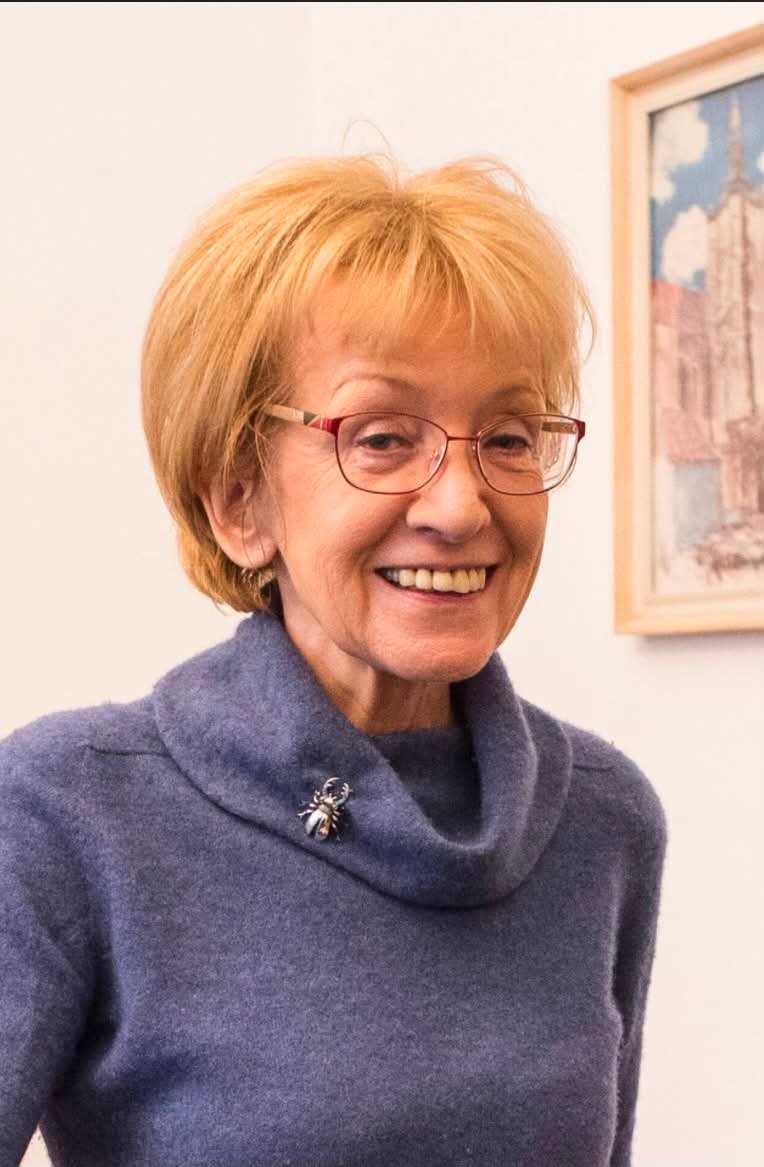
KDYSI POSÍLALI LIDI NA SMRT A STOUPALI ZA TO NAHORU. DNES STAČÍ OBEJÍT SOUD. Helena Válková sedí ve Sněmovně za ANO a od listopadu 2025 předsedá mandátovému a imunitnímu výboru — tomu, který rozhoduje, jestli poslance vydat spravedlnosti, nebo ho před ní schovat. Sedí i v ústavně-právním výboru a v podvýboru pro justici. Ta samá Helena Válková napsala v 70. letech společný odborný text s Josefem Urválkem — prokurátorem, který v roce 1950 poslal na smrt Miladu Horákovou. Když to v lednu 2020 vyplulo, tvrdila, že netušila, kdo Urválek je. Policii ale sama přiznala, že o jeho minulosti věděla nejpozději v roce 1977, dva roky před vydáním toho textu. A letos v únoru policejní Úřad dokumentace a vyšetřování zločinů komunismu uzavřel, že se Urválek na vraždě Horákové podílel vědomě a aktivně. Žena, která psala s Horákové katem, dnes drží klíč od dveří, kterými politik projde k soudu — nebo neprojde. A ten klíč použila okamžitě. Jako předsedkyně mandátového a imunitního výboru hlasovala proti vydání Andreje Babiše k trestnímu stíhání — tedy pro to, aby ho ochránila imunita. Zdůvodnila to tím, že kdyby Babiš nebyl politik, vůbec by stíhán nebyl. Výbor pak doporučil nevydat ani Tomia Okamuru — předsedu Sněmovny, který sám čelí obžalobě za plakáty SPD kvůli podněcování k nenávisti. A Sněmovna 5. března 2026 oba za imunitou schovala. A není v tom sama. Motoristé, třetí strana vlády, udělali ústavní krizi z toho, že prezident odmítl jmenovat ministrem Filipa Turka kvůli jeho výrokům — obvinili hlavu státu z porušení ústavy a Turka protlačili jako vládního zmocněnce. Vzorec je pořád stejný: když nám nevyhovuje soud, obejdeme ho. Když nám nevyhovuje prezident, řekneme, že porušuje ústavu. Když má jít náš člověk před soud, schováme ho za imunitu. A PROTI TOMU STOJÍ ONA Milada Horáková mohla za nacistů mlčet — nemlčela. Po válce mohla odejít — neodešla. Po únoru 1948 se mohla přizpůsobit — nepřizpůsobila se. Zaplatila za to životem: 27. června 1950 ji komunisté po vykonstruovaném procesu pověsili. Bylo jí 48, ostatky rodině nikdy nevydali. Nebyla nepohodlná proto, že byla radikální. Byla nepohodlná proto, že byla konzistentní — a člověk, který drží hodnoty za všech okolností, ukazuje ostatním jejich vlastní kompromisy. Přesně tahle hodnota se dnes ztrácí. Pragmatismus se stal ctností, hodnoty překážkou a moc si obchází spravedlnost jako tehdy. Demokracie přitom nepotřebuje mučedníky na piedestalu. Potřebuje občany, kteří se nenechají koupit. Horáková jím byla. Otázka je, co pro to děláme my. 🇨🇿 Zdroj: ✍️ Ondri Kolin https://t.co/LkzR1kMqdi #spravedlnost #demokracie #historie

11940
Mustafa Panshiri 3w

Vi dödliga förstår inte att Tand Ringqvist egentligen är pragmatisk och konstruktiv. https://t.co/njPhN2HpxL #pragmatism #konstruktion #politik

13566