WRLD

Search

#sosiaaliturva
Jari Mäkäräinen 4h

Jari Mäkäräinen criticized Sanna Ukkola's writing about the Prime Minister's meeting with Imam Sharmarke Said Aw-Mussen. According to Mäkäräinen, Ukkola regarded the meeting as ordinary work and believed that the imam, who was born in Turku, was being asked impossible questions regarding Sharia. Mäkäräinen argued that asking the imam was not a misunderstanding: in his view, the imam left open whether Sharia would be applied in Finland in family or criminal law matters. Mäkäräinen wrote that, according to him, freedom of religion did not justify the establishment of a parallel legal system alongside Finnish laws. He claimed that in Muslim-majority countries, freedom of religion, women's equality, and individual rights were not realized in liberal democracies due to Islamic doctrine and Sharia. He cited Lebanon as an example, where he believed the growth of the Muslim population and political organization undermined previous balance and led to civil war. In France, Sweden, Belgium, and Britain, he mentioned the visibility of parallel societies, honor-based violence, segregation of areas and schools, and pressure to accept practices related to Sharia. In Finland in the 2000s, Mäkäräinen claimed that groups with a Muslim background who had immigrated were connected to the overrepresentation of sexual offenses, unemployment, use of social security, and demands for their own rules. He believed that distinguishing criticism of Islam from calls for deportation did not make questions about Sharia suspect. According to Mäkäräinen, the primacy of the Finnish Constitution and criminal law should be clear in all matters, and Finland did not need to repeat the experiences of countries where the application of Sharia had been tried. https://t.co/bGpZ7VaTux #uskonnonvapaus #integratio #muslimit (translated)


1558
Jari Mäkäräinen 7h

Jari Mäkäräinen criticized an article in Helsingin Sanomat and said he had made corrections to it. According to him, the nonfiction writer Ari Haasio and Mattila had suggested that Finnish identity was ambiguous, compared the mistrust faced by evacuees from Karelia to current fears directed at Muslims, and stated that everyone was a descendant of immigrants. Mäkäräinen wrote that migration was an old phenomenon, but migrations from different times could not be equated. He noted that the first people arrived in what is now Finland about 11,000 years ago and believed that this did not provide a basis for equating the current migration from Afghanistan or Somalia with the arrivals of earlier traders, craftsmen, or industrial founders. He described Finlayson as an actor that built factories in capital-poor Finland, brought technology, and created jobs. Mäkäräinen compared him to a Mohammed coming from Somalia, who he described as illiterate and dependent on Kela support. He believed these examples illustrated different types of migration and claimed that there were differences in education, employment, cultural distance, and criminality. He also claimed that those coming from Afghanistan were overrepresented in rape statistics. Regarding the evacuees from Karelia, Mäkäräinen wrote that they had come from within Finland, spoke Finnish, and shared key features of Finnish culture. He said they had faced mistrust and derogatory name-calling, but believed they differed from current arrivals from Afghanistan, for example, in terms of adaptation, work ethic, and use of social security. Mäkäräinen also denied the comparison made by Haasio and Mattila between 19th-century antisemitism and the Somali discussions of the 1990s. According to him, the groups were not similar, and Jews had mostly integrated well. He argued that current migrations should be evaluated based on their impacts on employment, crime, and social security. Finally, he wrote that the continuity of society required, in his opinion, the adaptation of newcomers. #maahanmuutto #suomalaisuus #kulttuuri (translated)

1936
PS:n eduskuntaryhmä 2d

The parliamentary group believed that social security should be based on citizenship. The group justified its position by stating that Finland should not be responsible for the social security of the entire world. https://t.co/GRgauMCmco #sosiaaliturva #kansalaisuus #Suomi (translated)

2834
OsakeKeisari 3d

OsakeKeisari wrote that Jari Sarasvuo assessed that Finland needed more successful companies and entrepreneurs. According to Sarasvuo, there would be no need for discussion about the funding of social security if there were enough resources for it. He believed that 10 billion euros could be cut from the public finances, among other things, from administration. https://t.co/XLNdb83OTV #eläke #yrittäjyys #sosiaaliturva (translated)

2910
Perussuomalaiset 4d

The Finns Party wrote that the party's long-term goal was to tie social security to citizenship. It stated that Finland could not act as a "global social office." #ps #perussuomalaiset #sosiaaliturva https://t.co/0yVkNnYbk4 #perussuomalaiset #sosiaaliturva #politiikka (translated)

2925
Thunder ⚡️ 🇫🇮 5d

Thunder wrote that the pension system is, in his opinion, a scam that Alex Gunsberg and Roni had already discussed. He estimated that the system would collapse sooner or later and claimed that there were no jobs for those over 50. Additionally, he claimed that brain surgeons were being brought into the country on social security, who would receive pensions without paying pension contributions. https://t.co/WtGLmYfN19 #eläke #sosiaaliturva #työmarkkinat (translated)
2935
Jari Sarasvuo 6d

Jari Sarasvuo wrote that wealthier nations received, according to him, income transfers for their pensions and home renovations. He estimated that this did not affect his own standard of living, but he felt a bit sorry for the young, less fortunate, and the elderly. #tuloerot #sosiaaliturva #hyvinvointi (translated)

2945
Perussuomalaiset 6d

The Finns Party wrote that Marin's government had opened the opportunity for students from third countries and their family members to come to Finland and benefit from Finnish education and social security at the taxpayers' expense. The party stated that it had started to limit the program and said the work would continue in the next election term. According to them, the Finns Party was the only party that could continue this work. #siksiPS #perussuomalaiset #opiskelijat #maahanmuutto #opiskelijat #maahanmuutto #perussuomalaiset (translated)

3512
Heikki Pursiainen 6d

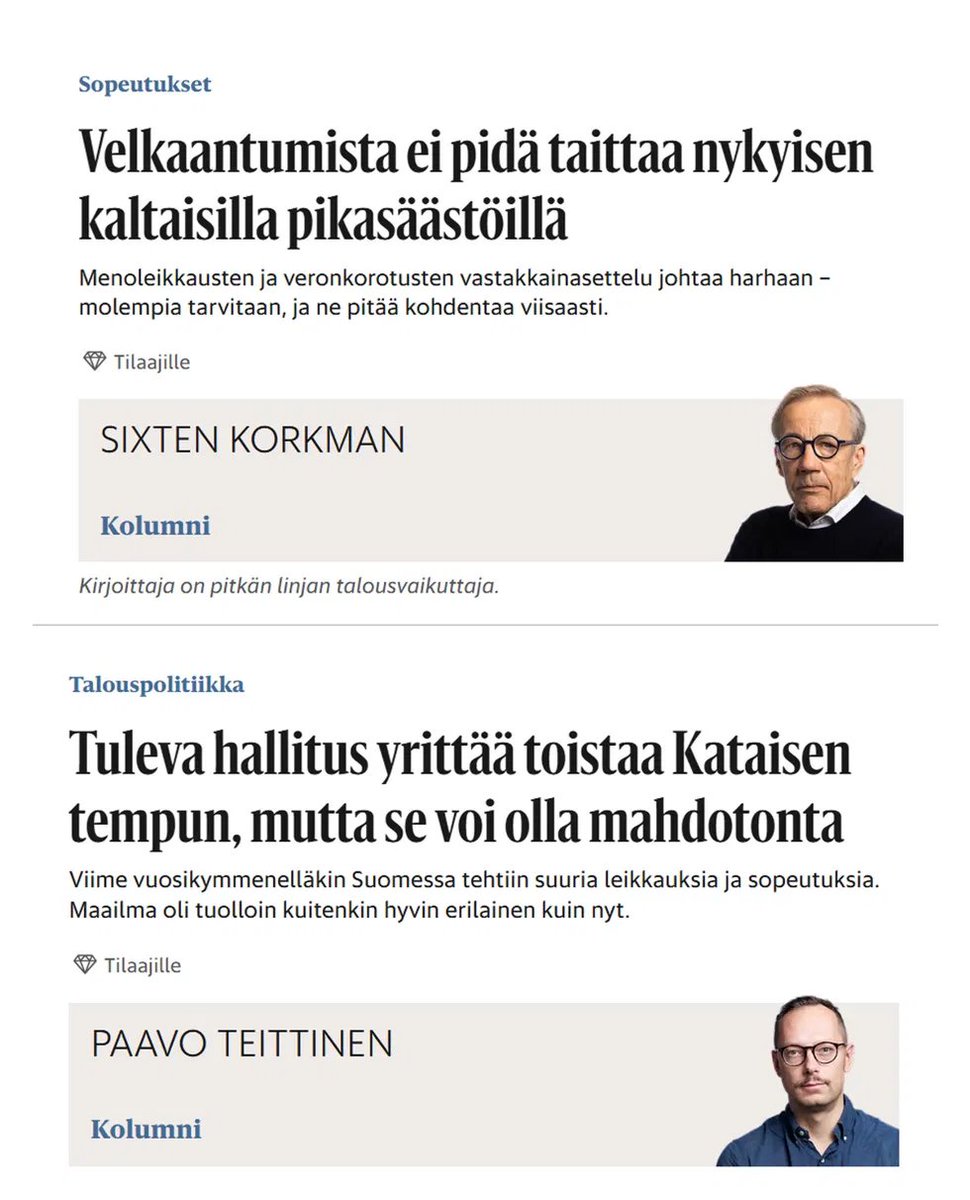
Heikki Pursiainen criticized Finnish economic discussion as limited based on two recently published columns in Helsingin Sanomat. According to him, Korkman described what should not be cut and believed that adjustments were necessary but did not propose any cuts. Pursiainen claimed that Korkman also criticized the government’s policies without offering alternatives. Pursiainen wrote that he found Teittinen’s reflections good in themselves but believed they underestimated Finns' ability to impact matters. He argued that Teittinen suggested that adjustments would probably be politically impossible and that Finland's fate depended on economic conditions and Russia. Pursiainen assessed that there could be many actions: he mentioned more encouraging social security, cutting business subsidies, tuition fees, and abandoning incentives for staying home as a parent. He added that for conservatives, a smaller public sector was a goal and not a reason for lamenting, and in his view, adjustments did not threaten the foundations of the welfare state. Pursiainen indicated that economists should also present their own solutions for discussion and negotiation. #Suomi #Taloustiede #Politiikka (translated)

2719

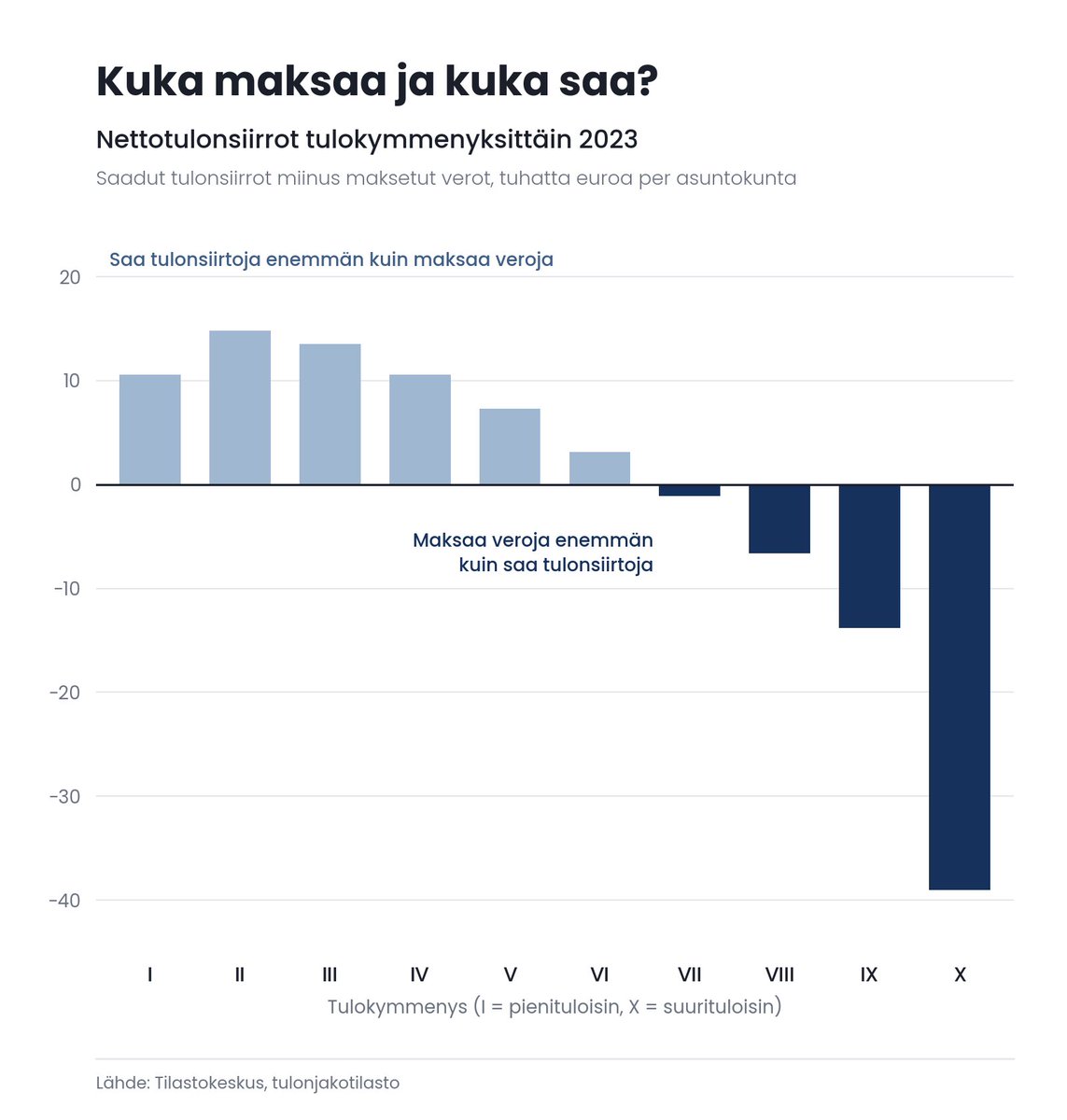
Sture Fjäder wrote to Jenny Kasongo that, according to him, the government had not taken anyone's own income or money, but had paid somewhat less in Kela benefits, housing support, and social assistance. He noted that the benefits are financed by taxpayers and mentioned that he had attached a picture of who receives and who pays. #kela https://t.co/Nie3wnLItV #Kela #verot #sosiaaliturva (translated)

11580
mtvuutiset.fi 1w

According to the diaconal barometer, church diaconal workers report that the number of people in need of help has increased significantly due to cuts in social security, which causes financial concern and increases people's isolation. #diakoniatyö #sosiaaliturva #köyhyys (translated)

www.mtvuutiset.fi
Heikoimpien kasvanut hätä näkyy kirkoissa – "On aika suomalaista eristäytyä, kun asiat ovat huonosti"
1486
Mika Merano 2w

No human will ever present a single reasonable justification for why any Finn should pay any social benefits or any other tax-funded services to non-citizens. And since this will not be done, they should be removed. #verotus #sosiaaliturva #kansalaisuus (translated)

16925
Riikka Purra 2w

Development aid does not become more effective by simply changing the words. Developing countries do not improve by changing the words. Even in our own country, someone decided to start calling immigrants from developing countries relying on the social security system as top talents. But no, that didn't work either. Empirically verifiable facts cannot be changed by beautifying the language – although a significant part of the left's energy seems to be spent on that nowadays, playing with words. #kehitysapu #maahanmuuttajat #sosiaalisetasiat (translated)

14411
Petteri Hietanen 2w

Now think about it, people: an immigrant gets a guaranteed pension after living here for three years. Similarly, the rights of an immigrant to social security are the same as those who have lived and worked here all their lives. Finnish decision-makers are, in their ignorance, a class of their own on the whole planet. #maahanmuutto #sosiaaliturva #Suomi (translated)

13974
mtvuutiset.fi 2w

The Kokoomus party is presenting its cuts list for the next parliamentary term at a press conference today, which includes 9 billion euros in savings in the public sector, social security, and pensions without tax increases. #Kokoomus #valtiontalous #leikkaukset (translated)

www.mtvuutiset.fi
Suora lähetys: Kokoomus esittelee ison leikkauslistansa
1490
Kaisaleena Koiranen 2w

@kokoomus ei leikkaisi kehitysavusta, ei maahanmuuton ja kotoutuksen kustannuksista, ei rällsseistä, eikä varsinkaan halua sosiaaliturvaa kansalaisperusteiseksi. Eli, kaikki järkevät säästöt puuttuvat kokonaan. Siksi @persut on ainoa todellinen vaihtoehto. https://t.co/5qMdveQ8t7 #politiikka #kehitysapu #maahanmuutto

11590

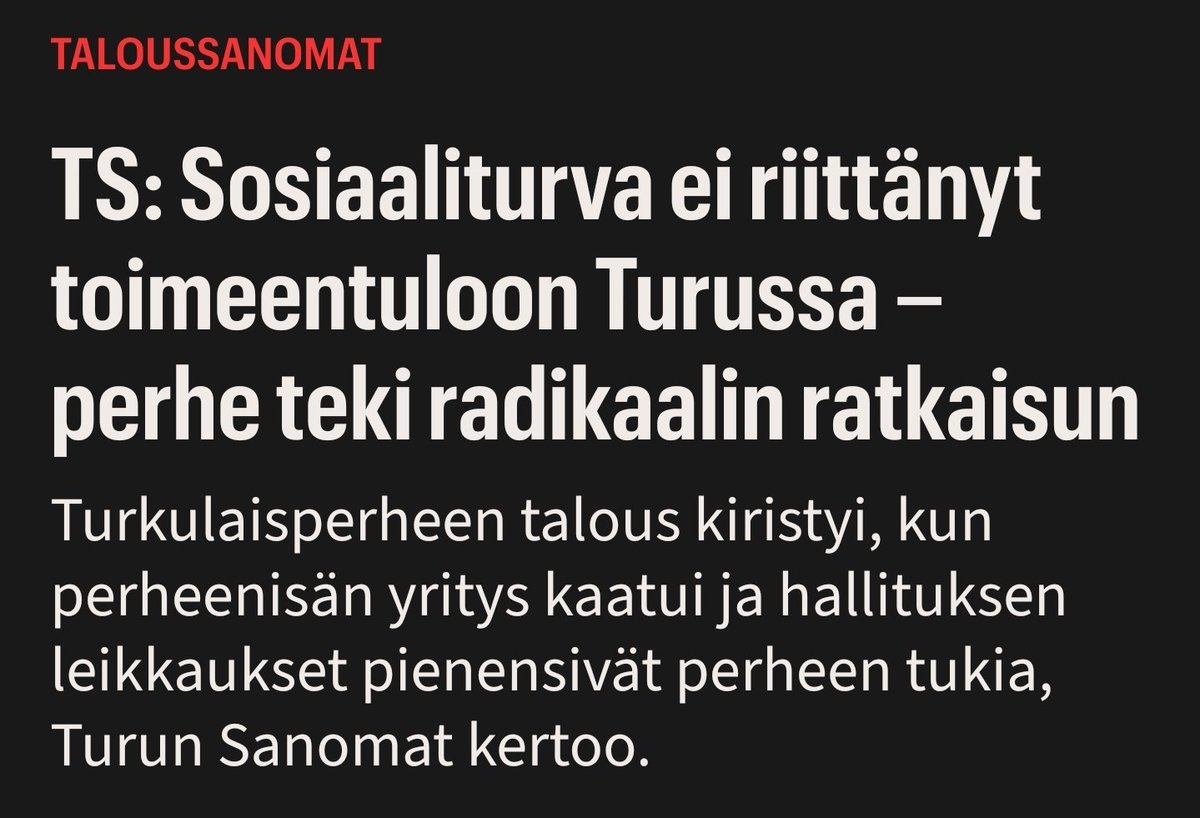
"Sosiaaliturvan leikkaukset johtivat siihen, että turkulaisperhe päätyi muuttamaan Turusta Pohjois-Karjalan Lieksaan. Perheenisä sai Lieksasta kokoaikatyön ja asumiskulut pienenivät, lehti kertoo." ~ -Kaikkea nämä hallituksen leikkaukset tekevätkin😱 https://t.co/UEVreuWxz2 #sosiaaliturva #työnhaku #perhe

12051
Tere Sammallahti 🇫🇮💙🇺🇦 2w

Sosiaaliturva ei enää riittänyt, niin perhe teki "radikaalin" ratkaisun ja muutti työn perässä toiselle paikkakunnalle. Ei työn perässä muuttaminen ole radikaalia, vaan ihan tavallista. Itse muutin aikoinaan työn ja opiskelun perässä toiselle mantereelle. https://t.co/avM5PdSlts https://t.co/PucOhcc5Pa #työ #muutto #perhe

17805
Päivän Byrokraatti 2w

"Kauhistelun sijaan kannattaa ymmärtää päätösten historiallisuus: kerrankin mennään suuntaan, jota on suositeltu vuosikymmeniä. Työnteosta tehdään kannattavampaa suhteessa sosiaaliturvaan." #työ #sosiaaliturva #historisuus

11493
Sami Pakarinen 2w

HS kirjoittaa tänään eriarvoisuuden kasvusta Laboren laskelmiin pohjautuen. Toivottavasti kukaan ei muodosta mielipidettään vain tämän uutisen perusteella. Muutama huomio lukijalle taustaksi: -Suomi laski ylimpiä marginaaleja tämän vuoden alusta 58 % -> 52 %. Tätä suositteli jo vuonna 1994 presidentti Ahtisaaren asettama Pekkasen työryhmä. Toteutukseen meni 31 vuotta. Ylimmät marginaalimme olivat maailman korkeimpien joukossa ja ovat yhä laskun jälkeenkin. Tämä historiallinen päätös näkyy suurempituloisten ostovoiman kasvussa, mutta jutussa siitä ei sanota sanaakaan. -IMF suositti vuonna 2017 ylimmäksi marginaaliksi enintään 44 %. OECD-maiden keskiarvo on n. 35 %. Suomi on siis muutoksen jälkeenkin selvästi yli maksimin. -14 % eniten tienaavista maksoi 49 % kaikista tuloveroista. Julkisista nettotulonsiirroista ylimmät tulokymmenykset maksavat kaiken (Kuvio). Veronkevennyksillä heille ei anneta rahaa, vaan he saavat pitää hieman suuremman osan itse tienaamistaan ansioista. Oikeudenmukaisempaa. -Verohallinnon tilastojen perusteella alin 40 % tulonsaajista (alle 2000 €/kk) maksaa vain 6 % ja alin 57 % (alle 2800 €/kk) vain 16 % tuloverokertymästä. -HS:n juttu päättyy virkkeeseen ”Vastaavaa ei ole Suomessa ennen nähty” viitaten suurituloisten ostovoiman kasvuun ja pienituloisten laskuun. Kauhistelun sijaan kannattaa ymmärtää päätösten historiallisuus: kerrankin mennään suuntaan, jota on suositeltu vuosikymmeniä. Työnteosta tehdään kannattavampaa suhteessa sosiaaliturvaan. Tervehenkinen suunta hyvinvointiyhteiskunnassa, jonka velkaantuminen on kestämätöntä. -Suomi tasaa verotuksella tuloja OECD-maista eniten. -Ylimpien marginaaliverojen kevennyksen itserahoitusaste on tuoreen tutkimustiedon valossa hyvin todennäköisesti yli 100 %. Veroja laskemalla saadaan siis enemmän verotuloja. -Verotuksen keventäminen lisää työtä ja kannustaa kouluttautumaan ja etenemään uralla, mikä vahvistaa julkista taloutta verotulojen kautta. Kevennyksen perumista haluavalta kannattaa kysyä, mistä tulevat korvaavat säästöt? -Ylimpien marginaalien on myös hyvää tki-politiikkaa: tki-rahoituksesta tarvitaan enemmän irti ja työnteon kannustimet paranevat. -Suomen bkt asukasta kohden on polkenut lähes 20 vuoden takaisella tasolla. Talous kääntyi kasvuun 2024, kasvu jatkui 2025 ja tänä vuonna tahti on kiihtynyt. Kaikkien tilanne siis paranee, vaikka niin ei ole vielä käynyt. Työllisyyskin on nousussa. -Suomen gini-kerroin on pienempi kuin Tanskassa ja Ruotsissa eikä ole juuri muuttunut koko 2000-luvulla. Orpon hallituksen toimet muuttavat sitä 0,8, ja se on nyt lähellä EU-keskiarvoa. HS otsikoi: ”Suomalaisten välille on revennyt kuilu.” Missä todellisuudessa elämme? Syntyykö oikea kokonaiskuva, jos ihmiset ovat vain tämän uutisoinnin varassa? Miten voidaan keskustella järkevästi esim. yhteisö-, osinko- tai perintö- ja lahjaverotuksesta, jos jo ansiotuloverotuksen ja sosiaaliturvamuutosten tarkastelu jää näin kapeaksi? Missä on pitkä aikaväli ja talouden dynamiikka? Kuka kysyisi ruotsalaisittain ”miten tämä vaikuttaa kasvuun ja yrittäjyyteen?” Tämä on suomalainen erityispiirre. Ruotsissa kasvun ja kannustimien merkitys ymmärretään aivan eri tavalla: kaikkia kannustetaan tekemään enemmän, ei painamaan toisten menestystä alas. Kun kaikki tekevät enemmän, yhteiskunta voi paremmin ja on rahoituksellisesti kestävämpi. Jokaisen olisi hyvä kysyä, miten voimme Suomena vaurastua, jos kukaan ei saa vaurastua ensin? Ruotsi pääsi rikas-köyhä-vastakkainasettelusta irti noin 50 vuotta sitten. Ajattelutavan muutos teki siitä Euroopan pääomamarkkinoiden ja kapitalistisen muodonmuutoksen mallioppilaan. Milloin me pääsemme samaan Suomessa? Onneksi olemme jo hyvää vauhtia matkalla sinne, kun suomalaiset tienaavat, sijoittavat ja vaurastuvat aiempaa enemmän! #Suomi #verotus #yhteiskunta

12989