The author said the quote explained socialism’s electoral success in Spain and elsewhere, arguing that politicians created dependency on the state and that this dependency generated voters. They referred to people relying on government transfer payments, subsidies and social safety nets. #Socialismo #Política #Elecciones #ES
The author said Ivica Dačić wanted the Serbian flag to fly over Prizren and described the position as a territorial claim against a neighbouring country. They said Serbian voters should understand what they were deciding on 25 October, arguing that the course would lead to war rather than EU membership. The author also called for the EU to stop providing funds to Serbia. #Serbia #Prizren #EU #RS #XK
The author argued that Jean-Luc Mélenchon was right about France’s debt, saying centrists who dismissed alternatives to severe austerity left voters with only one viable form of rebellion, which the far right was ready to offer. #France #Mélanchon #Dettes #FR
The author wrote that Spain’s upcoming elections would test voters’ judgment, adding that a socialist re-election would worry them more for the country’s political culture than for the immediate effects of a socialist government. https://t.co/jVOvPayDyB #EleccionesEspaña #PolíticaEspañola #Votación #ES
The author shared a Bloomberg headline saying Ireland had cut energy taxes in a budget bid to appease voters. https://t.co/4oNSmbjq0P #Ireland #EnergyTax #Budget2023 #IE
Brazil’s synthetic voters – when AI manufactures public opinion They look like ordinary street interviews. A reporter approaches a passer-by in a Brazilian square and asks a simple question: who will you vote for? A young voter explains why Luiz Inácio Lula da Silva deserves another term. An elderly woman says Brazil needs Flávio Bolsonaro because he represents political renewal and greater security. The locations look plausible, the microphones are visible and the answers sound much like the brief political opinions heard in television vox pops around the world. None of the people are real. Ahead of Brazil’s presidential election on 4 October, fact-checking organisation Aos Fatos identified at least 50 TikTok videos in which artificial intelligence was used to manufacture voters, reporters and apparently spontaneous political interviews. Together, the videos had accumulated around 7.4 million views by mid-August. Some promoted Lula, others Flávio Bolsonaro, while another group used synthetic characters to ridicule or stereotype supporters of one side. Aos Fatos found no apparent evidence linking the accounts producing the videos to either presidential campaign. The opinion poll that never took place The format is important. These were not conventional deepfakes in which a recognisable politician is made to say something he never said. Instead, the creators reproduced the visual language of the vox pop – the short street interview used by broadcasters and social-media creators to illustrate what ordinary people supposedly think. In pro-Lula videos, synthetic voters described themselves as beneficiaries of social programmes or credited the president with improving their lives. In videos supporting Flávio Bolsonaro, artificial interviewees associated him with political renewal, public security and fighting corruption. Other clips were openly hostile: AI-generated characters presented as poor or living in parts of Brazil’s north-east were shown in dirty clothes or run-down surroundings, declaring support for Lula because they supposedly preferred welfare payments to work. The deception is therefore subtler than fabricating a candidate’s statement. It manufactures something that political communication normally treats as evidence of public sentiment. A real vox pop may be unscientific, but the people interviewed at least exist. These videos created the appearance that identifiable social groups – young people, pensioners, welfare recipients or residents of particular regions – were spontaneously expressing political preferences when no such encounters had taken place. An electoral-law specialist interviewed by Aos Fatos described the technique as the fabrication of a “social fact that never occurred”. That captures the central innovation: AI is being used not merely to falsify political speech, but to manufacture the impression of grassroots opinion. Fifty videos, but not one proven network The available evidence does not support describing the 50 posts as a centrally controlled influence operation. Aos Fatos located them through TikTok searches and recommendations produced by the platform itself, then examined the accounts responsible for publication. Most had relatively small individual audiences, although their combined reach was substantial. The first examples identified by the investigation appeared as early as March 2026. Activity increased in June and was concentrated particularly in July and the first half of August as Brazil’s election calendar intensified. Some accounts specialised in AI-generated videos generally, including fabricated podcast-style material. Others were explicitly political or supportive of a candidate, but Aos Fatos found no apparent links between those profiles and the official Lula or Bolsonaro campaigns. That distinction is essential. The evidence demonstrates a common technique and a shared political environment, not a single command structure. Some creators may have been motivated by ideology, others by engagement or monetisation. Publicly available evidence does not establish who commissioned the individual videos or whether any coordination existed between the accounts. This decentralised model also creates a different enforcement problem from a traditional bot network. There may be no headquarters to expose and no infrastructure whose removal disables the entire operation. The format itself can be copied by anyone with access to inexpensive generative-video tools. When the algorithm mixes real and synthetic citizens Aos Fatos documented another important feature of the phenomenon: TikTok’s recommendation system placed AI-generated interviews alongside genuine street interviews. For a user scrolling quickly through the platform, the transition between an authentic citizen and an entirely fabricated one could therefore be almost invisible. In 18 per cent of the 50 videos analysed, there was no indication that the people shown had been generated using AI. After Aos Fatos provided TikTok with the videos, the company said it had removed all of them for violating its rules on edited and AI-generated media. TikTok said its policies require creators to identify synthetic content and prohibit manipulated media capable of misleading users about matters of public importance or impersonating genuine journalistic material. The issue extends beyond one platform. Factchequeado’s review of Brazil’s 2026 election campaign found that synthetic endorsements and other deepfakes had become one of the most visible forms of AI-assisted electoral misinformation, alongside fabricated candidate statements and invented scenes. Brazil already had rules for synthetic politics Brazil entered the campaign with unusually detailed electoral rules governing artificial intelligence. The Superior Electoral Court, the TSE, requires electoral propaganda using synthetic multimedia to disclose clearly that AI was used. More importantly for the fake-voter videos, its rules prohibit synthetic audio or video used to favour or harm a candidacy when it creates or alters the image or voice of a living, deceased or fictitious person. The difficulty is attribution and enforcement. When a synthetic video is published by an official campaign, responsibility can be relatively straightforward to investigate. When it comes from an apparently independent account with no demonstrated relationship to a candidate, lawyers interviewed by Aos Fatos said responsibility is more likely to fall on the individual creator, while imposing electoral sanctions on a campaign would require evidence of a connection. For the final 72 hours before the election and the 24 hours following it, the TSE has imposed additional restrictions on newly published or republished synthetic material involving candidates or public figures, reflecting the particular difficulty of correcting fabricated content immediately before voting. From deepfake politicians to synthetic electorates The Brazilian case illustrates a broader change in political manipulation. The first generation of electoral deepfakes concentrated on famous people: make a politician appear to say something damaging, or fabricate an endorsement from a celebrity. Synthetic vox pops reverse the perspective. The politician can remain completely authentic; it is the electorate around the politician that is fabricated. That changes the psychological proposition of the message. Instead of saying the candidate believes this, the video suggests people like you believe this. Age, clothing, accent, neighbourhood and social class can all be generated to construct an artificial constituency around almost any political claim. There is no evidence that the 50 Brazilian videos identified by Aos Fatos constitute a single centrally directed campaign, nor evidence that they changed voting intentions. What they demonstrate is a technique whose barrier to entry has become extremely low. AI no longer needs to forge the politician. #DISINFORMED #Episode14 #Brazil #BrazilElection2026 #Elections #ElectionDisinformation #ArtificialIntelligence #AI #GenerativeAI #SyntheticVoters #SyntheticMedia #AIAvatars #AIGeneratedVideo #VoxPop #FakeInterviews #Astroturfing #AIPropaganda #PoliticalDisinformation #InfluenceOperations #InformationWarfare #SocialMediaManipulation #TikTok #PublicOpinion #ManufacturedConsent #SyntheticPublicOpinion #DigitalInfluence #Deepfakes #ElectionIntegrity #TSE #AosFatos #FactChecking #OSINT #MediaManipulation #WRLD (translated)
Mary Regan examines whether a budget allocation of €1,500 will effectively alleviate voters' concerns about rising living costs. #Cookies #Security #WebAccess
US voters will head to the polls on 3 November in a ballot that could have a major impact on Donald Trump’s presidency. #Midterms2024 #USPolitics #CongressElection

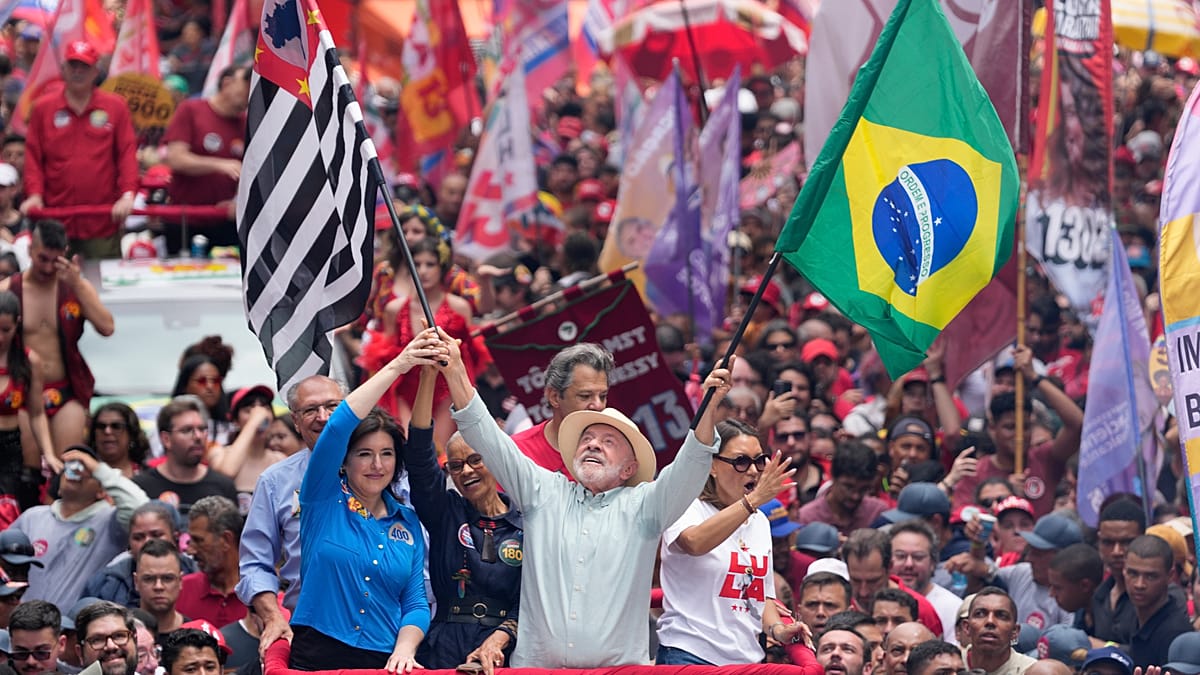
Brazilian President Luiz Inácio Lula da Silva and Flávio Bolsonaro have a final chance on Saturday to sway voters at rallies in crucial São Paulo before a tight election marked by scandals and personal attacks. #BrazilElections #LulaVsBolsonaro #PoliticalCampaigns

The author said a new survey in Chile estimated that 25.5% of voters who backed José Antonio Kast in last year’s presidential runoff would change their vote, while 38% of Kast voters expressed regret. https://t.co/WfAlOvX8O1 #Chile #Elecciones2023 #VotoRegret #CL
The polls this year have a bias... What we are seeing in some polls in Brazil goes through a methodology called likely voters. Basically, the institutes try to estimate not only who the voter intends to vote for, but also the probability that this voter will actually show up at the polls. And here's an important point: Lula performs very strongly among lower-income voters, a segment that has historically been more prone to abstention. When this factor enters the model, the tendency is to reduce his advantage and create an appearance of greater closeness to Flávio. Does that make sense? More or less... The problem is that this type of methodology depends on something extremely difficult: predicting today who will effectively vote on Election Sunday. And 2026 may have a completely different dynamic from 2022. What we are seeing in terms of mobilization in the streets in favor of Lula, for example, is something that must be taken into account. Mobilization also affects the voter’s willingness to leave home to vote. Therefore, I have my doubts about to what extent this "likely voter" model will be able to accurately capture this election. The traditional method of voting intention has always worked in Brazil. In 2022, we had a very specific context, including PRF operations involving the transportation of voters that led the TSE itself to intervene during the second round. This needs to be remembered when someone tries to use that election as an absolute parameter to project abstention in 2026. So I would be very cautious with polls that try to turn voting intention into predictions of turnout. After all, polls measure intention. Who will or will not step outside on election day is a variable that is much more difficult to predict. #Eleições2026 #Voto #PesquisaEleitoral (translated)
Republicans are losing Hispanics and, in Miami, Latino voters may learn a lesson: Trump's immigration enforcement was never about differentiating between those who came to this country “the right way” and those who didn't https://t.co/JXWfw5Tq84 #Republicans #LatinoVote #ImmigrationPolicy #US #ES #MX
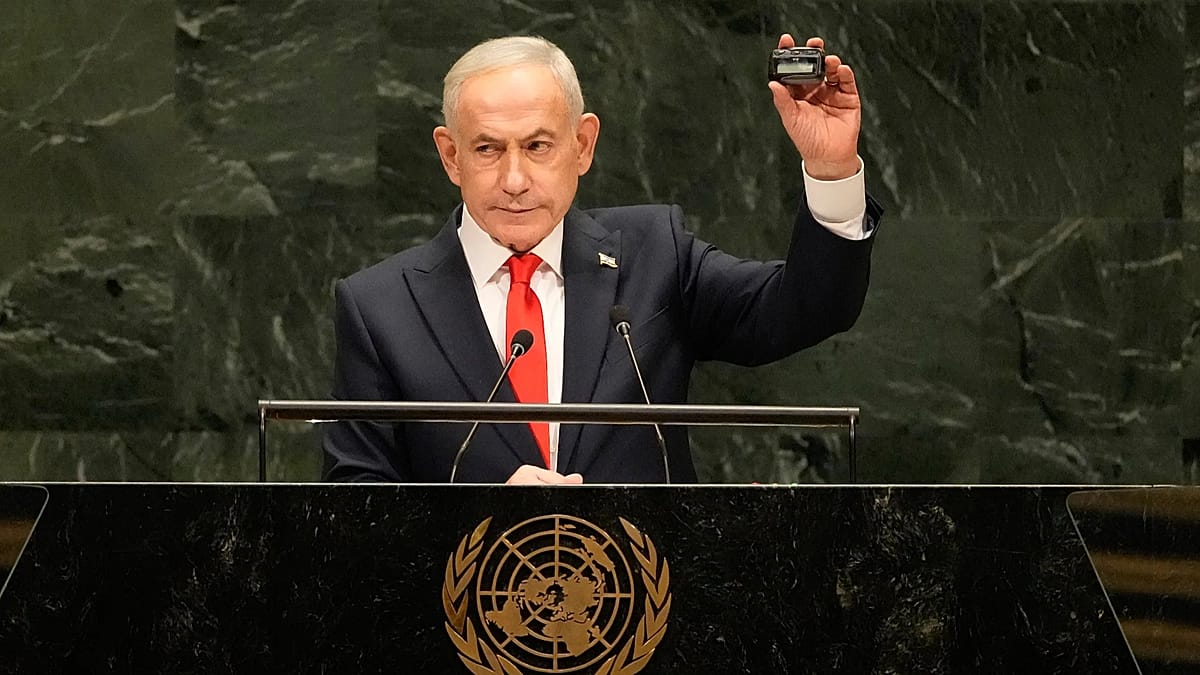
With Israel’s election approaching, Israel’s prime minister is battling new revelations of alleged warnings about Hamas’ 7 October attack and countered the political storm with a fiery UN speech directed at his voters and the world. #Netanyahu #Hamas #IsraelElections

Russia’s influence operation arrives ahead of the US midterms With weeks remaining before America's November midterm elections, a familiar type of content has begun appearing online. Videos resembling reports from CNN, the BBC and The New York Times accuse candidates of corruption, antisemitism and misconduct. Hollywood actors appear to denounce Democrats. Other clips claim that warnings about Russian interference are themselves a Democratic disinformation campaign. The reports are fabricated. Graphika, which tracks online influence operations, says it has identified a coordinated campaign targeting candidates in competitive US Senate races. It assesses with high confidence that the material was produced by Operation Overload, also known as Matryoshka – a long-running Russia-aligned influence operation previously active against elections and political debates in Europe and the United States. The activity coincides with a broader warning from American intelligence officials. Classified assessments reported by The New York Times conclude that the Kremlin has authorised another digital influence campaign ahead of the 2026 midterms, aimed primarily at exploiting existing divisions and undermining confidence in American democracy. There is an important distinction. US officials have not reported evidence that Russia is attempting to manipulate voting machines or alter the counting of votes. The operation is about influencing the information environment surrounding the election. Fake scandals for competitive Senate races Graphika traced a concentrated wave of activity between 10 and 14 September. Likely inauthentic or repurposed accounts distributed videos accusing Democratic politicians of corruption, antisemitism and other misconduct. The targets included Senator Jon Ossoff in Georgia, Representative Chris Pappas in New Hampshire and Texas state representative James Talarico, as well as Senate candidates Sherrod Brown in Ohio, Roy Cooper in North Carolina, Mary Peltola in Alaska, Abdul El-Sayed in Michigan, Joshua Turek in Iowa and Troy Jackson in Maine. The selection was not random. These were politicians involved in Senate contests where the result could matter to control of the chamber. The campaign did not rely on a single political narrative. Instead, it attached different accusations to different candidates – corruption, social issues, antisemitism or personal misconduct – while maintaining a consistent production and distribution model. That model is characteristic of Matryoshka: create apparently independent pieces of evidence, disguise them as journalism and distribute them through networks of disposable accounts. Hollywood celebrities who never said what the videos claimed One of the campaign's more distinctive techniques involved genuine footage of American actors. Videos featuring celebrities including Sarah Jessica Parker and Julia Roberts were altered with captions and other material to suggest they were promoting the slogan #AllDemocratsAreCriminals. The technique continued in subsequent material. Fact-checkers identified fabricated New York Times-branded videos using footage of Alyssa Milano, Sean Astin, Rachael Harris, Leonardo DiCaprio, Eric Braeden, Annie Potts and Patrick Fabian. Some of the original footage came from Cameo, where actors record personalised video messages. Their authentic images were retained while fabricated audio, captions or surrounding material changed the meaning entirely. Lead Stories compared several of the clips with the originals and found that the supposed political statements did not appear in the genuine recordings. Eric Braeden's representative separately confirmed that the claim he had joined the anti-Democratic campaign was false. The advantage of the technique is straightforward. Generative AI does not need to create a convincing celebrity from nothing. The operator can begin with authentic footage of a recognisable person and manipulate only the elements necessary to manufacture a political statement. Stealing the authority of real newsrooms Celebrity impersonation was only one layer. The operation repeatedly borrowed the visual identity of established media organisations. Graphika identified material impersonating or falsely citing the BBC, CNN and Politico, alongside references to France's VIGINUM foreign-interference agency and journalist Brandy Zadrozny. Other material reproduced New York Times-style branding. Some fabricated reports made an unusual claim: that Democrats themselves were organising disinformation or “false-flag operations” and then blaming Russia. This creates a defensive layer around the influence operation. Instead of merely distributing false political allegations, the campaign also attempts to discredit future reporting about the manipulation itself. If successful, evidence exposing foreign interference can be reframed as part of the conspiracy. Graphika says it assesses with high confidence that Operation Overload produced these videos. The technique is well established. Earlier investigations by CheckFirst and Reset Tech documented hundreds of falsified pieces of content produced by Operation Overload, often impersonating journalists, institutions and major media brands. AI-generated or manipulated material has increasingly become part of that production system. What US intelligence says Russia is trying to achieve The broader strategic picture comes from American intelligence assessments reported on 18 September. According to US officials familiar with classified findings, the Kremlin has authorised a covert digital influence campaign aimed at Americans during the 2026 election season. Its apparent objective is to seed or amplify domestic divisions and weaken confidence in the political process. Some officials described the principal aim as creating disorder rather than helping a single political party. The publicly identified Matryoshka material examined so far, however, has targeted Democratic candidates. Those two findings should not be treated as contradictory. An operation can exploit partisan divisions while serving the broader objective of making the electoral system appear corrupt, chaotic or illegitimate. US officials also reportedly assess the current Russian campaign as less extensive or coordinated than some previous election operations. Moscow is considered less focused on congressional elections than presidential contests and remains heavily occupied by its war against Ukraine. Russia has denied previous US accusations of election interference. An operation with limited reach – so far There is another reason for caution: producing large quantities of disinformation is not the same as successfully influencing voters. Matryoshka has repeatedly demonstrated an ability to manufacture content at industrial speed, but much of its material receives little genuine engagement. Researchers monitoring the network have previously warned against confusing automated distribution and platform view counts with authentic audience penetration. There are exceptions. A fabricated New York Times-style video featuring Jamie Lee Curtis had accumulated nearly 200,000 views on X by the end of 17 September, according to reporting by The New York Times. Other pieces attracted considerably less attention. There is currently no public evidence demonstrating that the campaign has changed voting intentions or will affect election results. What the September activity demonstrates is something narrower but important: a Russia-aligned influence infrastructure previously used against European elections has now turned significant attention towards the American midterms. The basic method has changed little – impersonate trusted media, manufacture scandals and use networks of inauthentic accounts to distribute them. What has changed is the production technology. Authentic celebrity footage, synthetic voices, manipulated video and rapidly generated fake journalism allow the same operation to produce more tailored material for more candidates at lower cost. The objective does not require Americans to believe every fabrication. Creating uncertainty over which videos, news reports and public statements are authentic can itself degrade trust in the information environment surrounding an election. Sources - Graphika — Russia-Aligned Influence Operation Targets US Midterm Candidates, German State Elections https://www.graphika.com/insights/russia-aligned-influence-operation-targets-us-midterm-candidates-german-state-elections - The New York Times — Russia Aims to Inject Chaos Into Elections, U.S. Intelligence Finds https://www.nytimes.com/2026/09/18/us/politics/russia-election-disinformation-us-intelligence.html - Kathimerini / The New York Times — Russia Aims to Inject Chaos Into Elections https://www.ekathimerini.com/nytimes/1315792/russia-aims-to-inject-chaos-into-elections-us-intelligence-finds/ - CheckFirst — Operation Overload: An AI-fuelled escalation of the Kremlin-linked propaganda effort https://checkfirst.network/operation-overload-an-ai-fuelled-escalation-of-the-kremlin-linked-propaganda-effort/ - CheckFirst — Operation Overload targeting the US election https://checkfirst.network/operation-overload-a-growing-disinformation-threat-now-targeting-the-u-s-presidential-election/ - Lead Stories — Fake NYT videos: Alyssa Milano, Rachael Harris and Sean Astin https://leadstories.com/hoax-alert/2026/09/fact-check-fake-new-york-times-videos-of-alyssa-milano-rachael-harris-sean-astin-falsely-claim-they-support-all-democrats-are-criminals.html - Lead Stories — Fake NYT videos: Leonardo DiCaprio, Eric Braeden and other celebrities https://leadstories.com/hoax-alert/2026/09/fact-check-fake-new-york-times-videos-of-leonardo-dicaprio-eric-braeden-other-celebs-falsely-claim-they-support-all-democrats-are-criminals.html - Brennan Center for Justice — AI Is Changing Foreign Election Influence https://www.brennancenter.org/our-work/analysis-opinion/ai-changing-foreign-election-influence - ODNI — previous US intelligence assessment of foreign election information operations https://www.dni.gov/files/ODNI/documents/assessments/NICM-Declassified-Foreign-Threats-to-US-Elections-After-Voting-Ends-in-2024.pdf - FBI / ODNI / CISA — previous joint assessment of Russian election influence operations https://www.fbi.gov/news/press-releases/joint-odni-fbi-and-cisa-statement-110424 #DISINFORMED #Episode9 #Russia #UnitedStates #USMidterms #Midterms2026 #USElections #ElectionInterference #ForeignInterference #RussianInfluence #RussianDisinformation #OperationOverload #Matryoshka #Disinformation #InformationWarfare #InfluenceOperations #FIMI #ArtificialIntelligence #AI #AIPropaganda #Deepfakes #SyntheticMedia #MediaImpersonation #FakeMedia #FakeNews #PoliticalDisinformation #CelebrityDeepfakes #SocialMediaManipulation #DigitalInfluence #ElectionSecurity #CognitiveWarfare #Graphika #OSINT #Democracy #WRLD

AFRICA DAILY REPORT — 23 SEPTEMBER 2026 Major developments reported during the previous 24 hours 1. SOUTH SUDAN — Kiir dissolves transitional government ahead of December election Importance: 10/10 — Critical President Salva Kiir dissolved South Sudan’s transitional government after signing amendments that remove requirements to complete a permanent constitution and census before the long-delayed national election. The opposition has challenged the changes, while the move fundamentally reshapes the political framework ahead of what is intended to be the country’s first national election since independence. Source: Reuters — https://www.reuters.com/world/africa/south-sudans-president-signs-election-law-changes-ahead-december-vote-2026-09-22/ Additional source: Africanews — https://www.africanews.com/2026/09/22/south-sudan-president-dissolves-govt-as-controversy-engulfs-december-poll/ 2. SUDAN — US links Burhan’s UN visa to proposed ceasefire Importance: 9.5/10 — Very High The United States is withholding a visa for Sudanese army chief Abdel Fattah al-Burhan ahead of the UN General Assembly, according to Reuters sources, in connection with a US-backed proposal for a 90-day ceasefire that Khartoum has resisted. Sudan has asked the UN to intervene, and its foreign minister is expected to address the General Assembly instead if the dispute is not resolved. Source: Reuters — https://www.reuters.com/world/africa/us-withholding-sudanese-leaders-visa-over-ceasefire-plan-sources-say-2026-09-22/ 3. SUDAN — Currency collapse deepens civilian economic crisis Importance: 9/10 — Very High Sudan’s pound has lost nearly half its value in army-controlled territory since May, trading at around 7,500 pounds to the dollar on the black market versus about 4,100 in May. Reuters links the collapse to the economic fragmentation created by the war, reduced state revenues and wartime spending. The depreciation is driving up the cost of basic goods and worsening hardship for civilians and returning refugees. Source: Reuters — https://www.reuters.com/world/africa/currency-collapse-heaps-more-pain-civilians-divided-sudan-2026-09-22/ 4. DR CONGO — Government orders investigation into violence at anti-government protest Importance: 8.5/10 — Very High DR Congo’s justice minister ordered a judicial investigation into violence during the September 15 opposition protest in Kinshasa, including reports of injuries, arrests, property destruction and a death. The demonstration opposed a proposed constitutional change that could allow President Félix Tshisekedi to seek another term. Police used tear gas, while clashes were also reported between opposition demonstrators and pro-government groups. Source: Africanews — https://www.africanews.com/2026/09/22/dr-congo-to-probe-violence-death-of-protestor-at-anti-govt-rally/ 5. RWANDA / BELGIUM — Diplomatic relations restored after 18-month rupture Importance: 8/10 — High Belgium and Rwanda have resumed diplomatic relations 18 months after breaking ties amid their dispute over the conflict in eastern DR Congo. The restoration is diplomatically significant because Belgium has been a prominent European actor in the Great Lakes region and relations deteriorated sharply over allegations concerning Rwanda’s role in the Congolese conflict. Source: Reuters — https://www.reuters.com/world/africa/belgium-rwanda-resume-diplomatic-relations-after-drc-conflict-dispute-2026-09-22/ 6. LIBYA — Armed group shuts pipeline valve, reducing Sharara oil production Importance: 8/10 — High An unidentified armed group closed a valve on the pipeline connecting Libya’s major Al-Sharara oil field with Zawiya, reducing production. The National Oil Corporation warned that a prolonged shutdown could force it to declare force majeure and could also affect the Zawiya refinery. The disruption again demonstrates the vulnerability of Libya’s oil-dependent economy to armed-group pressure and political fragmentation. Source: Africanews — https://www.africanews.com/2026/09/22/libya-oil-production-hit-after-armed-group-shuts-pipeline-valve/ 7. MOROCCO — Parliamentary election puts youth participation and social pressures in focus Importance: 7.5/10 — High Nearly 16 million registered voters are eligible to elect Morocco’s 395-member House of Representatives today. Youth disengagement is a major issue: Africanews/AFP reports that only around 4% of registered voters are aged 18–24. Employment, housing, public services and the legacy of the Gen Z-led protests are central themes surrounding the vote. Source: Africanews — https://www.africanews.com/2026/09/23/i-expect-nothing-morocco-elections-test-young-peoples-faith-in-politics/ 8. TUNISIA — 2026 confirmed as hottest summer on record Importance: 7.5/10 — High Tunisia’s National Meteorological Institute says summer 2026 was the country’s hottest since records began in 1950. Average temperatures were about 2.9°C above the previous record, with prolonged heatwaves, exceptionally warm nights, water shortages and electricity cuts. Kairouan reached 49.7°C in July. Source: AFP via FMT — https://www.freemalaysiatoday.com/category/world/2026/09/22/tunisia-says-2026-summer-hottest-on-record 9. GUINEA — Exiled opposition leader says authorities revoked his passport Importance: 7/10 — Significant Guinean opposition figure Cellou Dalein Diallo says his passport was revoked as he prepared to travel from Abidjan to New York for meetings on the sidelines of the UN General Assembly. Diallo has lived in exile since 2022. His UFDG party was dissolved in March along with other opposition parties, adding the passport case to wider concerns about political restrictions under President Mamady Doumbouya. Source: Africanews — https://www.africanews.com/2026/09/22/exiled-guinean-opposition-leader-says-his-passport-has-been-revoked/ 10. KENYA / AFRICA AT UNGA — Ruto presses for reform of global financial architecture Importance: 7/10 — Significant At the Partners for Multilateralism summit during UN General Assembly High-Level Week, Kenyan President William Ruto argued that international financial institutions should act more as catalysts for African capital rather than simply as lenders. The intervention forms part of a broader African push at UNGA for reforms to global financial governance and greater representation in multilateral institutions. Source: Africanews / AP — https://www.africanews.com/2026/09/22/ruto-pushes-for-global-finance-reforms-at-summit-for-multilateralism/ #Africa #AfricaNews #TopNewsOfAfrica #SouthSudan #SalvaKiir #SouthSudanElections #PoliticalTransition #TransitionalGovernment #ElectoralReform #AfricanPolitics #Tunisia #NorthAfrica #ClimateChange #ClimateCrisis #RecordHeat #ExtremeHeat #Heatwave #GlobalWarming #WaterScarcity #ClimateSecurity #Sudan #SudanConflict #AbdelFattahAlBurhan #UnitedStates #Ceasefire #PeaceNegotiations #Diplomacy #UnitedNations #UNGA2026 #AfricanSecurity #RegionalStability #Geopolitics #AfricaToday #wrldorg