WRLD

Search

#Breakdown
Krzysztof Graj 3d

Russia’s war propaganda gets a soundtrack – how AI-generated songs reached global streaming platforms Russian war propaganda is no longer confined to television broadcasts, Telegram channels or political videos. A study by the Ukrainian threat-intelligence organisation Terrecon has identified 981 songs combining signs of AI generation with pro-Russian military narratives, distributed through an ecosystem that reaches YouTube, Spotify, Apple Music, Deezer and SoundCloud. The songs range from sentimental ballads to rock and heavy metal. Their recurring themes are familiar from conventional Russian wartime propaganda: the heroisation of Russian soldiers, romanticisation of the war, mobilisation, the “Russian world”, commemoration of fallen troops and attacks on Ukraine and its armed forces. Some contain derogatory or dehumanising references to Ukrainians. What is new is not necessarily the message, but the production and distribution model: generative AI allows propagandistic music to be produced rapidly, cheaply and in quantities that would previously have required musicians, studios and producers. Nearly 1,000 tracks identified Terrecon examined 3,725 tracks collected from YouTube, YouTube Music, SoundCloud and the AI music platform Suno. After manual review, researchers classified 981 as showing both indications of AI generation and pro-Russian war propaganda. In 681 tracks they identified 728 propaganda-related keywords or phrases. The largest category was the glorification of the Russian military, followed by romanticised treatment of Moscow’s so-called “special military operation”, mobilisation appeals, narratives about the “Russian world”, and the cult of fallen soldiers and the state. The reach was not merely theoretical. Listening or viewing statistics were available for 608 of the identified tracks; together they had accumulated 86.8 million plays and views, according to Terrecon. A smaller group of 13 high-performing songs accounted for more than 53 million YouTube views and more than 67 million when YouTube Music was included. Among the better-known examples is “Power of Artillery”, a Russian-language rock song praising artillery weapons that passed two million views on YouTube. Most of the tracks for which publication dates could be established appeared after 2024, broadly coinciding with the rapid expansion of consumer AI music generators such as Suno and Udio. That correlation does not prove that AI alone caused the increase, but it illustrates how drastically the economics of production have changed. A propaganda song for as little as $11 Terrecon also tested how difficult it would be to commission such material. Researchers approached 25 creators producing AI-assisted militaristic music; 15 agreed to take commissions. Prices ranged from approximately $11 to $330, while delivery times ranged from two hours to three days. According to Terrecon, some were prepared to produce highly aggressive anti-Ukrainian material, including content intended for audiences involving children from occupied Ukrainian territories. Some creators used Russian intermediary services that provided access to Western AI tools such as Suno and Udio despite restrictions. The researchers then tested several AI generators themselves. Across 40 prompts submitted to Suno, Udio, Mureka, Google Flow Music and ElevenLabs, 25 resulted in successful generations, while safeguards were circumvented in 15 cases. Terrecon reported that four of the five services tested produced Russian-language material containing wartime narratives, although technical problems prevented comparable testing on some systems. In one Udio experiment, the researchers said the model itself introduced more explicit violent language than had appeared in the original promp These tests do not demonstrate that the commercial platforms knowingly support Russian propaganda. They show something narrower: existing safeguards can be inconsistent when political messaging is packaged as music. From generation to Spotify The distribution experiment may be the most revealing part of Terrecon’s research. The team deliberately uploaded test tracks containing explicit hostile language to YouTube, SoundCloud, Spotify and Deezer. Terrecon says none was blocked during the experiment. On SoundCloud, researchers used an account identifying its location as Moscow, disclosed the use of AI and added markers including references to the Russian military and the war. The platform accepted the upload and subsequently offered paid promotional and distribution tools. This does not prove that streaming recommendation systems systematically promote pro-war music. There is currently insufficient public evidence to make that claim. It does demonstrate that material can enter the same commercial distribution infrastructure as ordinary music and, once there, potentially benefit from playlists, searches, sharing and recommendation mechanisms available to other releases. That distinction is important. Propaganda no longer has to announce itself as political communication. On a streaming platform it can look like another song. Culture as a delivery mechanism Music has always been used in wartime propaganda. What generative AI changes is scale. Instead of investing heavily in a limited number of patriotic performers or officially commissioned productions, creators can generate variations across styles, audiences and emotional registers at very low cost. Terrecon found material ranging from war rock to sentimental songs and content styled for younger audiences. Some creators also experimented with cloned celebrity voices and stylistic imitation of established musicians. The format also offers a different relationship with the audience. A political video asks a viewer to consume an argument. Music can accompany commuting, exercise or entertainment and may be encountered outside explicitly political spaces. This does not automatically make it more persuasive, and Terrecon’s research does not establish measurable effects on political attitudes. It does, however, place wartime narratives inside a cultural environment where users may not initially perceive themselves as consuming political messaging. An ecosystem, not a proven Kremlin command structure The strongest evidence supports describing this as a growing AI-assisted pro-Russian propaganda-music ecosystem, not a single operation controlled from Moscow. Terrecon did not establish that the Russian government created, financed or coordinated all 981 tracks. Reporting on the study likewise notes that the extent of direct state involvement remains unclear. There is broader evidence that the Russian state finances cultural projects and digital content supporting the war, including through state-backed funding bodies. That context matters, but it does not allow individual songs in Terrecon’s dataset to be attributed to the Kremlin without additional evidence. The significance of the case lies elsewhere. AI has reduced the cost of producing ideological content, intermediaries can help creators access generation tools, and global platforms can provide distribution. The result is a pipeline in which wartime propaganda no longer has to resemble propaganda at all. It can simply appear in a playlist. Sources Terrecon / Ukrainska Pravda — Daria Verbytska on the research https://www.pravda.com.ua/columns/2026/10/05/8056229/ Suspilne Culture — detailed breakdown of Terrecon findings https://suspilne.media/culture/1417933-rosijsku-voennu-propagandu-maskuut-pid-anime-karaoke-ta-rok-doslidzenna-si-pisen-vid-terrecon/ The Insider — AI-generated Russian war propaganda music https://theins.ru/news/297839 Institute of Mass Information — summary of New York Times reporting https://imi.org.ua/en/news/doslidzhennya-rf-masovo-stvoryu%D1%94-propagandistski-pisni-za-dopomogoyu-shi The Bridge Media — AI-generated songs and Russian military propaganda https://thebridgemedia.com.ua/en/ai-generated-songs-russian-military-propaganda/ Center for Strategic Communication — cost and production of AI propaganda music https://spravdi.org/propaganda-za-11-yak-rosiya-shtampuye-shi-pisni-z-miljonamy-prosluhovuvan/ Times of India — AI-generated Russian war songs https://timesofindia.indiatimes.com/world/europe/ai-sings-russias-war-story-inside-the-rise-of-generative-songs-about-ukraine-conflict/articleshow/134650594.cms EU Council / EUR-Lex — Presidential Foundation for Cultural Initiatives https://eur-lex.europa.eu/legal-content/EN/TXT/?uri=CELEX:32026D1351 Human Rights Watch — Russian state funding of digital and patriotic content https://www.hrw.org/report/2025/07/30/disrupted-throttled-and-blocked/state-censorship-control-and-increasing-isolation #DISINFORMED #Episode16 #Russia #Ukraine #RussianPropaganda #WarPropaganda #MusicPropaganda #AIMusic #ArtificialIntelligence #AI #GenerativeAI #SyntheticMedia #AIPropaganda #Disinformation #InformationWarfare #InfluenceOperations #CulturalPropaganda #DigitalInfluence #NarrativeManipulation #PropagandaMusic #StreamingPlatforms #Spotify #AppleMusic #YouTube #YouTubeMusic #Deezer #SoundCloud #Suno #Udio #RussianWorld #RusskiyMir #MilitaryPropaganda #WarNarratives #Mobilisation #AlgorithmicDistribution #RecommendationAlgorithms #MusicStreaming #PlatformManipulation #Terrecon #OSINT #MediaManipulation #WRLD

224
Krzysztof Graj 7d

Africa Daily Report — 5 October 2026 Main developments reported during the previous 24 hours. 1. Ethiopia — Federal forces take control of Mekelle after TPLF withdrawal Ethiopian federal forces and allied fighters took control of Mekelle, the capital of Tigray, after the Tigray People's Liberation Front said it had withdrawn and temporarily relocated the regional administration. The renewed fighting, which began on 23 September, is the most serious breakdown since the 2022 peace agreement and has revived concern about a wider Horn of Africa conflict, particularly after Ethiopia and Eritrea severed diplomatic ties. Source: https://www.reuters.com/world/africa/government-forces-seize-capital-ethiopias-tigray-region-rebels-2026-10-04/ 2. Horn of Africa — Egypt, Eritrea, Somalia and Sudan issue joint declaration The leaders of Egypt, Eritrea, Somalia and Sudan met in New Alamein on 4 October and called for peaceful political solutions to regional conflicts, respect for sovereignty and non-interference. The summit took place amid Ethiopia's renewed Tigray war and escalating diplomatic tensions with Eritrea. The four leaders also called for a political solution to Sudan's civil war. Source: https://www.aljazeera.com/news/2026/10/5/four-african-leaders-issue-joint-declaration-as-ethiopia-war-escalates 3. Sudan — WFP aid trucks attacked in South Kordofan Importance: 10/10 — Critical An aerial attack hit two clearly marked trucks carrying World Food Programme food supplies from Dilling to Kadugli, killing one driver. WFP called for a prompt and impartial investigation and stressed that humanitarian personnel and cargo must be protected. The incident followed another WFP truck striking an explosive device in Dilling one day earlier. Source: https://wfpusa.org/news/wfp-strongly-condemns-attack-trucks-south-kordofan/ 4. Sudan — 32 WFP aid trucks reportedly seized in North Darfur Importance: 10/10 — Critical A Darfur regional humanitarian official accused the Rapid Support Forces of continuing to hold 32 trucks from a WFP convoy carrying relief for famine-threatened communities in North Darfur. The official said a 60-truck convoy entered from Chad through Tina and that dozens of vehicles were diverted. The RSF had not immediately commented on the accusation. Source: https://sudantribune.com/article/319630 5. Kenya — Highway crash kills at least 17, mostly Catholic pilgrims Importance: 9/10 — Very High At least 17 people were killed in a multi-vehicle collision on the Nairobi-Mombasa highway in the Salama area. Most victims were Catholic pilgrims travelling to a prayer site in Nakuru County. Kenya's road-safety authority described the location as a known accident black spot and urged motorists to exercise additional caution. Source: https://apnews.com/article/d2f788a5ab157acec3b5caa3afd5330f 6. Somalia — 366 Shabelle River breach points raise flood risk Importance: 8/10 — High Somalia's Disaster Management Agency warned that the Shabelle River has breached or is vulnerable at 366 major high-risk points. Authorities say the condition of the river is making flood prevention more difficult, raising risks to low-lying communities, farmland, homes and infrastructure along the river system. Source: https://www.dawan.africa/news/shabelle-river-breaches-at-366-points-raising-flood-risk-sodma-warns 7. African Union — Leaders focus on continental integration and value-added production African leaders met in New Alamein for the 8th African Union Mid-Year Coordination Meeting. A major economic theme was the need to move African economies from exporting raw materials toward processing and higher-value production, while improving regional integration and access to development finance. South African President Cyril Ramaphosa participated in his capacity as SADC chair. Source: https://www.sabcnews.com/sabcnews/africa-must-shift-from-raw-exports-to-value-added-products-sisi/ 8. Mozambique — Central bank holds benchmark interest rate at 9.25% Importance: 7/10 — High The Bank of Mozambique kept its MIMO policy rate at 9.25%, while also changing the reserve-requirement framework for banks. The central bank said its decision reflected prevailing risks to the inflation and macroeconomic outlook. Source: https://southafricatoday.net/africa-news/southern-africa/mozambique/mozambique-bank-of-mozambique-holds-interest-rate-at-9-25-percent/ 9. Nigeria — Telecom regulator launches free educational data pilot Importance: 7/10 — High Nigeria's Communications Commission has launched a pilot initiative giving eligible learners up to 100 MB of free daily data for approved educational platforms. The initial phase targets 5,000 learners and involves telecom operators and technology-sector partners. The programme is intended to test whether subsidised connectivity can measurably improve digital-learning access and outcomes. Source: https://brandspurng.com/2026/10/04/ncc-introduces-free-100mb-daily-data-for-mtn-airtel-and-glo-users-under-education-scheme/ 10. Eswatini — Laotian deportee released after more than a year in detention A Laotian national who had been deported from the United States to Eswatini and held there for more than a year has been released, according to Associated Press reporting. The case forms part of continuing scrutiny of arrangements under which migrants removed by the United States have been transferred to third countries in Africa. Source: https://abcnews.com/International/wireStory/immigrant-deported-us-held-african-prison-year-released-136989610 #Africa #AfricaNews #TopNewsOfAfrica #HornOfAfrica #Egypt #Eritrea #Somalia #Sudan #Diplomacy #RegionalCooperation #Sovereignty #NonInterference #AfricanUnion #AU #RegionalIntegration #ValueAddedProduction #Industrialisation #DevelopmentFinance #AfricanEconomy #Ethiopia #Tigray #Mekelle #TPLF #FederalForces #PretoriaPeaceAgreement #RegionalConflict #AfricanSecurity #Geopolitics #AfricaToday #wrldorg

454
Philip Pilkington 3w

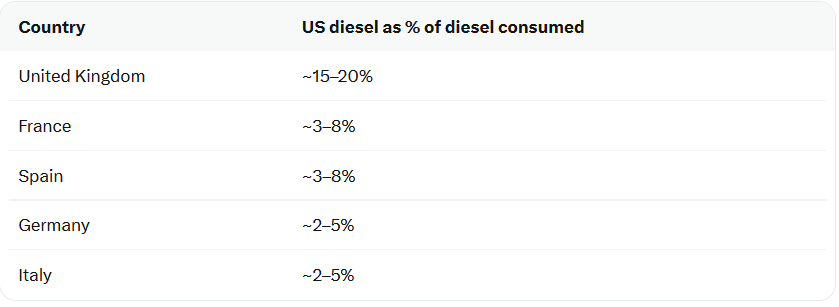
Looks like UK will be worst hit in the short-term with 1 in 5 or 1 in 6 barrels of diesel lost. Ireland imports 40% of its diesel from UK, so 2 in 5 barrels lost there. Both countries will suffer severe fuel shortages and logistics breakdown after the US ban. 🇬🇧🇮🇪 https://t.co/KqLpNtkAWe #FuelShortage #UKDiesel #LogisticsCrisis #GB #IE #US

1270
Philip Pilkington Sep 5

Meanwhile at the Pentagon, there seems to be some sort of severe breakdown of trust taking place. 🇺🇸 #Pentagon #TrustIssues #NationalSecurity #US

S
Sandfeen Aug 30

From Powerlessness to Collective Madness The world has gone crazy, but there is a pattern behind it. More people seem to be losing their grip on reality, swept up in ideological movements that demand conformity and punish dissent. This progression begins with powerlessness, continues with possession, and ends in resentment disguised as justice. The first stage is the breakdown of what can be called the power process. Human beings need to set goals, work toward them, and achieve them in order to feel whole. Once, daily life revolved around hunting, farming, building, and creating. Today, survival and progress are often managed by vast systems and institutions. As a result, many people feel alienated and powerless. They turn to movements for a sense of purpose, drawing progress not from their personal lives, but from the causes they embrace. Carl Jung described what happens next. Inside a movement, individuals can become possessed by collective identities. Those who refuse the difficult task of becoming themselves may dissolve into the group mind. This is why ideologies such as communism, nationalism, feminism, socialism, and environmentalism can exert such power: they offer ready-made identities and moral clarity. Individuals gradually stop thinking for themselves and become mouthpieces for the collective identity that has seized them. Nietzsche revealed the final stage: resentment. In *Thus Spoke Zarathustra*, he described the “tarantulas”—moral preachers who spin ideological webs in the name of justice. They claim to champion the weak, but their motivation may be envy and revenge, cloaked in noble language. Their goal is not always to uplift, but to tear down the strong. When the world seems to have gone mad, the pattern is clear: people lose the power process in their own lives, surrender themselves to ideologies, and then act out their resentment as justice. The cure is not another movement, but the difficult task of reclaiming individuality in an age of collective madness.

703
S
Sandfeen Aug 28

The Pathology of Masculinity and Femininity Without Cultural Restraint Both sexes have evolutionary roles: men developed strength for protection, provision, and competition; women developed beauty and selectiveness for pair-bonding and survival. Culture channels these drives—family structure, dating norms, fatherhood, shame, religion—guiding strength toward building and beauty toward commitment. Remove the norms and the drives seek new avenues. For men, the open channel becomes force: aggression and risk can detach from responsibility, yielding robbery, assault, gang violence, and predation. The shadow side of masculinity is strength used to take rather than protect. For women, the channel shifts to extraction through simulated intimacy: monetized desire via platforms and influencer economies can turn closeness into leverage, often without the pair-bonding or family life it was built to support. The masculine ideal is protector and disciplined provider; its pathology is thug or criminal. The feminine ideal is nurturer and guardian of commitment; its pathology is the seller of simulated intimacy and extractor of attention. Both are corruptions of genuine virtues. Three accelerants intensified these patterns: stigma’s collapse, technology’s scalability of desire, and weakened communities and absent fathers. The root cause is the breakdown of family norms. Men are less destructive when bonded and mentored; women are less exploitative when raised to value enduring commitment. Consequences mirror each other: unchecked male pathology produces violence; unchecked female pathology produces mistrust, loneliness, and demographic decline. Both arise when culture denies that masculine and feminine virtues must be shaped and channeled rather than suppressed.

820
S
Sandfeen Aug 28

When Failure Becomes a Demand for More A worldview that persists despite its unending list of failures is not interested in truth but in power. Consider how its adherents respond to the breakdown of their policies. They do not believe that multiculturalism itself has failed; they believe it was not implemented forcefully enough, or that the host nation was not subjected to enough propaganda promoting compulsory compassion. It is not that gender dysphoria is a mental illness; they argue that society simply has not normalized it enough. It is not that safe supply has failed; it merely has not been expanded enough. Decriminalization is not a bad idea, they insist. We simply failed to provide criminals with enough free resources and support programs before implementing it. Friedrich Nietzsche expressed the idea of suicidal empathy in his own words nearly a century and a half before Saad. In *Beyond Good and Evil*, he described a society that had grown so “pathologically soft and tender that it sides even with those who harm it.” Once society reaches this stage, he observed, anything that raises a person above the herd or intimidates their neighbors is declared evil. Mediocrity becomes the highest achievement.

469
Christophe Barraud🛢🐳 Aug 17

🇨🇳 July data | A breakdown of the numbers shows that #China produced 53 billion semiconductors in July, a 21% jump from the same month last year - Bloomberg https://t.co/aPcc0A3EtF #China #Semiconductors #Economy #CN

588
Prof. Stefan Rahmstorf 🌏 🦣 Aug 5

“It’s time to make oil giants pay up to repair the climate breakdown they’re driving. Think how many fire and flood defences we could build, or how many solar panels we could install, if big oil paid their fair share in taxes.” https://t.co/fL7PHH4JhI #ClimateAction #OilTax #RenewableEnergy #Therearenospecificcountrymentionsinthetweetprovided.Thus #therearenocountrycodestoreturn.

118
Prof. Stefan Rahmstorf 🌏 🦣 Jul 26

Scientists say climate breakdown is triggering more frequent and more extreme weather events, evaporating soils and waterways, fuelling wildfires and leading to thousands of excess deaths. Europe is heating at about twice the global average rate. https://t.co/utrgl7m1M6 #ClimateCrisis #ExtremeWeather #GlobalWarming #EU

Fiona Dewaele Jul 15

Ff serieus blijven @carogennez, ik heb meerdere vrienden die een podcast runnen (met betere kijk- en luistercijfers) zonder subsidies of ads en dit is hun gemiddelde kost-breakdown: • Totaal eerste jaar (eenmalige investering in materiaal zonder huur van ruimte maar in deftige living of zo + goeie maar geen al te dure editing apps): €400 - €850 (gemiddeld ~€550) • Totaal over 3 jaar (eenmalig + 3 × terugkerend): €500 - €1.250 (gemiddeld ~€650 - €750) • Oké die mensen steken hun tijd er gratis in. Opmerkingen: • Die gasten zijn gestart met een basis-setup en later verder beginnen upgraden. • De meeste kosten zijn eenmalig. Na het eerste jaar zijn de lopende kosten zeer laag. • Tijdsinvestering (niet financieel): 4-10 uur per aflevering (editing) + initiële leerperiode. Dus oké, leg het ons uit a.u.b. #Podcast #Investering #Media

12452
Άχαστος🔴⚪ Jul 7

Αν δεν υπήρχε αυτή η φωτογραφία, αυτην την στιγμή θα είχα πάθει mental breakdown άνευ προηγουμένου https://t.co/rB4KfBu4MW #MentalHealth #Photography #Breakdown

12944
Philip Pilkington Jun 26

It appears what is actually going is that ships trapped in the west of the Strait are escaping via the Oman route. Meanwhile Iran is trying to calculate how much they allow before full closure and a potential breakdown in negotiations. 🇮🇷🛳️🚀 #StraitOfHormuz #Iran #ShippingCrisis #OM #IR

476
Euronews English Jun 5

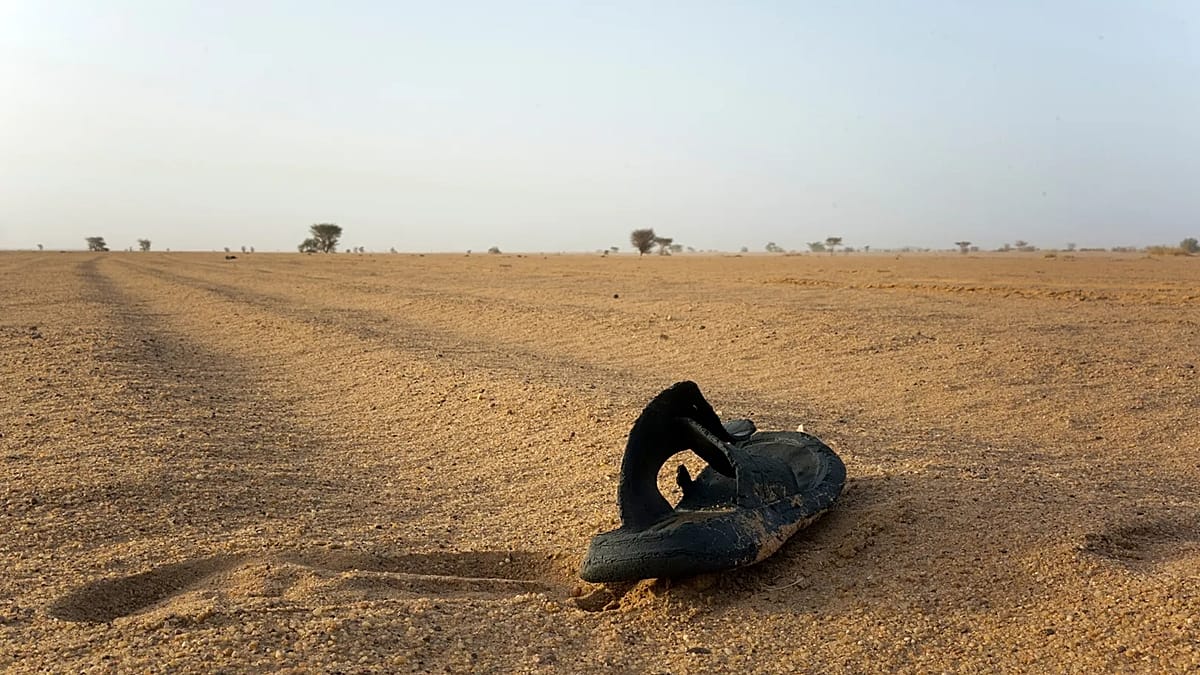
A truck breakdown in Niger left 49 passengers dead due to dehydration after they were stranded for days in the Sahara Desert while returning from a religious festival in Mali, with only two survivors managing to reach water and alert authorities. #NigerTragedy #SaharaDesert #TransportationSafety

www.euronews.com
Truck breakdown in Niger strands passengers and leaves 49 dead in Sahara Desert
8353
António Guterres May 22

Biodiversity is the living web that sustains humanity. Yet, climate chaos, pollution & the relentless exploitation of nature, are pushing the natural world towards breakdown. This #BiodiversityDay, let's work together to halt & reverse biodiversity loss, so people & nature can #BiodiversityDay #SaveNature #ClimateAction #Thetweetdoesnotmentionanyspecificcountries.Therefore #therearenocountrycodestoreturn.

239
Philip Pilkington May 17

Best 5 minute breakdown of what has happened in Hungary and why it is very bad for Europe. - Hungarian voters voted on domestic issues without understanding that the stakes were global and geopolitical. - The Fidesz government had manoeuvred Hungary onto the winning side of the https://t.co/jStujoHPom #Hungary #Geopolitics #Fidesz #HU #EU

www.diepresse.com
Norwegen gedenkt der Terroranschläge vor 15 Jahren
598
R
Reuters May 16

Samsung Electronics and its labor union are set to resume pay talks with a government mediator amid concerns over a potential strike, following a breakdown in negotiations and an apology from Chairman Jay Y. Lee regarding the labor dispute's impact on customers and the public. #Samsung #LabourNegotiations #TechIndustry #KR

www.reuters.com
Samsung Elec, South Korea union to resume pay talks on Monday, union says
8373
Alice Teodorescu Måwe May 15

RT @AvivaKlompas: A breakdown of how Nicholas Kristof discarded journalistic standards, abandoned rationale thinking, and published libelou… #Journalism #MediaEthics #FactChecking

BBC May 15

The article explores the journey and financial breakdown of crude oil from extraction in Saudi Arabia, where production costs about $25 per barrel, to the consumer, shedding light on the factors contributing to the current high pump prices, which have surged to around $95 amid Middle Eastern conflicts. #OilPrices #EnergyMarket #Commodities #SA #TH

www.bbc.com
BBC Audio | Business Daily | Why is filling your tank costing so much?
8972
R
Reuters May 15

A group of United Nations human-rights experts has urged Starbucks and the U.S. government to address allegations of intimidation and harassment against employees seeking to unionize, highlighting serious concerns about violations of rights to freedom of expression and assembly, while negotiations between the company and its unionized workers have recently resumed after a prior breakdown. #HumanRights #LaborRights #Unionization #US

www.reuters.com
UN human-rights experts urge Starbucks and US to address union-busting claims
8375