WRLD

Search

#Uskonto
Teemu don Hiilinen 12h

The author stated that he had warned multiple times about the strong increase of anti-Muslim sentiment and Islamophobia in Finland. According to him, key social media influencers and politicians were still spreading hate and labeling an entire religion as the "other." He added that history should not have to repeat itself. #muslimiviham #islamofobia #suomi #FI (translated)

2126
Nuorsuomalainen nupisee 13h

A young Finnish person reported that British Christian police officer Luke Salmons, 46, won a legal battle against police administration. According to the report, Salmons challenged the claim that Islam is a religion of peace in diversity training and raised questions about jihad, Hamas, and Gaza. He was suspended from work two days after the training, and the police department deemed him guilty of a serious misconduct. Salmons was added to the Police Barred List, which effectively prevented him from working in law enforcement. The young Finnish person wrote that Salmons appealed the decision, and North Yorkshire Chief Constable Tim Forber later determined that it was not a serious misconduct nor a breach of professional standards. Salmons was then removed from the barred list. He subsequently filed a lawsuit for religious discrimination and harassment, as well as for violations of his freedom of religion and speech. North Yorkshire Police settled the matter before it progressed to an employment tribunal, and Salmons received financial compensation from the police. The amount of the settlement was not disclosed in the report. #oikeus #uskonnonvapautta #monimuotoisuus (translated)

2480
Keijo Kaarisade 18h

Keijo Kaarisade wrote that when condemning the oppression of women, it was agreed, in his opinion, to speak vaguely about religions and cultures without referring to Islam. He criticized that a member of the National Coalition Party had been assigned to the matter and they themselves had followed along, and said that he would have to explain the issue to the imam again with Petteri. https://t.co/bbPqxHiqBm #naistenoikeudet #uskonto #kulttuuri (translated)

2177
Klaus 1d

Klaus said he had responded to a user named Sukkola, who he claimed had blocked him. He stated that his criticism was directed at Said Aw-Musse's position as a religious authority rather than at his personal actions. Klaus described classical Sunni Islam as a tradition in which sharia is seen as divinely ordained and as a legal system superior to human laws. According to him, it included legal, moral, and social rules regarding, among other things, testimony, inheritance, apostasy, and legislative authority. Klaus wrote that Aw-Musse had studied theology in Saudi Arabia and worked in a mosque where the teachings of Muhammad ibn Abd al-Wahhab had been used. He described this figure as an ultra-conservative thinker who demanded the return of Islam to its literal roots. According to Klaus, Aw-Musse's refusal to clarify his position on the primacy of Finnish law and the status of sharia justified suspicion. Merely following the law, in his opinion, did not indicate whether he considered the constitutional order of Finland to be just and final or a temporary imposition. Klaus expressed a desire to know what kind of Finland Aw-Musse envisioned in 50 or 100 years. Klaus believed that questions regarding women's rights, freedom of speech, freedom of religion, and criminal law were not leading him into a trap but were inquiries into whether Aw-Musse accepted the principles of the Finnish rule of law. He deemed Aw-Musse's public stance significant for its societal relevance due to his religious role. According to Klaus, integration required not only adherence to the law but also acceptance of fundamental values. #uskonto #oikeudet #kulttuuri (translated)

2911
Lucia-pulla 2d

Lucia-pulla stated that she had posed several questions to Said Awmuss, to which she had not received answers. She had asked, among other things, what kinds of hobbies Muslim girls could engage in and whether twerking, hip-hop, and ballet were acceptable. Additionally, she inquired about the attitude towards dating a Finnish Christian, marrying a Jew or a Hindu, and the Muslim Brotherhood. On the day of Aleksis Kivi and Finnish literature, Lucia-pulla asked what the Finnish language, literature, and culture meant to Said Awmuss, and urged him to discuss it with her. She also wrote that Islam was not a race or ethnicity but a religion or ideology, and considered discussing racism in this context misleading. According to her, no one is born a Muslim. #uskonto #kulttuuri #kysymykset (translated)

2658
Sanna Ukkola 2d

According to the author, there was an uproar over Prime Minister Petteri Orpo's meeting with the imam, even though meetings with leaders of religious communities were part of the Prime Minister's duties. The author stated that the imam said that Finnish law applied to everyone, including Muslims, but according to him, he was still pressed on sharia as if it were a crime. The author found this repugnant and racist. #uskonto #rasismi #Suomi #FI (translated)

2826
Eija-Riitta Korhola-Dunderfelt 3d

Eija-Riitta Korhola-Dunderfelt wrote in her response to Suvi-Anne Siimes that she was completely of the opposite opinion on the matter. According to her, the undeniable trademark of the National Coalition Party had been home, religion, and fatherland, but one important voter group no longer saw this line in the party. At the same time, she assessed that the Finns Party had become a more credible alternative. #politiikka #Suomi #vaalit (translated)

2905
Elina Hiltunen 7d

Elina Hiltunen wrote that, in her opinion, people were expected to constantly perform, be independent, and emphasize their own accomplishments or identity, even though not everyone could manage alone or was perfect. She described such belief systems as ruthless. Hiltunen stated that in Christianity, salvation could not be achieved by one's own deeds or rules, but it was a gift from Jesus. According to her, no one was better than others, and everyone needed grace. She wrote that receiving the gift made a person love their enemies as well. Hiltunen encouraged those who saw Christianity as rules and abstaining from fun to get to know Jesus with an open mind. She recommended starting with the New Testament instead of the Bible and asked readers to share their thoughts and join her Instagram community to discuss the topic. She also urged sharing the video further. #armo #kristinusko #yhteisö (translated)

2949
Päivi Korpivaara 🇫🇮 1w

Päivi Korpivaara wrote that Judaism had not influenced matters in Finland one way or the other, and mentioned Seela Sella as an example. She said that Jews had been able to be on the streets peacefully in previous decades, but claimed that the increase in the number of Muslims and their hatred towards Jews had changed the situation. #juutalaisuus #Suomi #uskonto (translated)

11603
Lucia-pulla 1w

Lucia described the typical reader of Helsingin Sanomat as a 25–40-year-old, highly educated urban woman who lived in neighborhoods like Kallio, Käpylä, Kumpula, Pakila, Kalasatama, Töölö, or Lauttasaari. She noted that this woman would usually vote for the Greens, the Left Alliance, or the SDP and would frequent brunches, bars, and the Flow festival. According to Lucia, the woman she described might be in a relationship, live in a community garden cabin, and be the mother of one or two children. She listed names like Alvar, Oliver, Ariel, Kuura, and Kaura for the children. Lucia mentioned that the woman preferred public transportation but accepted her partner's expensive car, even if she suffered from climate anxiety and flying shame. The woman might also have a small dog. The author claimed that such a reader did not know any voters of the Finns Party and might consider her rural uncle, who had voted for the party at times, to be peculiar. She speculated that the woman worked in a field where she could aim to make the world a better place. Lucia called this a reader profile and target group for Helsingin Sanomat, whose interests and views, according to her, the paper's journalists anticipated. She wrote that HS did not aim for objective or neutral reporting, nor was it an agenda-driven media outlet. According to her, the paper's target group did not encompass all people regardless of their background, lifestyle, or viewpoints. She compared HS to a mirror held up by journalists so that the reader could be satisfied with what they saw, and concluded that the reader of the described profile was not the same as the writer of the piece. #Helsinki #ilmastoahdistus #lukijaprofiili (translated)

13083
Matti H. Virtanen 1w

Matti H. Virtanen wrote that he finds it special that people labeled as racists do not need to be named, even though problems in journalism are usually identified in order to solve them. He pondered whether racism would then be seen as an abstract evil residing in everyone. Virtanen referred to Timo R. Stewart's column in Yle, which stated in its title that a racist has nothing useful to say about social issues. According to Virtanen, religions, beliefs, and cultures are not related to skin color or other racial characteristics, and comparing and evaluating them is acceptable civic discourse. He argued that "From the River to the Sea – all Women shall be Free" is not a racist appeal, even though opponents of equality might claim otherwise. #journalismi #kulttuuri #yhteiskunta (translated)

11850
Jari Mäkäräinen 1w

Jari Mäkäräinen criticized Timo R. Stewart's column, stating that Stewart had already decided in advance that those who disagree are stupid and racist. According to Mäkäräinen, Stewart defined racism as evaluating individuals based on their ethnic or religious background and concluded that such individuals had nothing useful to say about international politics. Mäkäräinen mentioned that the column likened the observation of group differences to climate denialism, young Earth creationism, vaccine resistance, and reptilians. He also claimed that it had asserted that the Finnish media, researchers, and the Ministry of Foreign Affairs had adopted their Middle Eastern stance from Hamas. Mäkäräinen argued that the claim about the absence of pure races did not refute the phenomena indicated by statistics, attitude surveys, and street views. He highlighted religion, cousin marriages, concepts of honor, fertility, and renouncement of religion, adding that the common goals of Muslims could be examined from their own polls. According to Mäkäräinen, explaining unpleasant phenomena solely with prejudices and labeling dissenters as racists was essentialism. He criticized a sense of moral superiority and argued that it led to a lack of fact-checking, distinguishing between immigrant groups, or noticing that one's own media repeated Hamas's casualty figures. He believed that placing morality above observations weakened empathy. https://t.co/dglVfEEw2o #rasismi #media #ilmasto (translated)

24284
Peltsi Peltola 1w

Peltsi Peltola wondered whether such headlines could still be written if religions, names, or cultures could not be mentioned in them. He assessed that not everything would pass with everyone, and at the same time speculated that such writing would increase opposition — possibly intentionally by the journalists. https://t.co/r0fAFsZi0X #mediakritiikki #kulttuuri #vapaaehtoisuus (translated)

12219
Tere Sammallahti 🇫🇮💙🇺🇦 1w

Tere Sammallahti wrote that blasphemy was still prohibited by law in Finland, which he claimed was one of the few such countries in Europe and the Western world. According to him, the law restricted freedom of speech and opinion by protecting gods and things considered sacred in religion. Sammallahti argued that the law currently protects more new religions than secularized Christianity. Sammallahti stated that he had made a legal proposal to repeal the blasphemy law and urged sharing information about the proposal as well as reminding members of parliament to sign it. According to this, religions do not need legal protection, but freedom of speech does. #Terestroika #Sananvapaus #Uskonto #Suomi (translated)

12905

Vihdoin! Puolueeni Kokoomus on tullut oikealle linjalle! Sopeutukset tehdään leikkaamalla,ei veronkorotuksilla. Vielä nyt enemmän koti,uskonto,isänmaa linjalle,niin kannatus nousee. #talous #kokoomus https://t.co/wqwbB6e7Uw #kokoomus #politiikka #talous

13309
Elias Rosengrén 2w

@ir_rkp On hämmästyttävää miten länsimaisesta kulttuurista keksitään kaikkia "sortavia" rakenteita, mutta islamin silmin nähden sortavissa tavoissa ei ole ongelmaa alkuunkaan. #kulttuuri #uskonto #yhteiskunta

12621
Miikka Korja 3w

1/4: Näin sikamaisen härskiä hyväksikäyttöä ei tapahdu kuin uskonnollisissa + poliittisissa lahkoissa. #KaikenVoiTehdäReilummin #sdp #säätiöt ”Nurminen joutui TYKS:n geriatriselle osastolle. Seuraavana päivänä Ulla Vuolanne haki hänet osastolta pankkiin” https://t.co/CsJlJjmvw6 # hyväksikäyttö #uskonto #politiikka

14439
mtvuutiset.fi 3w

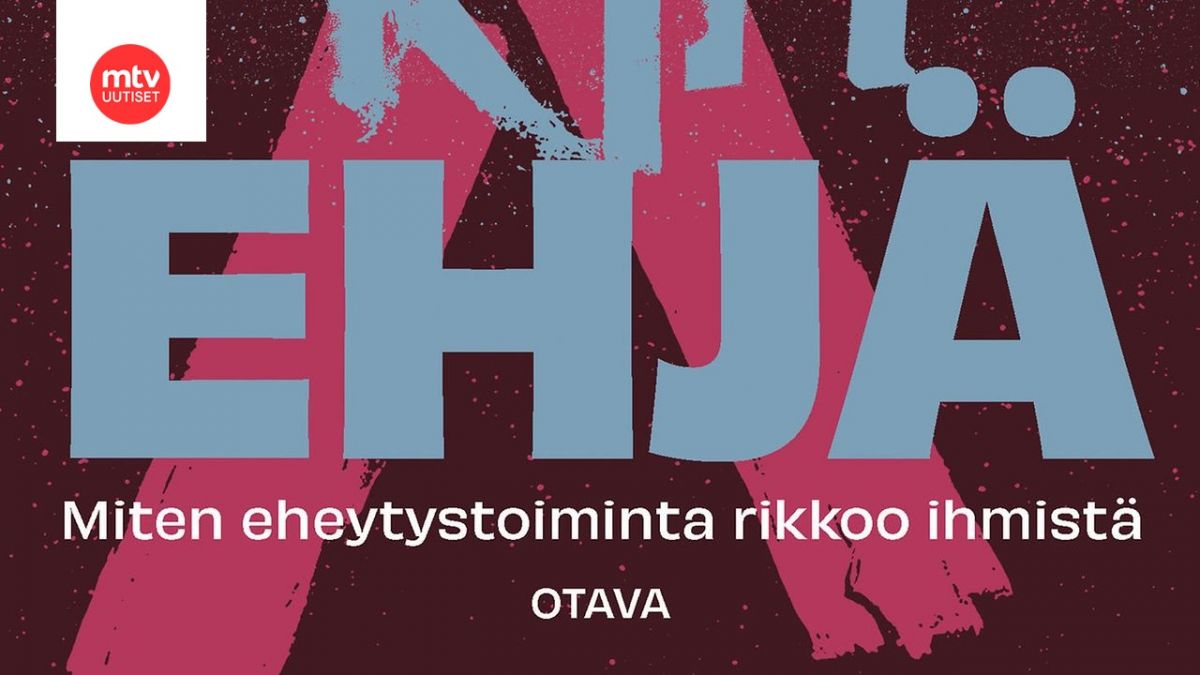
Ville Mäkipelto käsittelee kirjassaan Sittenkin ehjä eheytystoimintaa kirkollisissa piireissä, jossa nuoria pyritään muuttamaan heteronormatiivisiksi, ja kuvaa sen aiheuttamaa henkistä väkivaltaa sekä taustalla olevia uskonnollisia tavoitteita. #eheytys #seksuaalisuus #uskonto

www.mtvuutiset.fi
Eheytystä ja henkistä väkivaltaa kirkollisissa piireissä
8686
Tuomo.Saarni 🇺🇦🇫🇮 4w

Juhanan historia on kirjoitettu hieman eri tavalla kuin mitä minä olen lukenut. Luettelen tähän maita joiden väestö on muuttunut muslimienemmistöiseksi muista uskonnoista. Käytän tässä nykyisiä valtioiden nimiä, vaikka nykyiset valtiot ja rajat on muodostuneet myöhemmin. Saudi-Arabia Jemen Oman Arabiemiirikunnat Qatar Bahrain Kuwait Irak Syyria Jordania Libanon Palestiinalaisalueet Egypti Libya Tunisia Algeria Marokko Mauritania Sudan Iran Azerbaidžan Afganistan Kazakstan Uzbekistan Turkmenistan Tadžikistan Kirgisia Turkki Albania Kosovo Bosnia ja Hertsegovina Pakistan Bangladesh Malediivit Indonesia Malesia Brunei Senegal Gambia Guinea Sierra Leone Mali Niger Burkina Faso Tšad Nigeria* Somalia Djibouti Komorit *Nigerian kohdalla tästä on eri arvioita mikä on valtauskonto. #historia #uskonto #muslimienemmistö

16476
Päivän Byrokraatti 4w

Yksi Ruotsin parhaista journalisteista, Per Gudmundson, on juuri julkaissut artikkelin siitä, miten Muslimiveljeskunta soluttautui Ruotsin sosiaalidemokraattiseen puolueeseen. Artikkelissa ei mainita, että Qatar on rahoittanut voimakkaasti Veljeskunnan toimintaa Ruotsissa. Gudmundson kirjoittaa:”15. kesäkuuta 1994 sosiaalidemokraatit saivat tarjouksen. ’Poliittinen komiteamme on käynyt hyvää vuoropuhelua muiden puolueiden kanssa, mutta päätös oli tukea sosiaalidemokraatteja. Uskonnolliset johtajamme ovat kehottaneet kaikkia perjantairukoukseen osallistujia menemään äänestyspaikoille 18. syyskuuta ja äänestämään; he ovat ilmoittaneet, ettei mikään estä muslimeja antamasta ääntään sosiaalidemokraateille, jotka puheissa ja kirjoituksissa puolustavat yhteiskunnan heikkoja.’”Allekirjoittajat edustivat Ruotsin muslimineuvostoa (SMR), Ruotsin muslimiliittoa (SMUF), Ruotsin yhdistyneitä islamilaisia yhdistyksiä (FIFS), Tukholman islamilaista yhdistystä sekä pitkää listaa niihin kuuluvia alayhdistyksiä, joiden he väittivät palvelevan yhdessä ”yli 75 000 muslimitaustaista ihmistä”. Vaalien jälkeen Veljesliikkeelle (Broderskaprörelsen), kristillisille sosiaalidemokraateille, annettiin ”vastuu yhteistyön kehittämisestä” sen kymmensivuisen raportin mukaan, jonka liike esitti vuoden 1999 kongressissaan. Vuoden 1998 vaalien osalta hanke todettiin ”erittäin onnistuneeksi, eikä vähiten SMR:n aktiivisen panoksen ansiosta muslimien äänestysprosentti on todennäköisesti ollut korkea, ja monet ovat äänestäneet sosiaalidemokraatteja.” He näkivät ”tilaa kauaskantoisemmille yhteistyöhankkeille sosiaalidemokraattien ja Ruotsin muslimineuvoston sekä sen poliittisen haaran välillä.” Asetettiin konkreettisia tavoitteita. ”Vuoteen 2002 mennessä sosiaalidemokraattisten luottamushenkilöiden joukossa pitäisi olla muslimeja 15 kunnanvaltuustolistalla, 5 maakuntavaltuustolistalla ja eduskuntalistoilla vähintään 5 läänissä. Sosiaalidemokraattisella puolueella tulee olla 2 000 muslimijäsentä, ja 300 heistä on saanut peruspoliittista koulutusta.” Kun Ruotsin islamilaisen yhdistyksen puheenjohtaja valittiin puoluehallitukseen keväällä 2013 (ja potkittiin pois viikon kuluttua), se seurasi pidempää uraa Hjärta-paikallisosastossa (Sydän) – Tukholman uskonnollisissa sosiaalidemokraateissa. Uudessa kirjassa ”Holy white lies: Muslim brotherhood in the West, case Sweden” uskontotieteilijä Sameh Egyptson kartoittaa, miten Muslimiveljeskunta toimii länsimaissa käyttäen Ruotsia esimerkkinä. Sosiaalidemokraattien lisäksi voidaan erityisesti mainita Keskustapuolue ja Vihreät – mutta Veljeskunnan strategia on toimia yhteiskunnan kaikilla tasoilla, minkä vuoksi he ovat etsineet kaikki vastaanottavaiset puolueet. Jopa Maltillisella kokoomuksella oli yksi ”veli” eduskunnassa yhden vaalikauden ajan. Kirja kirjoitettiin alun perin arabiankieliselle yleisölle, mutta se on käännetty englanniksi. Kirjan mukana on laaja dokumentaatio internetissä, jossa alkuperäislähteet on valokuvattu ja arkistoitu. Egyptson näyttää, miten hyvin pieni ryhmä ihmisiä hallitsee suurta määrää organisaatioita: islamilaista yhdistystä, Ruotsin muslimineuvostoa, Ruotsin islamilaisia kouluja, Ibn Rushd -opintoyhdistystä, vain muutamia mainitakseni. Toiminta on lähes kokonaan valtion rahoittamaa, ja päätarkoitus – muslimi-identiteetin säilyttämisen lisäksi Veljeskunnan uskontotulkinnan mukaan – on antaa vaikutelma suuremmasta kollektiivista ja esittää itsensä islamin todellisena äänenä Ruotsissa. Sinänsä tätä ei välttämättä tarvitse nähdä yhteiskuntaa hajottavana, mutta veronmaksajana ihmettelee, miksi valtion pitäisi rahoittaa tällaista toimintaa. Puolueen näkökulmasta rahavirta vaikuttaa loogisemmalta. Tai kuten Veljeskunnan lehdessä (13/98) todettiin: ”Ruotsissa on lähes puoli miljoonaa muslimia – yhdessä he voisivat nostaa minkä tahansa puolueen ennenkuulumattomiin korkeuksiin.” (Käännös Grok) #Ruotsi #journalismi #muslimiveljeskunta

16976