WRLD

Search

#järjestelmä
Jari Mäkäräinen 9h

Jari Mäkäräinen criticized Sanna Ukkola's writing about the Prime Minister's meeting with Imam Sharmarke Said Aw-Mussen. According to Mäkäräinen, Ukkola regarded the meeting as ordinary work and believed that the imam, who was born in Turku, was being asked impossible questions regarding Sharia. Mäkäräinen argued that asking the imam was not a misunderstanding: in his view, the imam left open whether Sharia would be applied in Finland in family or criminal law matters. Mäkäräinen wrote that, according to him, freedom of religion did not justify the establishment of a parallel legal system alongside Finnish laws. He claimed that in Muslim-majority countries, freedom of religion, women's equality, and individual rights were not realized in liberal democracies due to Islamic doctrine and Sharia. He cited Lebanon as an example, where he believed the growth of the Muslim population and political organization undermined previous balance and led to civil war. In France, Sweden, Belgium, and Britain, he mentioned the visibility of parallel societies, honor-based violence, segregation of areas and schools, and pressure to accept practices related to Sharia. In Finland in the 2000s, Mäkäräinen claimed that groups with a Muslim background who had immigrated were connected to the overrepresentation of sexual offenses, unemployment, use of social security, and demands for their own rules. He believed that distinguishing criticism of Islam from calls for deportation did not make questions about Sharia suspect. According to Mäkäräinen, the primacy of the Finnish Constitution and criminal law should be clear in all matters, and Finland did not need to repeat the experiences of countries where the application of Sharia had been tried. https://t.co/bGpZ7VaTux #uskonnonvapaus #integratio #muslimit (translated)


1854
Roni Arvonen 11h

Roni Arvonen wrote that he thought the YEL system had been fixed, but he admitted he had been mistaken. He thanked Jouni for the text he wrote and recommended it for reading. According to Arvonen, the National Coalition Party had also betrayed entrepreneurs in this matter, and the system had not been repaired in four years. He described the YEL system as drastically cutting down on entrepreneurs and accused the National Coalition Party of hating entrepreneurs. #yrittäjyys #Kokoomus #YEL (translated)

2080
Antero Paljakka OLY 13h

Antero Paljakka OLY wrote that the pension contribution indicated on the pay slip was 7.3 percent, whereas in reality, according to him, 25.5 percent of the salary went to it. He described the practice as a tax technical deception stemming from the legacy of the 1993 recession and claimed that naming over two-thirds of the contribution as the employer's share led Finns to perceive pension security as inexpensive. According to Paljakka, pension contributions reduced the employee's purchasing power and gross salary, and the employer viewed the total cost as the price of the employee. He asked how long people would accept that a quarter of the value of work went into the system without them having a say in how the funds were used. #eläkkeet #palkka #verotus (translated)

2389
Henri Vanhanen 1d

Henri Vanhanen wrote that Finland should take seriously Russia's alleged plans to assassinate leaders of the European defense industry. According to him, European intelligence services had warned that Russia had intensified its assassination plots targeting business executives. Possible targets included not only large arms manufacturers but also smaller defense technology companies, especially manufacturers of drones and their components. Vanhanen referred to a plan revealed in 2024 to assassinate Armin Papperger, CEO of the German company Rheinmetall. He wrote that more recent intelligence data indicated broader and more systematic actions beyond individual cases. According to Vanhanen, Russia's intention was to undermine the European defense industry, intimidate its business leaders, complicate support for Ukraine, and disrupt the strengthening of Europe's defense capabilities. Vanhanen urged an urgent assessment of whether the protection of key personnel in Finland's defense industry is adequate. He suggested that the security police, police, and defense administration work together with companies to identify individuals at special risk and ensure preemptive action against threats. He proposed, if necessary, strengthening personal protection, enhancing counterintelligence efforts against companies, and improving information sharing among authorities. According to Vanhanen, Finland should not wait for the first attack on its territory before preparing. https://t.co/xVZMYe1R7e #Puolustusteollisuus #Venäjä #Suomi (translated)

2917
Klaus 2d

Klaus said he had responded to a user named Sukkola, who he claimed had blocked him. He stated that his criticism was directed at Said Aw-Musse's position as a religious authority rather than at his personal actions. Klaus described classical Sunni Islam as a tradition in which sharia is seen as divinely ordained and as a legal system superior to human laws. According to him, it included legal, moral, and social rules regarding, among other things, testimony, inheritance, apostasy, and legislative authority. Klaus wrote that Aw-Musse had studied theology in Saudi Arabia and worked in a mosque where the teachings of Muhammad ibn Abd al-Wahhab had been used. He described this figure as an ultra-conservative thinker who demanded the return of Islam to its literal roots. According to Klaus, Aw-Musse's refusal to clarify his position on the primacy of Finnish law and the status of sharia justified suspicion. Merely following the law, in his opinion, did not indicate whether he considered the constitutional order of Finland to be just and final or a temporary imposition. Klaus expressed a desire to know what kind of Finland Aw-Musse envisioned in 50 or 100 years. Klaus believed that questions regarding women's rights, freedom of speech, freedom of religion, and criminal law were not leading him into a trap but were inquiries into whether Aw-Musse accepted the principles of the Finnish rule of law. He deemed Aw-Musse's public stance significant for its societal relevance due to his religious role. According to Klaus, integration required not only adherence to the law but also acceptance of fundamental values. #uskonto #oikeudet #kulttuuri (translated)

3165
Otto Juote 3d

Otto Juote criticized the National Coalition Party for allegedly abandoning its values and becoming an assistant to the right-wing government. He wrote that disappointed voters were shifting to support the Left Alliance and the Social Democratic Party and questioned where the previously promised projects, such as Garden Helsinki, senior spa vouchers, and the sale of natural monopolies to international investors, had gone. Juote ironically described the National Coalition Party as a leftist social-liberal party, which in his view had previously supported, among other things, state-owned projects, service vouchers, increased immigration from developing countries, climate actions, and support packages. He claimed that the party had also held onto acquired benefits while it spoke of cuts and reducing debt. Additionally, Juote asked why discussions about entrepreneurship, economic growth, and warnings about right-wing policies seemed to have disappeared from the party. He wrote that Orpo's National Coalition Party no longer reflected the pragmatic interest group and system party that he had previously supported. Juote estimated that he would likely vote for a red tie-wearing socialist in the upcoming elections instead of a blue tie-wearing one for the first time. #Kokoomus #Vasemmistoliitto #Politiikka (translated)

2912
Henri Vanhanen 4d

Henri Vanhanen warned about Finland's security and wrote that according to Denmark's Security and Intelligence Service PET, Russia had begun sabotage operations against Danish defense companies. According to him, companies supplying weapons and equipment to Ukraine were particularly targeted. Vanhanen stated that PET assessed that Moscow had aimed to reduce European support for Ukraine through intimidation and harassment and was now trying to harm weapons production and supply chains. Vanhanen wrote that perpetrators of the strikes were recruited via social media and were first paid for photographing and gathering intelligence on targets, and later for sabotage. According to him, this allowed operations without the direct involvement of Russian intelligence officers. He warned that Russia aimed to extend the effects of the war to NATO countries and also assessed that Finland's defense industry's production facilities, subcontractors, personnel, and supply chains could be targets. Vanhanen believed that protecting them required cooperation between companies and authorities, and urged NATO to assess when individual sabotage attacks would constitute a systematic campaign against the alliance's defense capability. https://t.co/CgjnDAjDhY #Turvallisuus #Ukraina #Venäjä (translated)

3490
Juho Salo 5d

Juho Salo criticized Finland's pension system and wrote that if the retirement age were to be raised, it could, in his opinion, be increased all at once to 100 years. He argued that in the system, a worker could pay pension contributions for 50 years, which would correspond to 25 percent of their salary, and receive a pension only at the age of 74. Salo pointed out that, according to him, pension accrual could not be collected. Salo called the system an economic catastrophe. He calculated the total amount of pension contributions and other shares to be 33.7 billion euros: 28.2 billion for occupational pensions, 0.7 billion for employees' shares, and 4.8 billion euros for state contributions. According to him, this amount could be used to pay a monthly basic income of 656 euros in addition to current social benefits and wages without tax increases. He compared the current system to a model where the retirement age would be 50 years and the pension would be 900–1,100 euros per month. Salo believed that money available earlier could be invested by individuals. He also criticized that those born before 1964 would receive the promised pension, while later generations would be left with the bill. Salo proposed that an investment of about 800 euros per month for 25 years would accumulate 240,000 euros without returns and over a million euros with investment returns. He related his comparison to the MSCI World index for the years 2001-2026 and said that wealth would remain for inheritance if 3-4 percent was withdrawn annually. According to him, such a system could make Finnish workers millionaires by the age of 50-60 and free up jobs sooner. Additionally, Salo criticized trade unions for not organizing strikes against pension contributions, development aid, and financing immigration, in his view. He compared the pension system to economic development aid and described it as an even worse solution. #eläke #perustulo #kansantalous (translated)

3604
Henri Vanhanen 5d

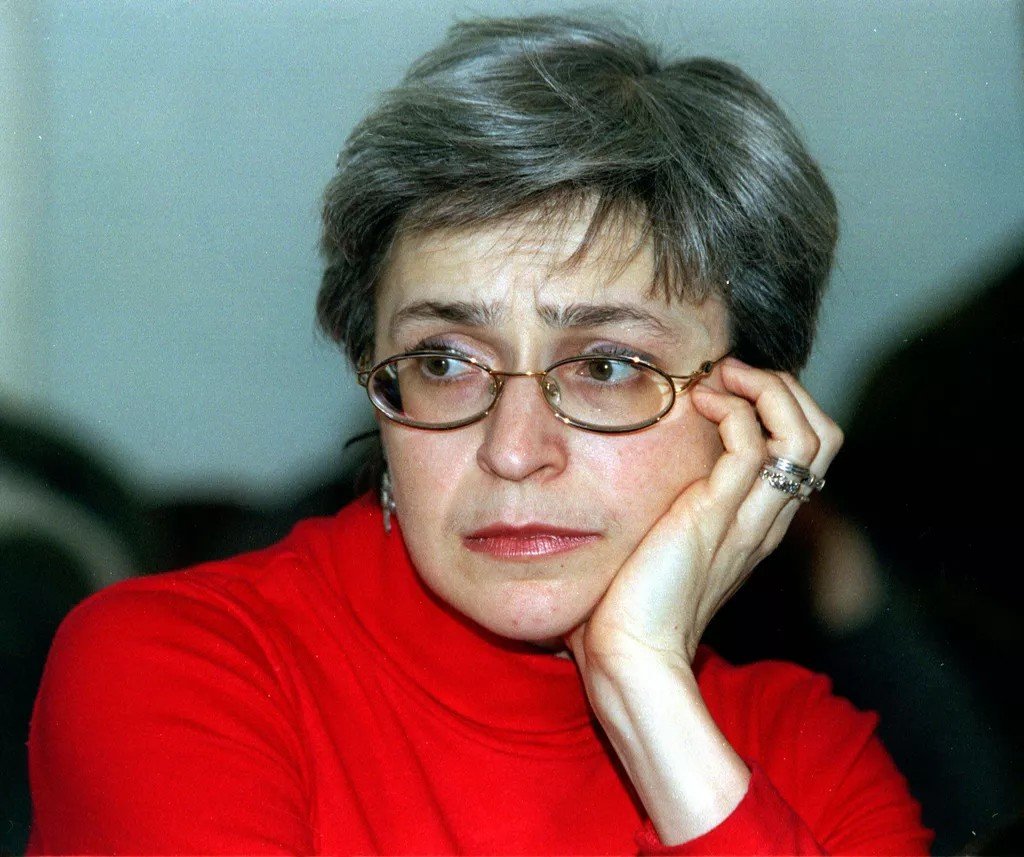
Henri Vanhanen wrote that Vladimir Putin turned 74 today and reminded that journalist Anna Politkovskaya was shot in the elevator of her apartment building in Moscow on Putin's birthday, October 7, 2006. According to Vanhanen, Politkovskaya had documented the atrocities of Russian troops in Chechnya, torture, and abuses of power, and was one of the sharpest critics of Putin's Russia. Vanhanen assessed that Politkovskaya's murder on Putin's birthday could have been a message or a grotesque gift from the mafia state he described to the pinnacle of power. He wrote that the murder reminded of the system that Putin built: power became concentrated, violence became a tool of politics, and those defined as enemies of power could pay for their resistance with their lives. Vanhanen urged to remember also those who tried to tell the world what kind of Russia Putin was building, according to him. #Putin #Politkovskaja #Venäjä (translated)

3387
Jari Parantainen 6d

Jari Parantainen wrote that the consultant would clarify the matter by asking about the goal of the change and whether the current system in Finland achieves those goals. According to him, the goals were clearly met, so he believed the matter had been addressed. #muutos #tavoite #konsultointi (translated)

3400
Henri Vanhanen 6d

The author stated that he had spoken on Yle's morning show about Ukraine's new weapon systems and robotization. According to him, humanoid robots would hardly solve the war in Ukraine, but robots and autonomous systems would already be commonplace in the next war. He added that it was easy to laugh at the current clumsy robots. https://t.co/EVRBr71spg #Ukraina #robotit #teknologia #FI #UA (translated)

2947
Samuli Katainen 7d

Samuli Katainen compared politics to institutionalization in prison: in his view, living for a long time in a bubble funded by taxpayers can make ordinary life feel theoretical. #Vankila #Politiikka #Yhteiskunta (translated)

2951
Matti H. Virtanen 7d

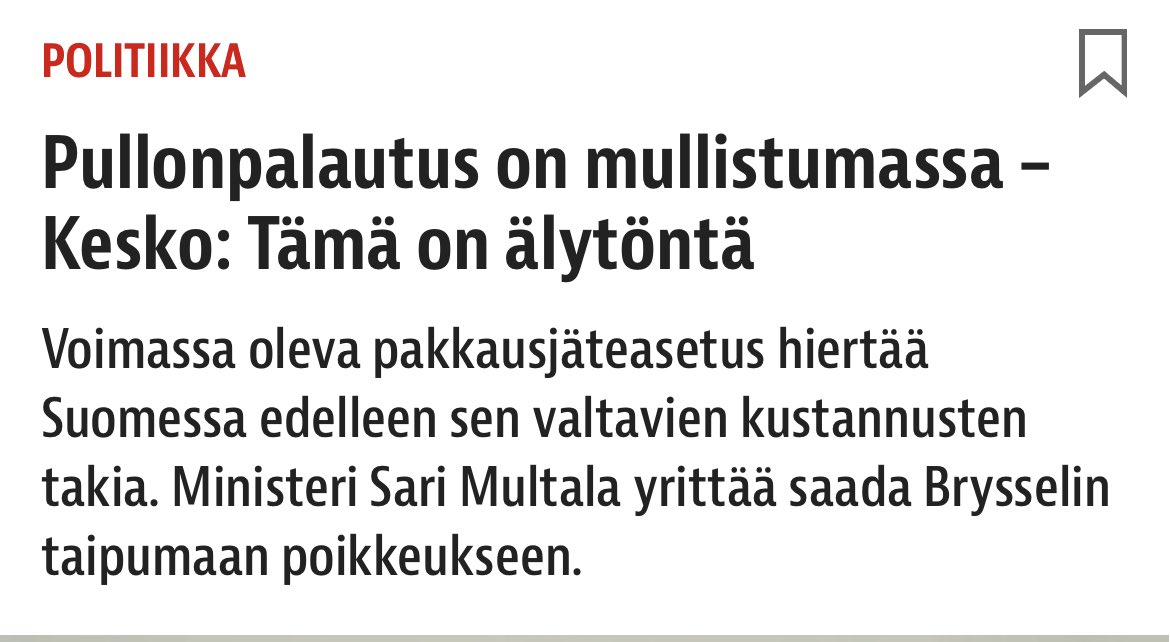
Matti H. Virtanen asked Sari Multalalta why Finland should always strive to actively influence matters. He inquired whether Finland would be separated from the union if the country announced it would maintain the old system, which he considered better than the proposed one. #Suomi #EU #vaikuttaminen (translated)

3519
Klaus 7d

Klaus wrote that as the importance of the party, the system, his own position, and fellow representatives grew, serving the people and challenging the shortcomings of the system could fall to the background. According to him, a challenger could thus become a maintainer of the system when it was comfortable to be within it. Klaus assessed Tere as an example of how a person who sincerely criticized the system could be integrated into it. He believed that better preparation was needed for this, and the case offered lessons to new challengers of the system about the importance of caution and principle. Klaus hoped for a steadfast challenger of the system in Parliament, who could have a significant impact, but he also thanked Tere for sticking to some of his principles. #politiikka #järjestelmä #korruptio (translated)

12383
Amos Ahola 7d

Amos Ahola wrote that Finland should declare that it will not comply with the system pushed through in Brussels if he considers it worse than the current one. He added that there should be no negotiations with terrorists. https://t.co/AIXGEX0uot #Suomi #EU #terrorismi (translated)

13748
Samuli Katainen 1w

Samuli Katainen wrote that Finland was at the forefront of bottle recycling in Europe: according to him, nearly all packages were returned and materials were efficiently circulated. He believed that the EU should guide other countries closer to the Finnish model instead of changing Finland's system. https://t.co/INNyWe2POv #kierrätys #suomi #ympäristö (translated)

12070
Samu Mökillä 1w

Samu Mökillä wrote that in Finland, with its long distances, many families needed a car for their daily lives, and that the fuel prices raised by the Middle East crisis had increased the cost of essential transportation. He criticized the proposal to use the commuting tax deduction to alleviate the situation, arguing that it mainly benefited commuters. According to him, the support would not help, for example, farmers, the transport sector, or lawnmowers. Mökkilä asked why fuel prices could be lowered elsewhere in the world but not in Finland, and considered the commuting tax deduction insufficient if the cost of living was also rising. He estimated that individual support lost its significance as general inflation consumed purchasing power. The rise in fuel costs would also increase freight rates, food production, industry, and logistics, which would be reflected in the prices of many products. He called for a reduction in distribution obligations and taxes instead of subsidies and described the commuting support as a small band-aid for a broader increase in living costs. According to Mökillä, politicians wanted to appear to be doing something, even if the support's impact on people's wallets was overshadowed by rising prices. Mökkilä also wrote that the state budget was heavily in deficit and dependent on revenues collected from motorists. He stated that high fuel taxes were part of climate policy, but rural residents, actors in the transport sector, and small entrepreneurs often had no opportunity to change their fleets or reduce driving. He criticized politicians for disregarding the situation of ordinary Finns, saying that while there was talk of savings, millions were sent to a terrorist organization. #Suomi #polttoaine #talous (translated)

12754
Reima Neva 1w

Reima Neva wrote that the return rate for beverage containers was around 97 percent. According to him, it would be foolish and nonsensical if Finland had to revert to a weaker system at enormous costs. He ended his message with an emoji criticizing the EU. https://t.co/u5DUFGp97j #kierrätys #ympäristö #EU (translated)

12413
Serhii Plokhy 1w

According to Plokha, there is a clear need for this, as Europe cannot credibly defend its way of life, political system, and prosperity. #ydinaseet #Eurooppa #turvallisuuspolitiikka (translated)

Huippututkijan vavisuttava ydinase-ennuste "panisi Venäjän miettimään kahdesti"
www.mtvuutiset.fi
1937
Otto Meri 1w

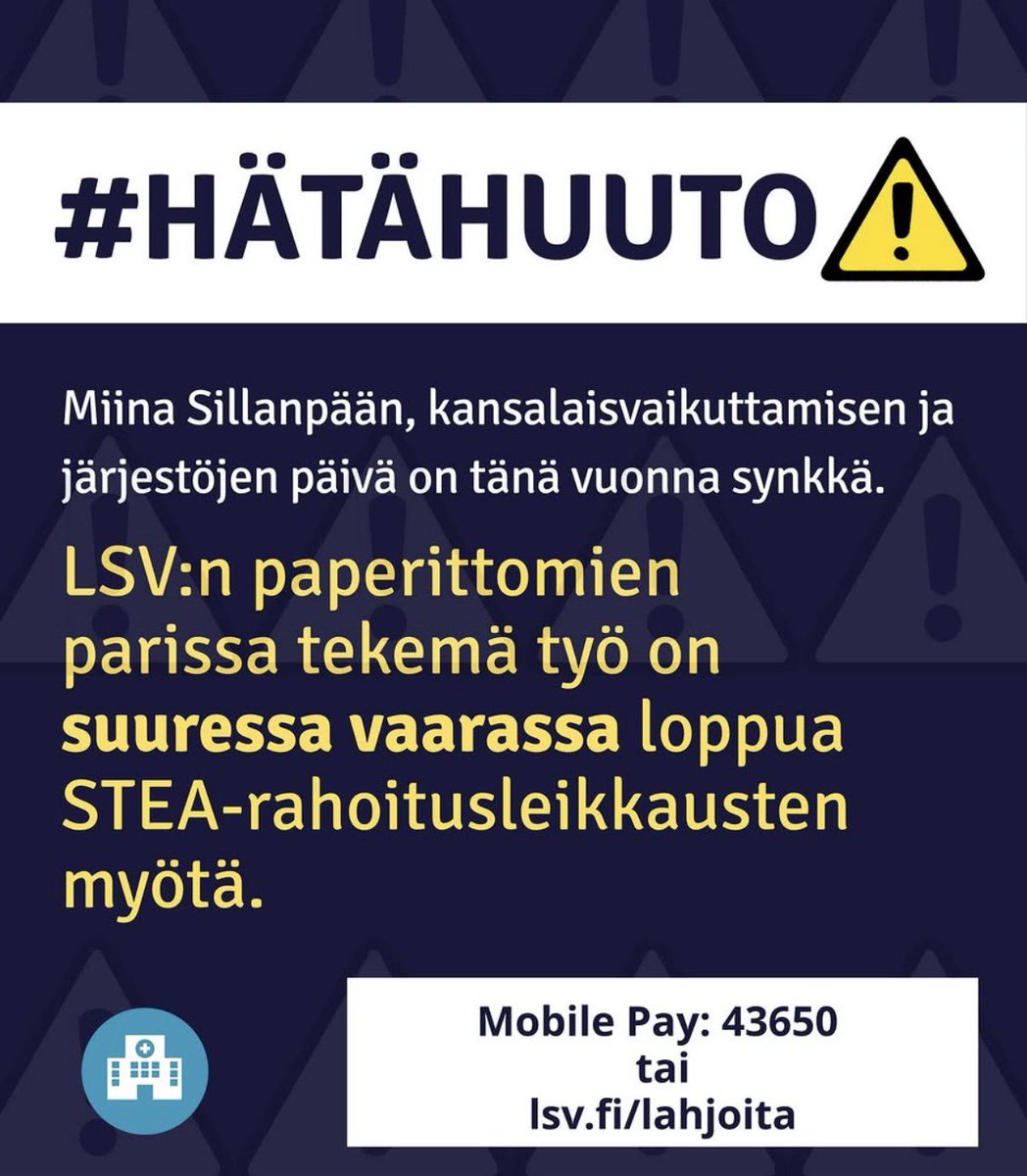
Otto Meri wrote that the organization helping illegal foreign residents was in trouble due to cuts in their funding. He asked why taxpayers' money had been directed towards helping them for years, and believed that they should return to their home countries to seek help instead of relying on Finnish taxpayers. According to Meri, this was the purpose of the whole system. #maahanmuutto #verot #apua (translated)

15179